-

ESSA Wine’s latest wines – May 2025
This is my first post in some time, and my apologies for that, but I hope all is well with all of you. Until all the Jews around the world are safe, I often feel these posts are trite. Still, it is our duty to support those in need, and it seems that these posts help others. With all that said, expect changes in the near future for this site, but until then, let us get to the subject at hand!
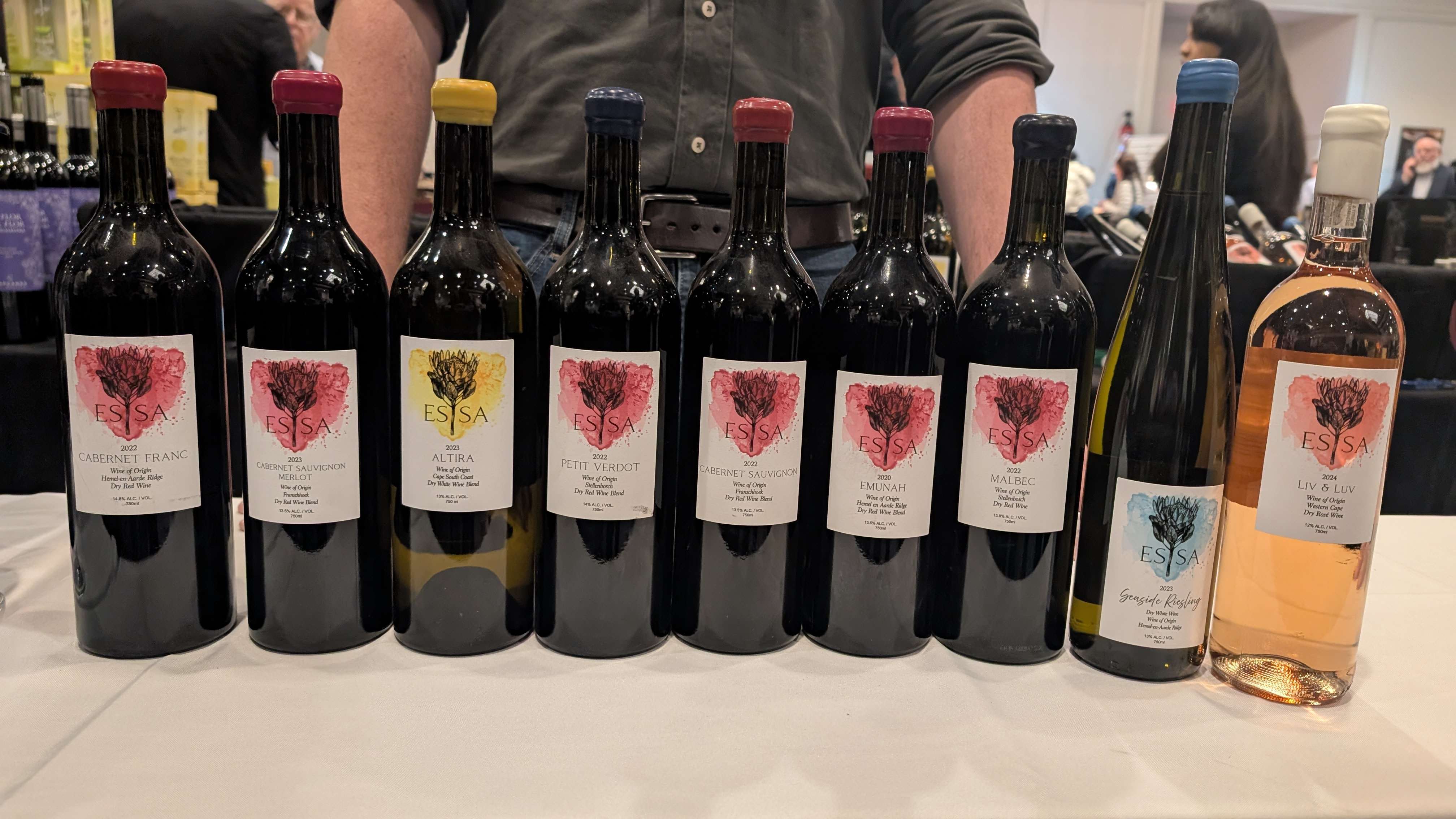
ESSA Wines is helmed by the married duo of Josh and Chana Rynderman. I have spoken and written about my friends often. The ESSA Wine group produces a diverse list of great wines and was worthy of this year’s Winery of the Year award.
The history of ESSA and Kos Yeshuos can be found on this blog; however, I will repeat it here for completeness.
Kos Yeshuos History
It’s incredible to think that Kos Yeshuos started “unofficially” in 2015! I was not even scoring wines with numbers back then! Ten years ago, Kos Yeshuos made a lovely Vin Gris from Cabernet Sauvignon, and the game was afoot! From there, Josh made wine for sale in 2016, the first “official” vintage of Kos Yeshuos, with two reds, a Syrah and a Grenache (I had just turned over to numerical scores and started to dabble with QPR). The 2016 Syrah was excellent last year!
Then came the 2017 wines, a Viognier and a Syrah. We flew in for the wedding in January 2018 and suffered through some horrible wines for that Shabbat. Joburg in the “winter” (AKA glorious Summer) was not bad at all. The lack of good wine was unacceptable! Thankfully, that is no longer an issue for those who seek good wine!
In 2018, Kos Yeshuos evolved to more playful labels, with a woman’s touch to say it correctly. We had the California Kid and another Viognier. The move to whites was required to make the dual-hemisphere dream a reality. In 2018, ESSA Wine came to life, and the 2018 ESSA Malbec was sold here in the USA!
Then, in 2019, Kos Yeshuos released four white wines, including a Joburg Girl! Then, miraculously, we survived the world’s curse, and its reward was one more year with Josh and Kos Yeshuos, along with more new 2019 ESSA wines! The Orange Sidewinder was nice enough, but the Viognier was indeed on point. ESSA was now in full sprint, producing top-notch wines like the 2019 Cabernet Franc and the 2019 Emunah. I am sure Josh was happy to not be flying back and forth, and the dual-Hemisphere thing had run its course. With the added time, ESSA evolved and added the Altira, and then more red wines followed.
Current day Lineup
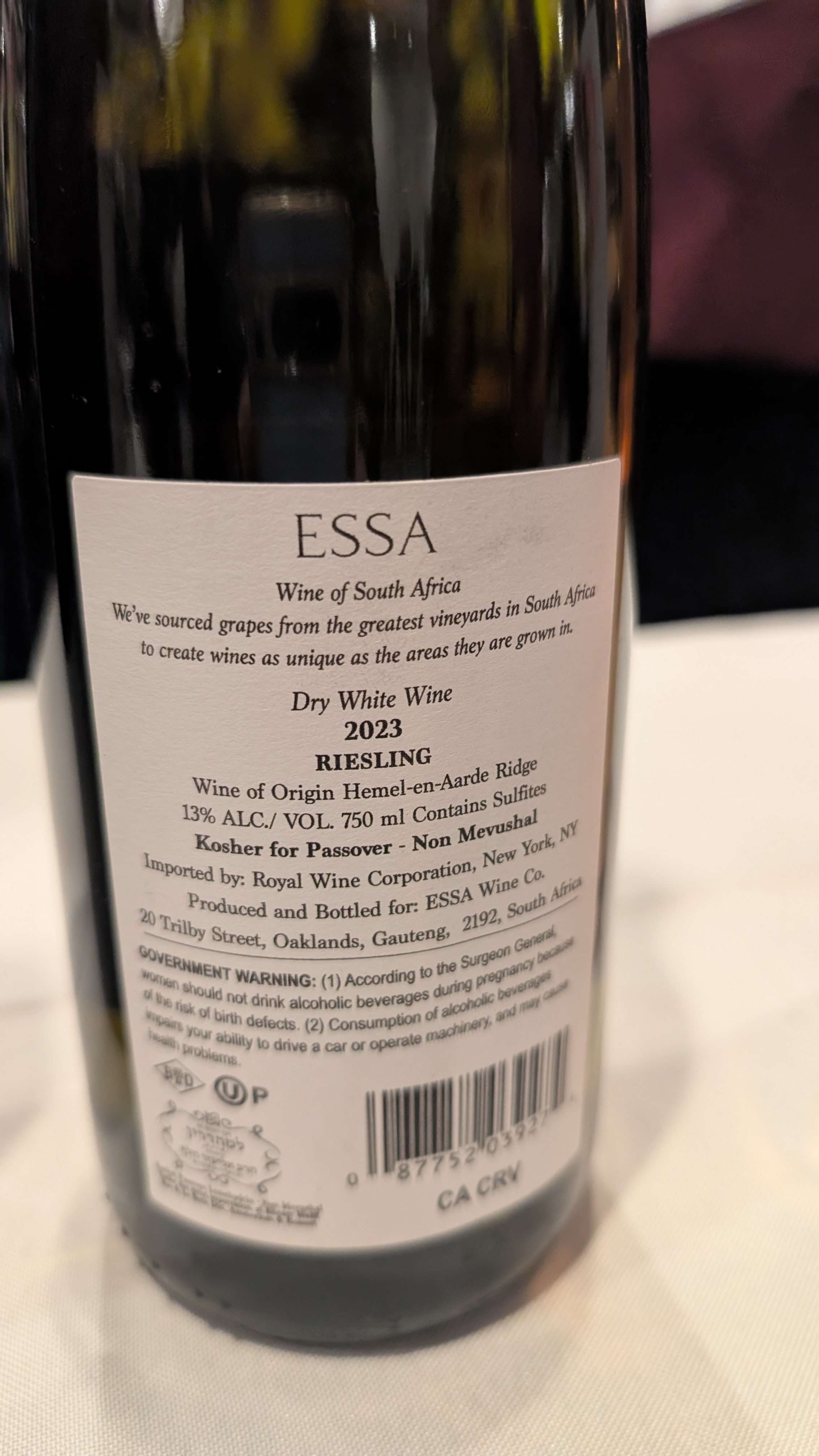
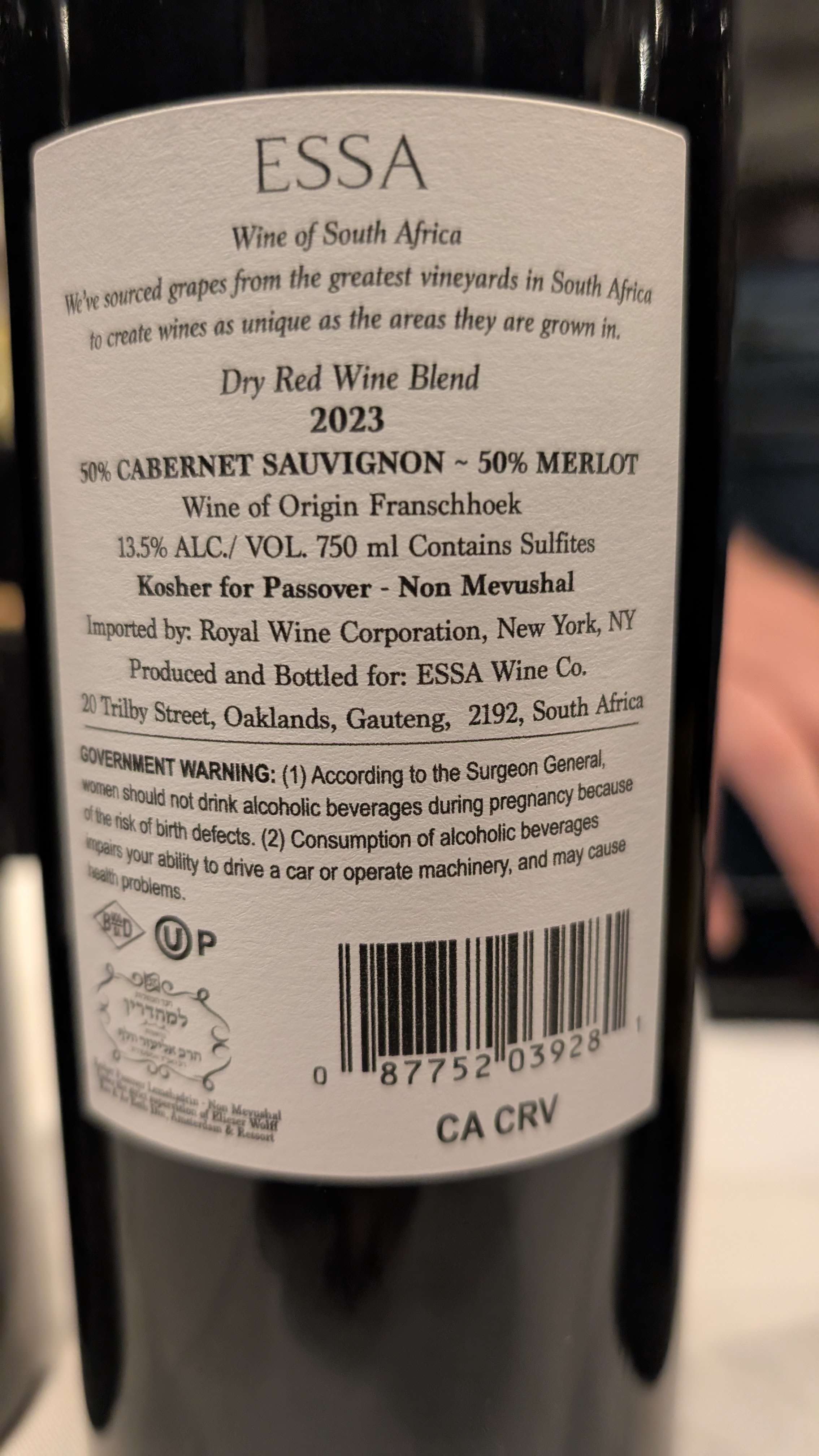
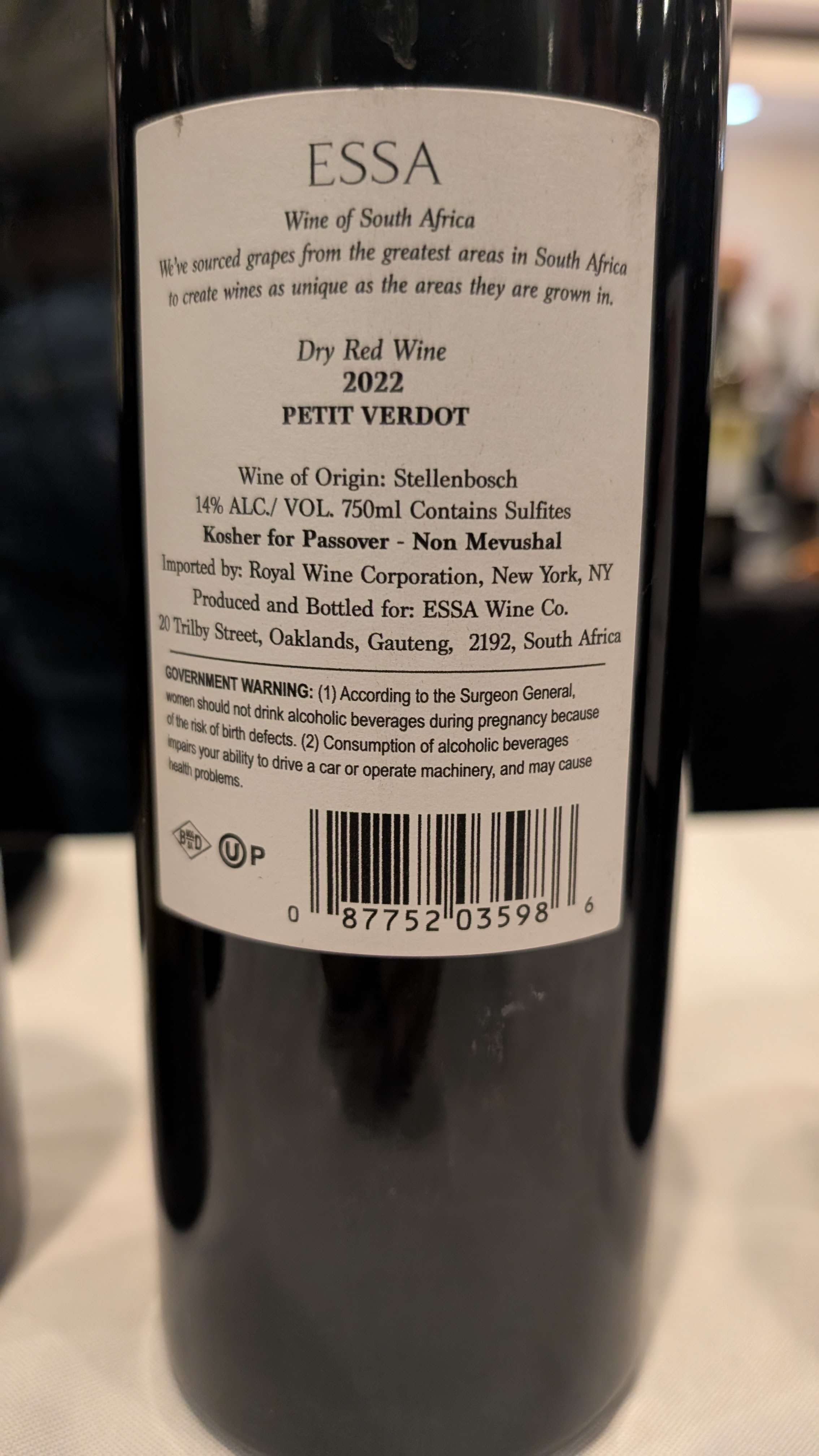
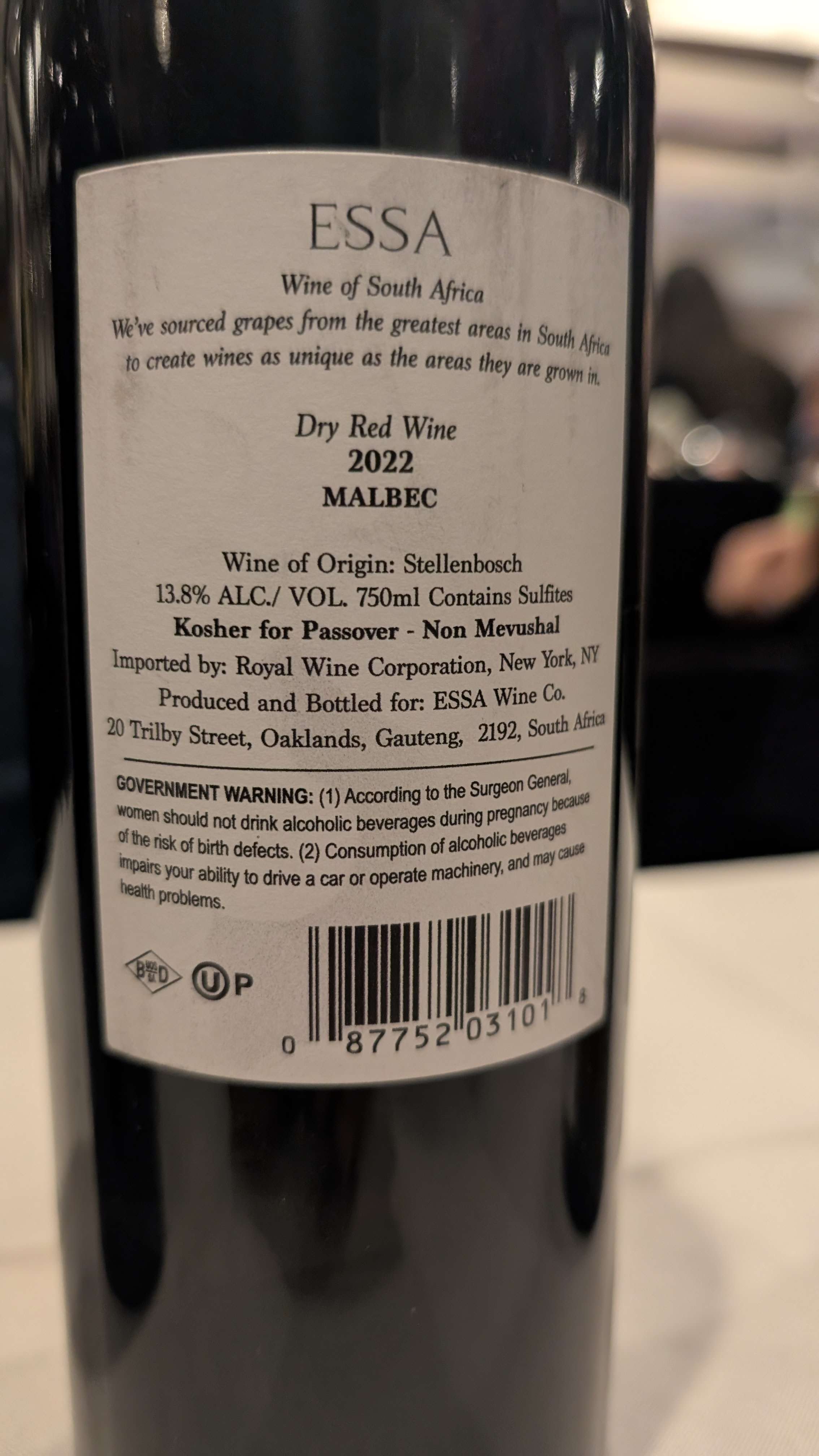
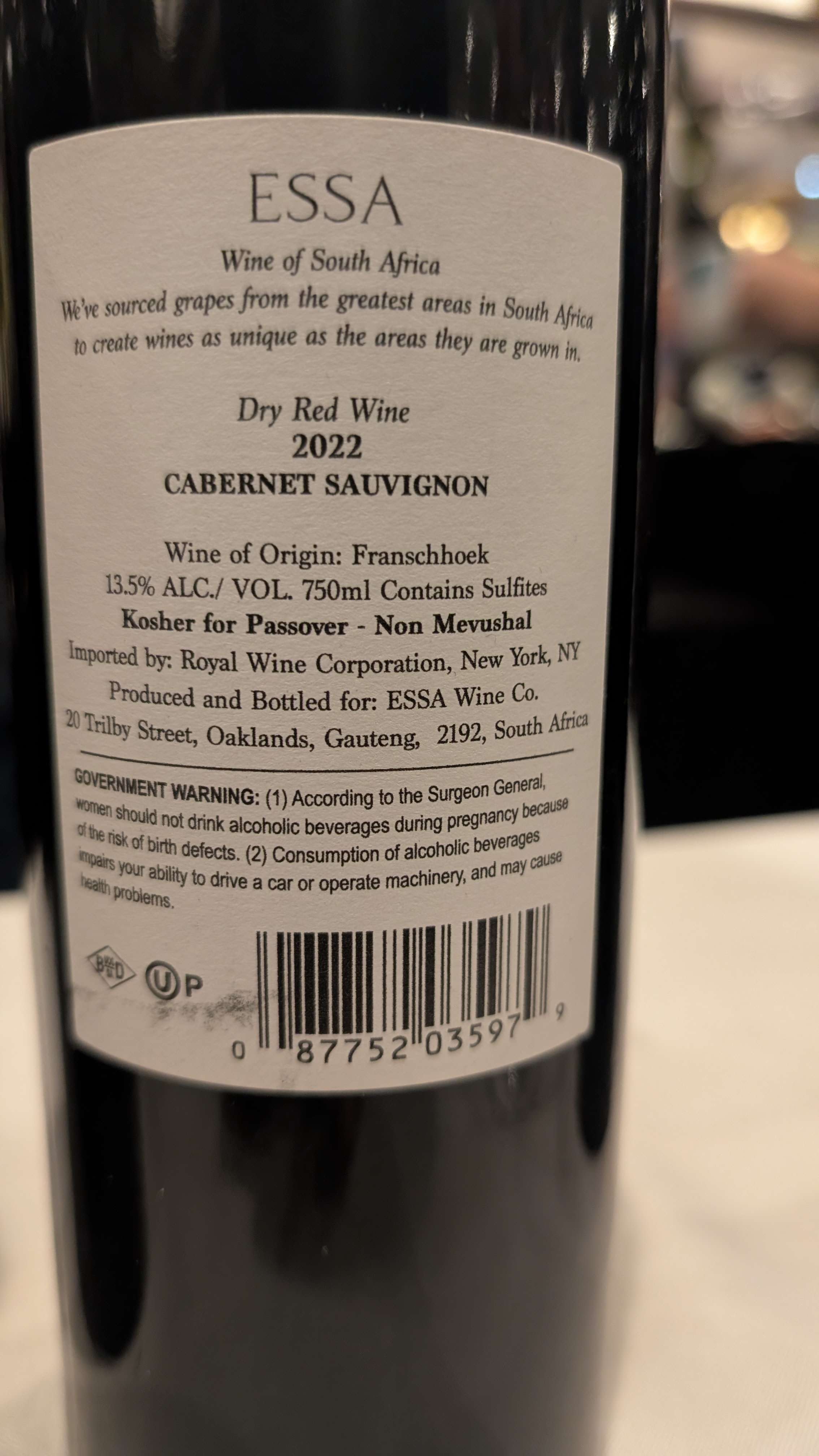
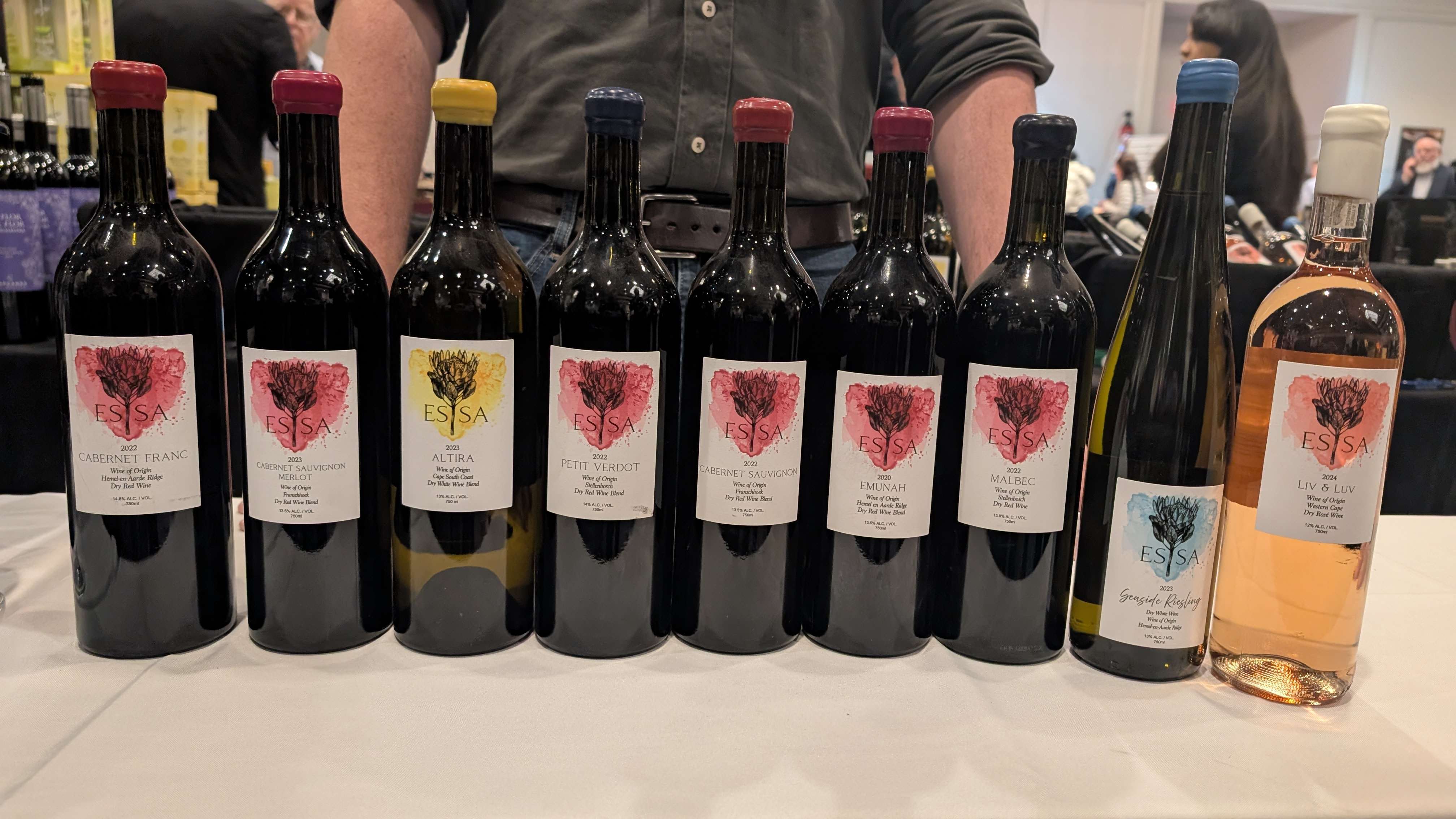
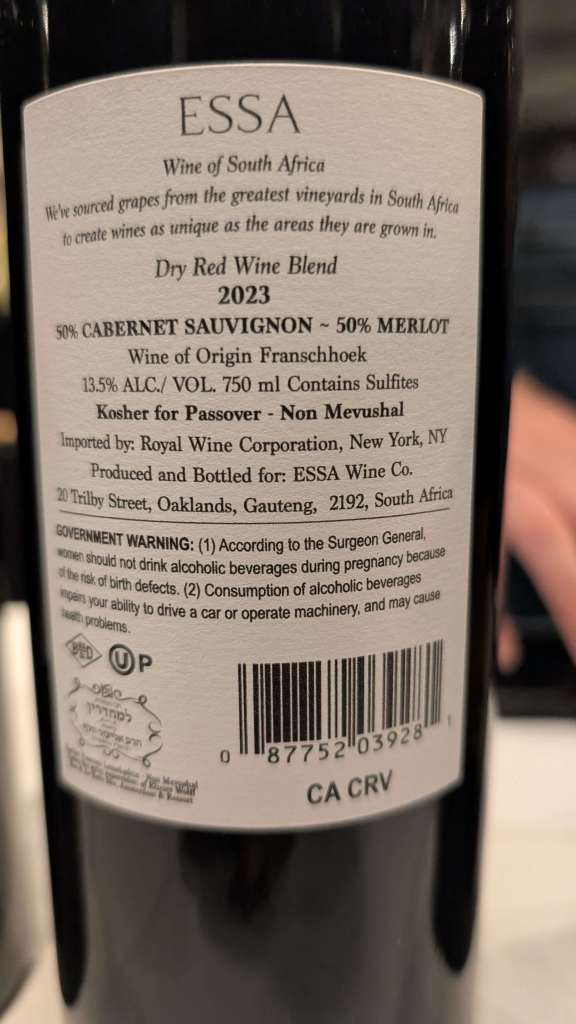
Today, ESSA stands at 10 wines, at least from my count. The Cabernet Sauvignon, Malbec, Emunah, Petit Verdot, Cabernet Franc, Riesling, Essa Liv & Luv Rose, Franschhoek Cabernet Sauvignon – Merlot, Fume Blanc, and Altira. A few new wines are coming, and I have a bottle of one of them here, the Semillon.
As you will see in the wine notes below, ESSA is excelling, almost across the board. Look, I may not love wines like the Petit Verdot, given their fruity style, but that does not mean it is a bad wine. The same can be said for Malbec. They are just grapes that rarely excite me. However, the classic grapes are doing very well under the care of Josh and Chana (yes, I know PV and Malbec are Bordeaux classic grapes, but who cares? They are rarely used, and when they are, it is a rounding error).
No matter the fact that Josh is a friend, he makes good wines, guys, and that is plain to see. What confuses me is why the red wines do not sell as well as they should. You have the big red wines (PV and Malbec) for that kind of folks. You have a crazy QPR with the Cab/Merlot mix. Then you have the higher-end reds with the Emunah, Cabernet Franc, and so on. Let alone the crazy white wines – each of them is a CRUSHING WINNER! Folks, taste the wine and tell me what I am missing!
The wine notes follow below – the explanation of my “scores” can be found here and the explanation for QPR scores can be found here:

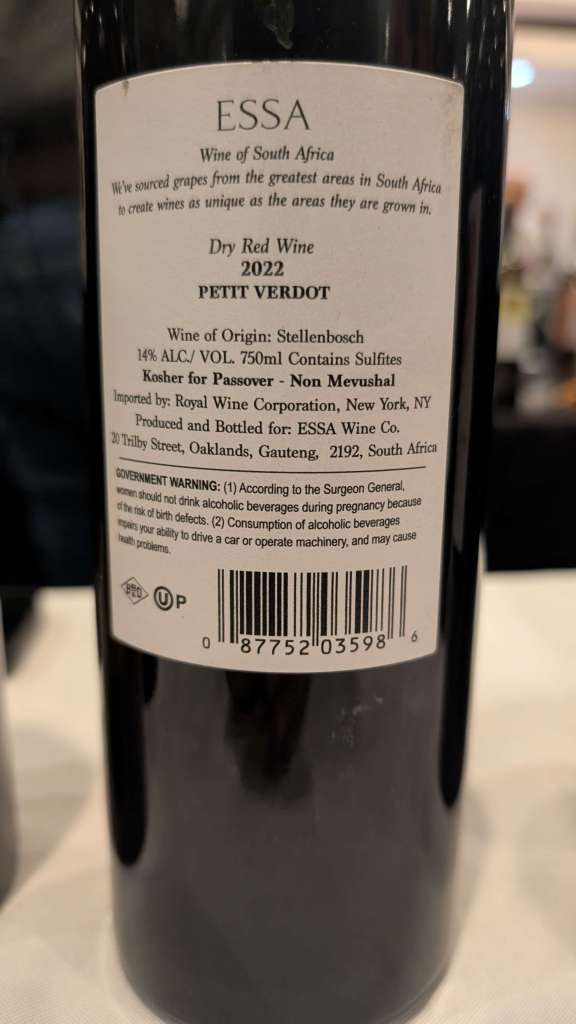
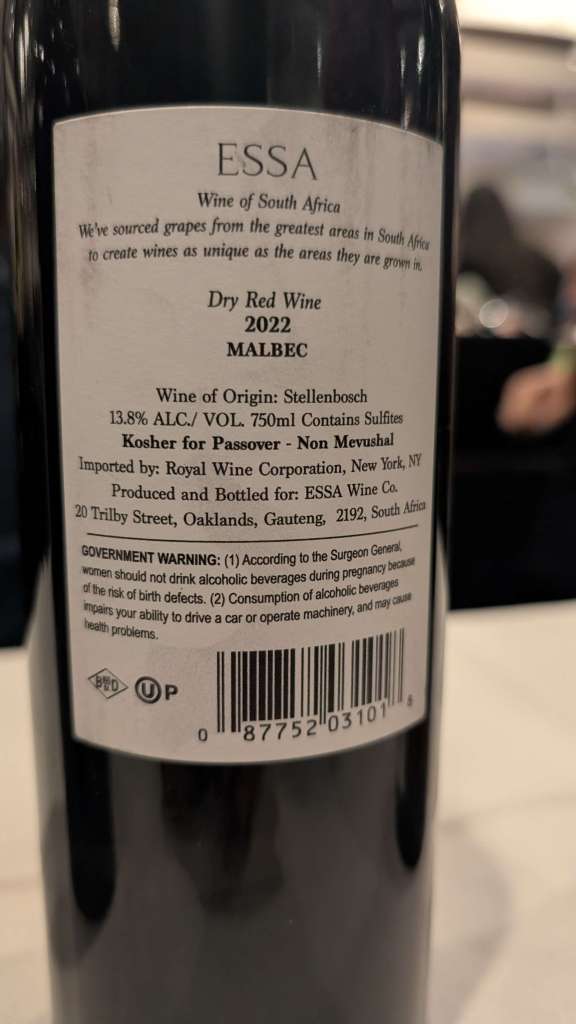
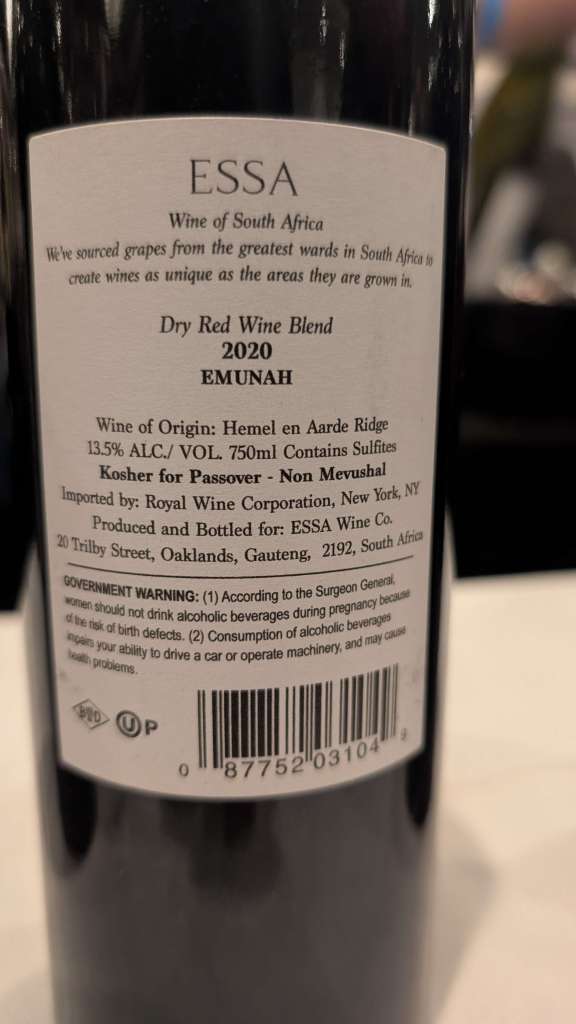
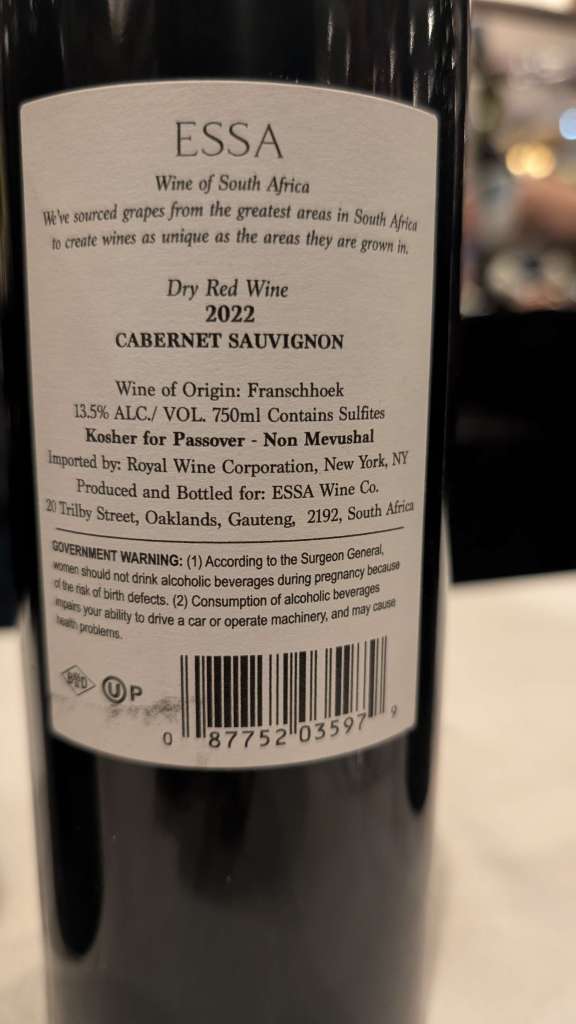
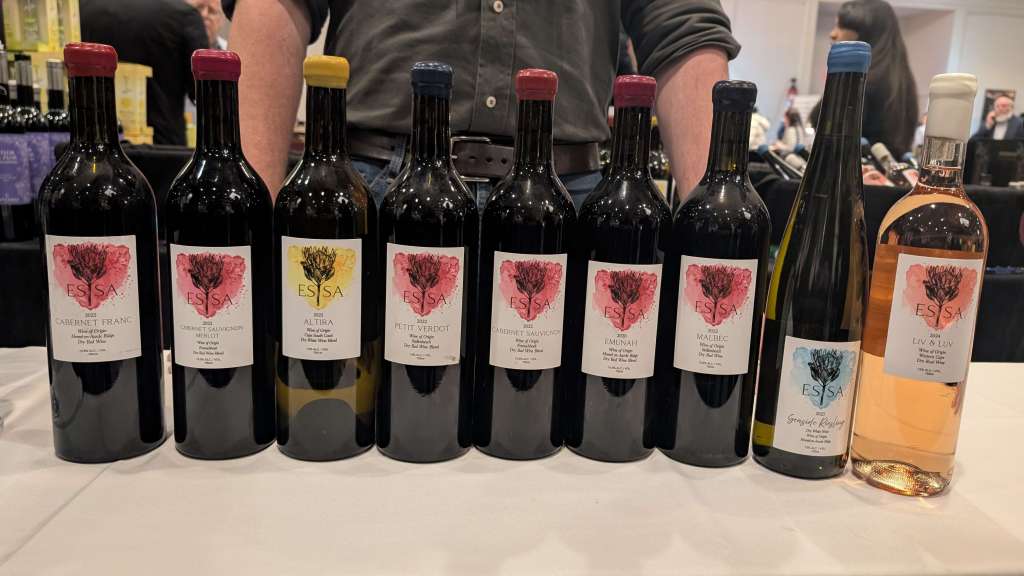
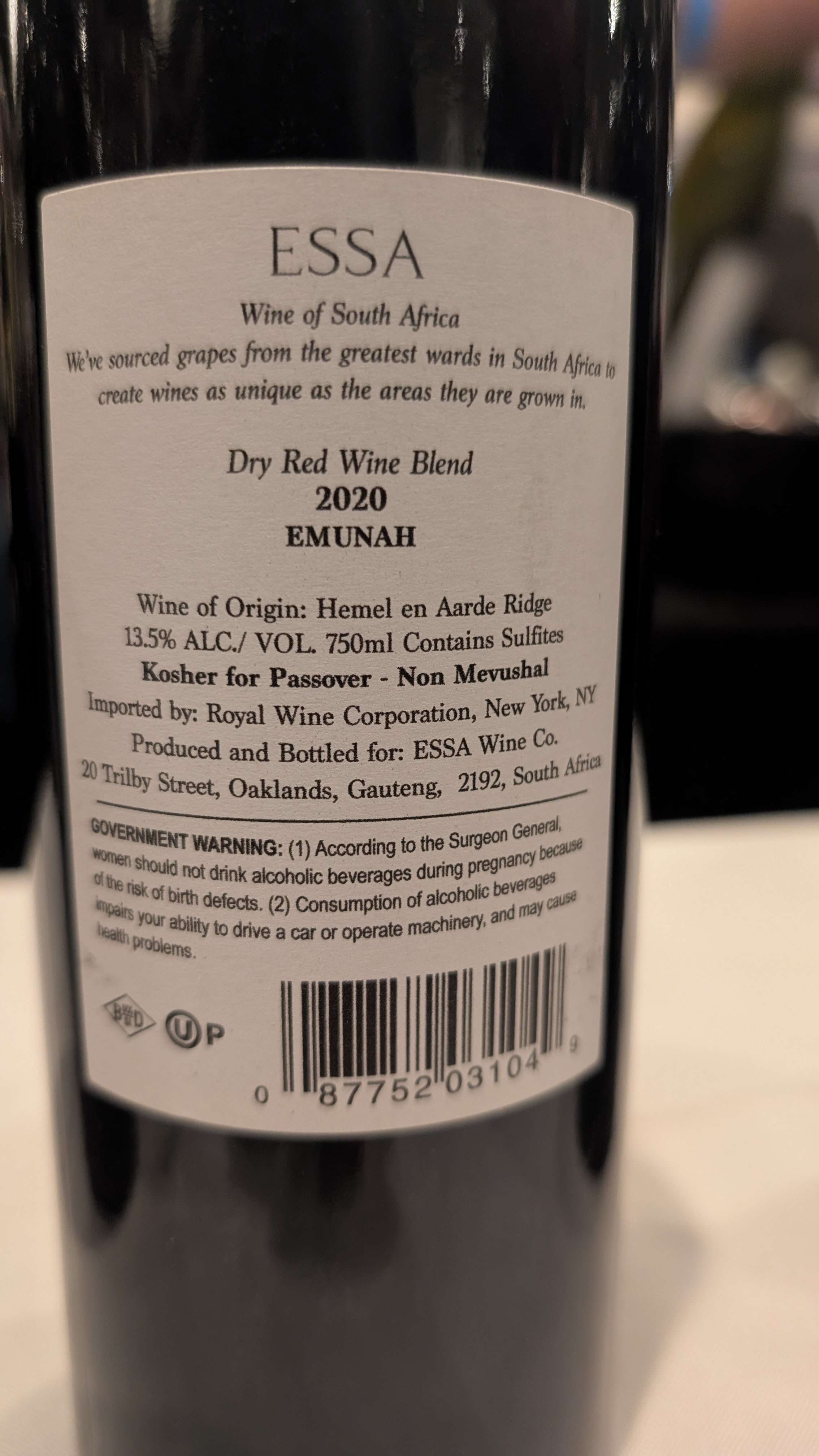
2020 ESSA Emunah, Hemel-en-Aarde Ridge – Score: 93 (QPR: WINNER)The nose of this wine is lovely, with notes of dirt, earth, and smoke, followed by mushroom, loam, and dense smoke, all complemented by black and red fruit, which is lovely and elegant, evoking an old-world approach. The mouth of this medium-bodied wine reveals great acidity, accompanied by a funky and earthy character and lovely mouth-draping tannin. It is elegant, not overly extracted, and features a nice focus on fruit, complemented by notes of raspberry, blackberry, and plum. Bravo! The finish is intense, with great acidity, funk, smoke, and toasty notes. The tannin lingers forever, accompanied by lovely minerality. Bravo. Drink by 2028. (tasted February 2025) (in KFWE, NJ) (ABV = 13.5%)
This content is for members only. Please Login or Subscribe Here to continue reading!
Altira, Blanc Fume, Cabernet – Merlot, Cabernet Franc, Cabernet Sauvignon, Emunah, ESSA Wine Co., Malbec, Petit Verdot, Seaside Riesling, SemillonNo comments on ESSA Wine’s latest wines – May 2025 -
Seder 2025
My work schedule simply does not allow me to ever catch up on wine writing! But time waits for no one – and here we are at Pesach, so I need to post my Seder picks for this year before finishing my series on Paris tastings. So be it.
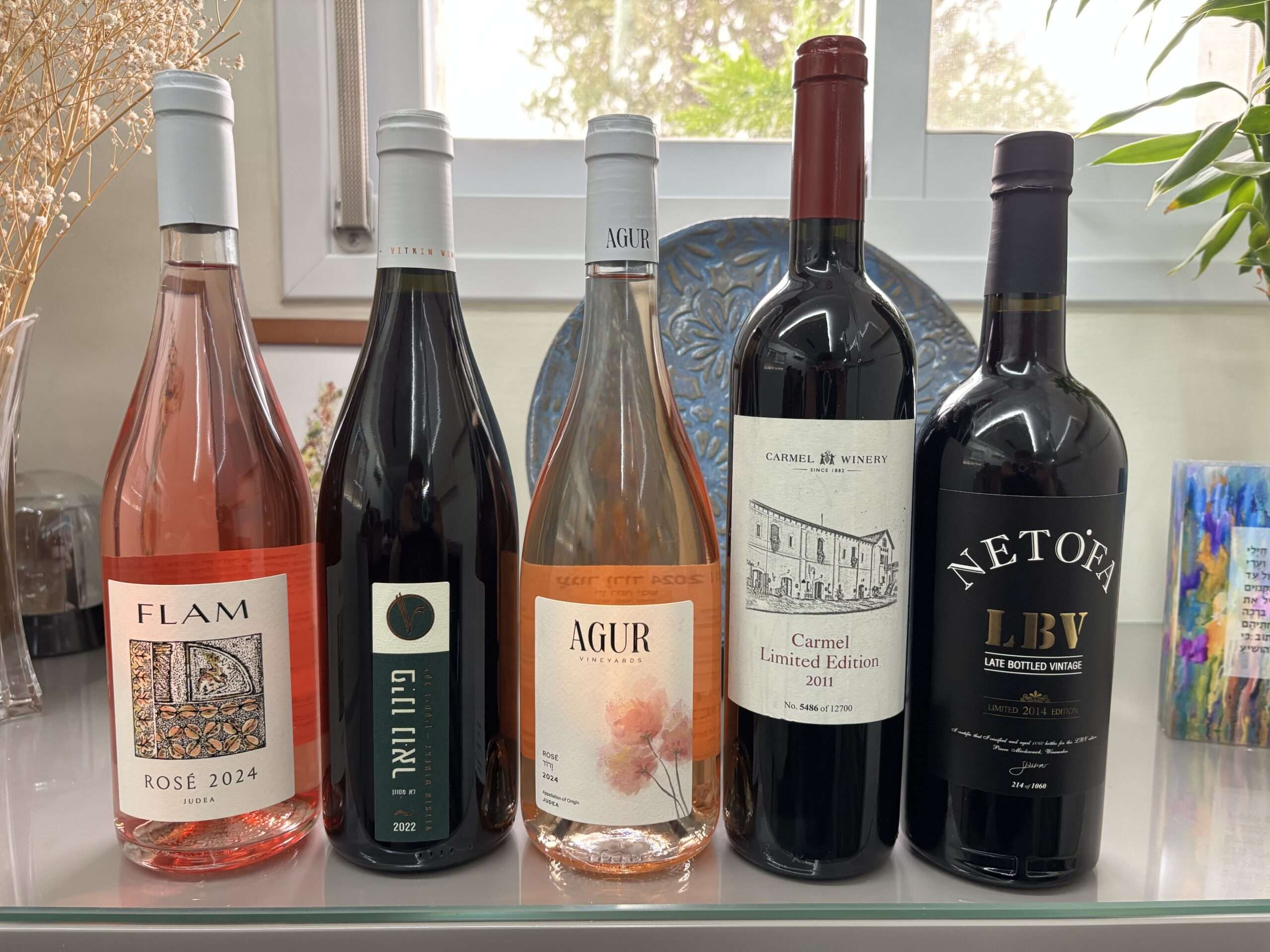
Each year when thinking about the Seder wines, I try to come up with a list of wines that are both practical for each kos, while being appropriate for the mitzvah, in that they are truly excellent wines that deserve to adorn my Seder table. As I wrote last year, in general, I am NOT makpid on all of my wines being from Israel for the Seder, and most years I end up with a mix of wines from various places. But in the spirit of the season – Why is this year different from all other years? While part of the answer is obvious, as with the Haggadah, there are also deeper reasons why we should be supporting Israel now more than ever. First and foremost, the current situation here in Israel from October 7th onward has made farming in Israel VERY difficult across the board, of course, including vineyards. While things have started to improve with the ceasefire in the north, the wine industry here is simply crippled. Add to all of this the fact that the Israeli wine market was already suffering during the Corona years due to depressed sales to the restaurant sector. Add to that the tariffs that now have a potential to raise the cost of Israeli wine abroad even further, and we have a REAL problem here in Israel. And so I will be doing my part to support Israeli wineries, and I encourage my readers to do the same if at all possible.
The Seder itself presents a number of challenges in terms of drinking. First and foremost, all of the four cups are drunk for the most part without food. Two cups prior to the meal on an empty stomach no less and two cups after the meal when we are already full and the hour is late. My Seder night strategy has served me well each year, and so I see no reason to change it up. So here it is, along with my choices for this year’s seder.
[My only criteria besides the wines being from Israel is that I have enough on hand to provide all of my Seder attendees with the same wine (we are about 15-20 people this year and most of them will be drinking wines, so 2-3 bottles of each.]
This content is for members only. Please Login or Subscribe Here to continue reading!
-

France, January 2025 – Part 3 – The Wines of Christophe Bardeau
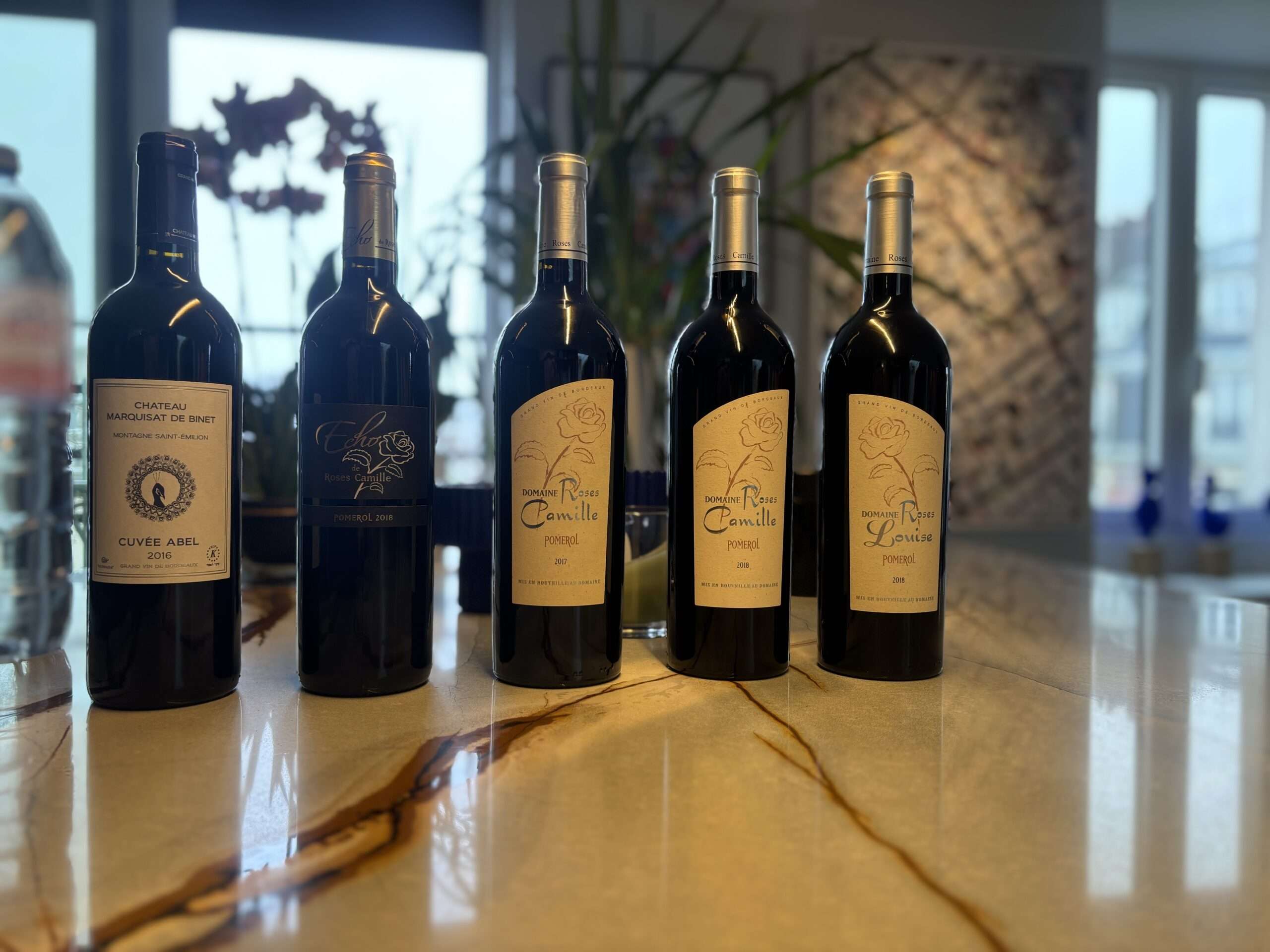
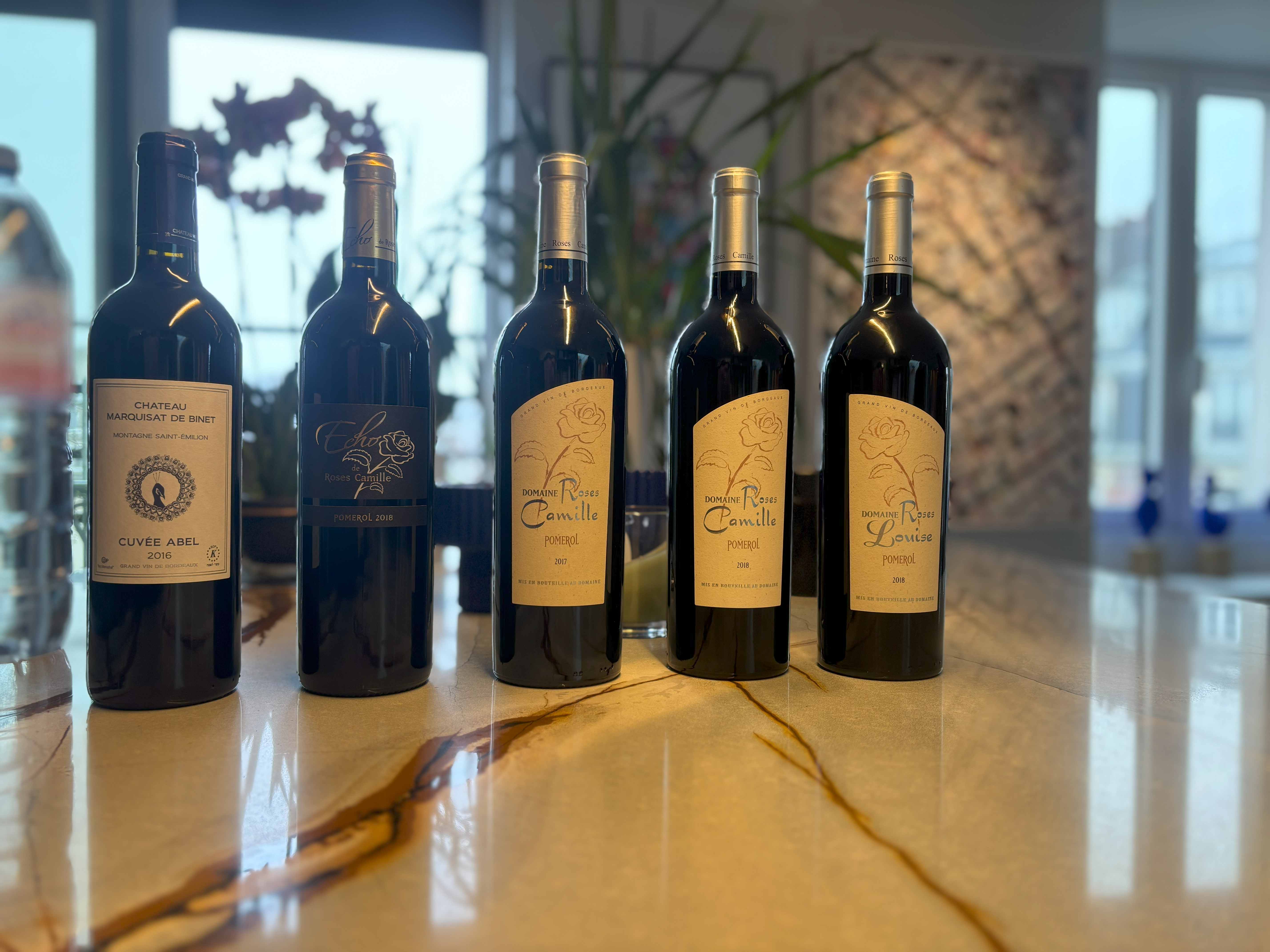
Continuing with my posts on my most recent tasting trip to Paris with David Raccah of Kosherwinemusings.com, after our trip to IDS, we quickly made our way to the next tasting of the day, with Christophe Bardeau of Domaine Roses Camille and Ben Sitruk of WineSymphony.fr, who is the distributor of all of Christophe’s output. This tasting was really to catch me up on the most recent top-end wines, as David had already tasted all or most of these in California – so I do appreciate everyone’s indulgence in catching me up. I am also sure David didn’t mind, as it gave him an opportunity to taste the Pomerol wines after retasting the Le Gay a day earlier.
Drinking with Christophe is always a trip. It is almost unique in the kosher wine world to have a winemaker who so intimately knows the vineyards from which the wine is made. I would guess that perhaps outside of the Cohen Family of Elvi, and Benyo at Four Gates, no other kosher winemaker is involved from start to finish in growing and harvesting the grapes and then making the wine. There may be others, but that’s who comes to mind. More than that, the vineyards have been in Christophe’s family for quite some time, and, as such, he simply grew up amongst the vines. He uses no lab to test ripeness, brix or pH levels. He simply bites into a grape in the vineyards and gauges whether or not it is time to pick. It’s fascinating. On top of that, he is a mensch and really easy to talk to with no pretentiousness at all – despite having literally a perfect record in terms of never having made a bad kosher wine. I don’t know anyone else who can boast this – I mean everyone has a miss here and there – or almost everyone. Part of the reason for this is that, due to the small production, literally everything is in Christophe’s control – from when to pick, to when to release the wine. As such we are now tasting wines from the 2016-2018 vintages, while the rest of the wine world is trying to wrap their heads around the penetrable 22’s. That is not to say that the 2018’s from Roses Camille and Roses Louise are ready. Far from it – as you will see below. But it does give him much greater control, and he simply will not release a wine until he feels it is ready.
As I mentioned, we tasted these wines the day after the Royal tasting, where we had tasted the Le Gay. At the time, David warned me that I was going to have a tough time as really, we have NEVER had this many kosher Pomerol wines on the market at once that we can judge against each other – and the competition would be close (remember – I gave the Le Gay a 95 – so I was excited!) But, we’ll give it a go.
This content is for members only. Please Login or Subscribe Here to continue reading!
-

France, January 2025 – Part 2 – IDS
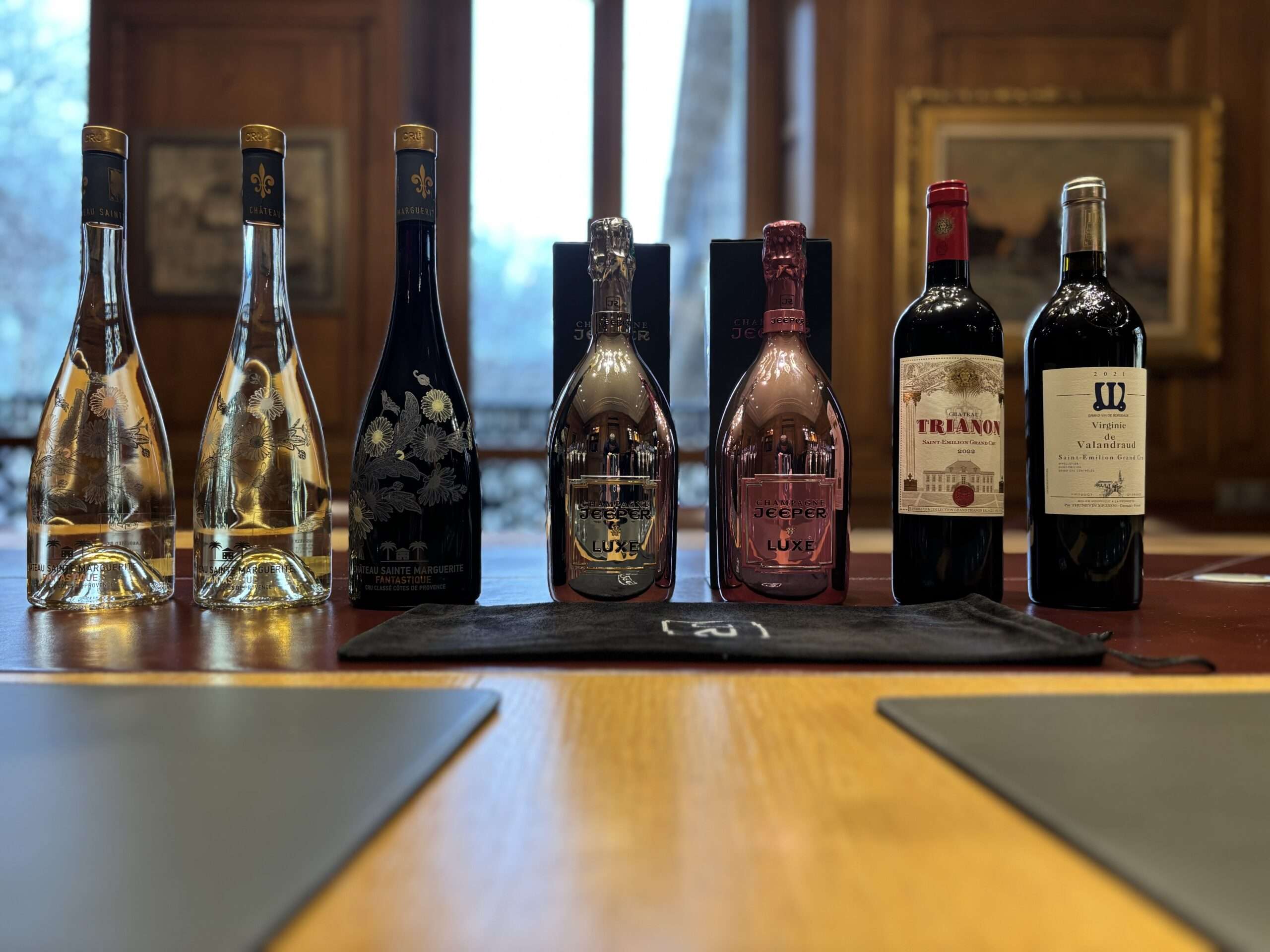
No Paris visit for me is complete without a visit to IDS. I have of course written about IDS many, many times. While Royal targets the entire kosher market from a price perspective, IDS’s strategy is to produce wines that target the high-end primarily, though a number of medium-end but extremely well-made wines are released each year as well. Their track record over the last decade has been impressive. This is in no small part due to Ben Uzan, who took over day to day operations of their wine business around the same time. Since then, the company has expanded significantly, and quality has been truly outstanding and consistent.
Unfortunately, the IDS big wines of 2022 (and there are quite a few including Smiith Haute Laffite, Lafon Rochet, Domaine Chevalier Red & White, etc.) were not released in time for our trip and so we had a relatively small number of wines to catch up with since the last time David Raccah (of Kosher Wine Musings fame) and I visited. Here are my notes:
This content is for members only. Please Login or Subscribe Here to continue reading!
-

The Best/Top kosher wines for Passover 2025 in all price ranges
As I have stated many times in the past, this list started from folks asking me to come up with a cumulative list. This year, there have been many such events. I went to three of them, and the number of great wines is growing along with the overall number of Kosher Wines.
First, here are a few caveats: This is MY list! This is not a list that will make many happy. These wines are the wines that make me happy. No wines here would be considered overripe, over-sweet, or all over the place. The wines here are listed in the order of cost. That said, the top-line wines – what I call Top-Flight wines, are not defined by cost at all. On that list, you can find 2018 Elvi Wines Herenza Rioja, Reserva. At the same time, the list includes some of the best high-end kosher wines I have ever tasted. Ultimately, price does not define your place on the Top-Flight Wines list, nor does QPR (Quality to Price Ratio); only pure quality gets you on this list. The list of Top-Flight wines are wines I would buy without hesitation, no matter the cost (if I can afford it of course).
Passover is a time of year when Jews buy the most wine, along with Rosh Hashanah, and the US New Year. That is why all the kosher wine events, usually, happen a month or two before the Passover festival. It allows the wineries and distributors to showcase all their wines, each appealing to different market segments. So, no there are no sweet or semi-sweet baseline wines here. There are many very good 25 or lower-dollar bottles of wine, that can be bought at Skyview Wines, Gotham Wines, Suhag Wine, Liquid Kosher, onlinekosherwine.com, kosherwine.com, and now Elk is live with his website, for those of you who live in the Miami area or are going there for Passover, or any other time of the year! Of course, those and others exist, support your local merchants! I have no real options, so I use the ones to the right of this blog, when viewed on the web (as always I NEVER make money from them and I never know or care what people buy, the list is whom I purchase wines from and so I feel comfortable recommending them to others).
Also, the amount of money you spend does not define the value or quality of the wine. Take, for example, the 16-dollar 2020/2021 Elvi Herenza Rioja, the 2023 ESSA Altira, and others. These are lovely wines; the fantastic price is only an added benefit. However, many low-priced wines are not on this list, as they lack the required quality, IMHO.
Seeing the list and checking it twice (could not help myself), I am sure there will be a question – what defines a wine as a Top-Flight wine, and why are there wines that are not on it? The Top-Flight wines are wines that impressed me when tasting them. That does not mean that the 2022 Chateau Moulin Riche, as lovely as it may or may not be, can compare to another wine on the Top-Flight Wine list. It does mean that when I tasted one of these Top-Flight wines, I was wowed, and I said this is a wine that everyone should get – no matter the price. In the end, the Top-Flight Wines is my way to whittle down the list of wines I enjoyed from thousands of kosher wines available here in America. In hindsight, I am sure I will have missed some wines. If you do not see a wine you love and it scored a 91 or higher on this blog somewhere, then I can assure you that it was probably an oversight on my part.
The sheer number of wines that I scored a 91 this year is crazy! The prices have significantly risen, but so has the selection. I have 200+ wines this year that got a 91 or higher. That is the highest number ever. Yes, some of that has to do with the sheer number of wines I tasted. However, that also has to do with the 2022 vintage from Europe and the 2021 vintage from Israel. Still, it is impressive.
Also, this is a PSA – please do not buy 2022 or 2023 rose wines! PLEASE! They are muted and a waste of your hard-earned money. Thankfully, there will be 2024 Roses out there soon!
Arba Kosot (The Four cups of Passover)
Finally, it is the Jewish custom to drink four cups of wine on Passover. The “requirement” is to gulp down these wines. This is far too hard for me (the concept here is to drink the base quantity of wine to fulfill your requirement – which is a Revi’it, within a certain period). In the past, I was drinking red, Israeli wines that were simple to drink, not complex or impressive, with my regular kiddush cup. However, with time, I found a better option, drinking the Revi’it from a small cup that fulfills the legal quantity of wine. I have further shifted my approach by drinking Yarden Rose Brut Sparkling wine. It is Israeli, not Mevushal, “red”, a lovely wine that is easy to gulp down and an acid BOMB!
For the main course, I am happy to open a Top-Flight wine and enjoy it at a calm and enjoyable pace. Another option is to get some of these great glasses from Stolzle. According to most Rabbis, this fulfills the official four-cup requirements regarding volume and respect. The glasses hold 3.5 fluid ounces of wine, which according to almost every source fulfills the concept of Revi’it.
It does not fulfill Chazon Ish’s requirements of 5.1 ounces, but if you wish to meet that requirement, use these glasses by Libby’s. Also, remember that you should drink the entirety of the cups, which is why I recommend the smaller cups. If you cannot, some allow drinking the majority of the cup, but that is not the best approach. Finally, the LAST CUP, should be drunk in totality, as that is the ONLY cup upon which you say an “After Bracha (Blessing)”, and as such you must have drunk at least 3.3 ounces to say the last blessing.
NOTE: Again, I make nothing from these Amazon links. They do not have sponsor links or whatever. I do not have that and never will. These are just suggestions—buy what you want. They are only there for ideas.
Four Cup Options
Like much of what I do on this blog, I was recently asked to develop some 4 cup options for people. I am not big on pounding good wines for the 4 cups. My Rabbi mixes wine and grape juice and pounds that. No rabbi says you must use the best wines for the 4 cups. I know that sounds horrible, but honestly, the point of the 4 cups is to drink wine in their Halachic format, not to drink great wines slowly, in their non-Halachic format. The priority is drinking red wine quickly and according to the proper shiur (assigned minimum liquid intake). Still, while I will be doing my 4 cups on the Yarden Rose Brut, I have a list of other options here. ALL OF THESE wines are available here in the USA and are at/below 13.8% ABV (VERY HARD By the way!!!). The 2022 Vintage in Bordeaux and the USA has made keeping the ABV low – a pipedream. So, many great wines are not on these lists below because they come in at 15% ABV!:
All White wines (non-Top-Flight Wines) – Sauvignon Blanc:
- 2022 O’Dwyers Creek Sauvignon Blanc
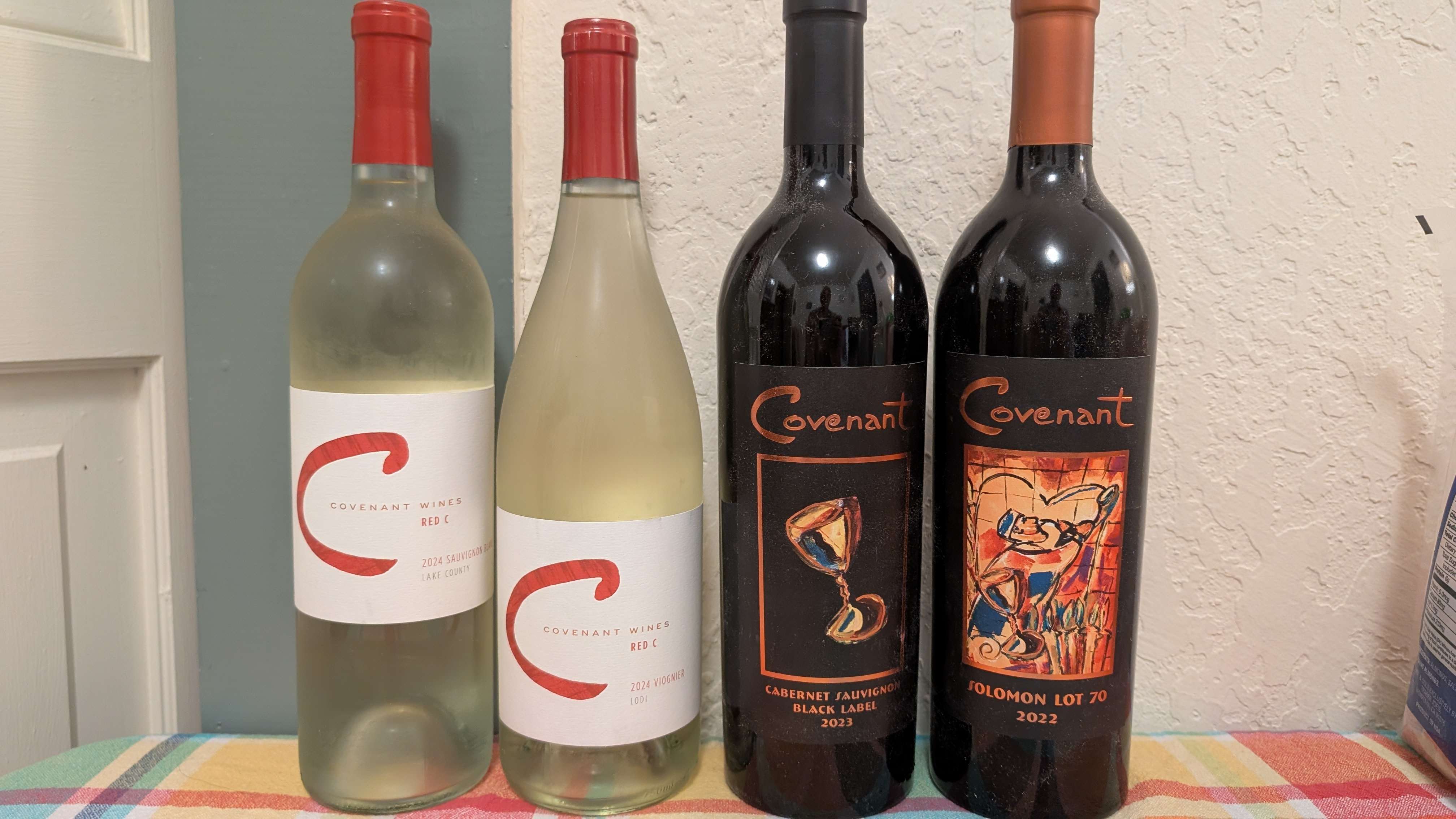
- 2024 Covenant Sauvignon Blanc, Red C
- 2023 Domaine J. de Villebois Pouilly-Fume
- 2023 Goose Bay Sauvignon Blanc
All White Wines (non-Top-Flight Wines) – Various:
- 2023 ESSA Riesling
- 2023 Hajdu Proprietary White Wine
- 2023 J De Villebois Sancerre Silex
- 2023 ESSA Altira
All White Wines (Top-Flight Wines):
- 2022/2023 Covenant Solomon Blanc
- 2021 Domaine de Chevalier L’Esprit de Chevalier
- 2021/2022 Le Nardian
- 2021 Chateau Olivier Blanc OR
- 2021 Domaine Vacheron Sancerre, Grand Champs
All Sparkling Wines:
- N.V. Drappier Carte d’Or
- 2017 Golan Heights Winery Yarden Rose, Brut
- 2018 Golan Heights Winery Blanc de Blanc, Yarden
- NV Raziel Brut
All Red wines (non-Top-Flight wines):
- 2020 Chateau Teyssier
- 2022 Philippe Le Hardi Mercurey 1er Cru
- 2023 Covenant Pinot Noir, Landsman
- 2022 Chateau Larcis Jaumat (14%)
All TOP Red Bordeaux’s:
- 2020 Château Pontet Labrie
- 2022 Chateau Moulin Riche (14%)
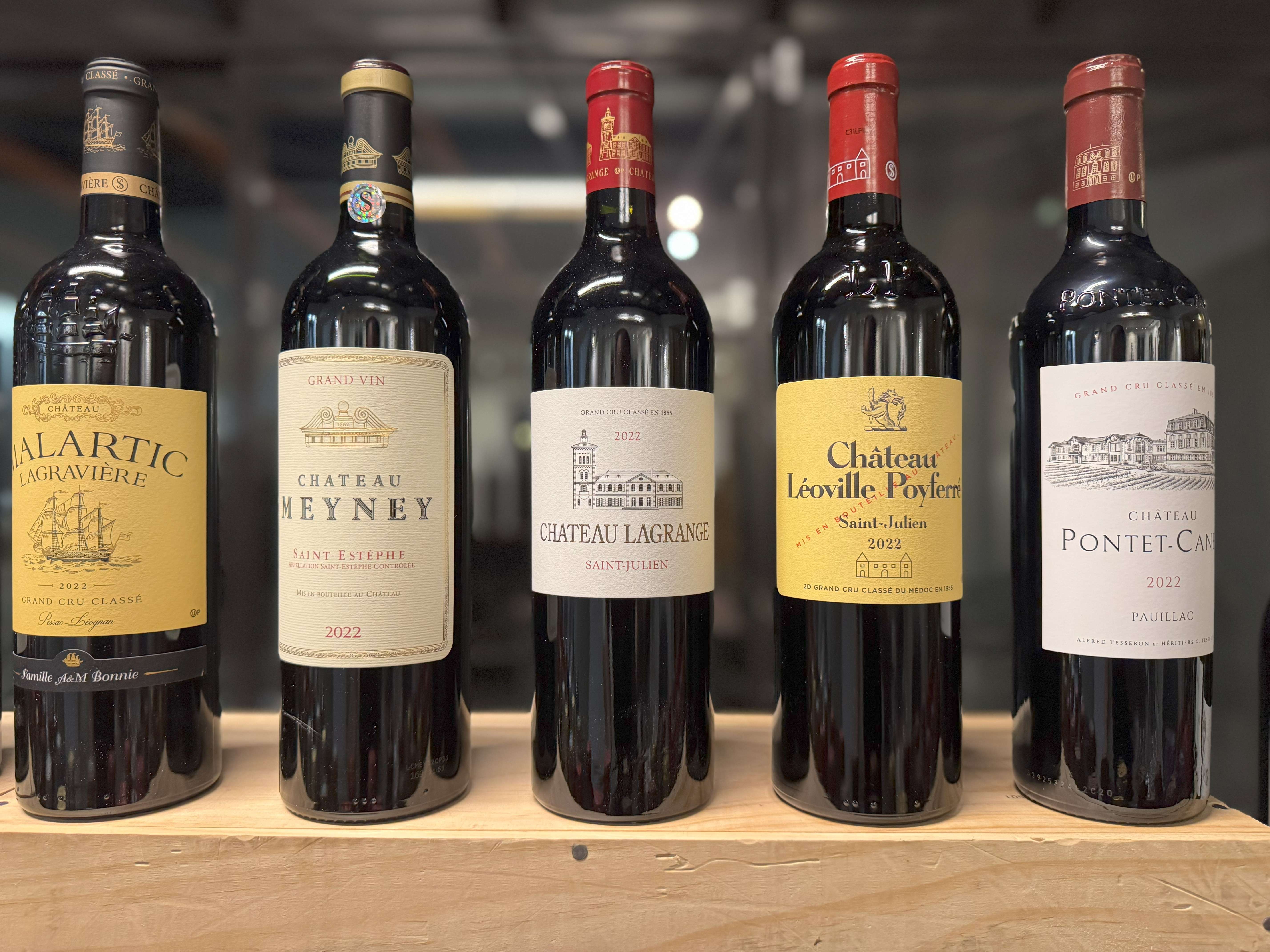
- 2022 Chateau Malartic Lagraviere Grand Cru Classe de Graves (14%)
- 2018 Domaine Roses Camille (14%)
All TOP Red (Top-Flight Wines not from Bordeaux) – I gave up! 14% or under
- 2022 Domaine Aegerter Gevrey-Chambertin Premier Cru, Fonteny
- 2022 Philippe Le Hardi Clos De Vougeot, Grand Cru
- 2023 Jean-Philippe Marchand Gevrey-Chambertin
- 2022 Philippe Le Hardi Aloxe Corton
All Top California Wines:
- 2021 Hagafen Cabernet Sauvignon
- 2022 Hagafen Pinot Noir
- 2021 Shirah Pinot Meunier
- 2022 Four Gates Pinot Noir
All sweet wines:
- 2008 Ya’acov Oryah “Old Musketeer” Dessert Wine
- 2018 Chateau de Rayne Vigneau 1er Grand Cru Classe
- 2021 Tokaj-Hetszolo Tokaji Aszu 6 Puttonyos
- 2022 Chateau Piada
Inflation has wrecked my price lists
Wine prices have gone up anywhere from 15 to 25% and as such the wine price lists, at the lower prices, are getting thin. Wines that cost 24 dollars are now 31 dollars. Israeli wines, which already were not worth what they charged, before they raised prices, are now even less interesting. The few that do exist are not QPR anymore, as the overall market, which QPR compares against, has NOT risen as much as Israeli wines have. The French market is higher as well, but that only shows at the higher end. Therefore, fewer wines will be QPR going forward, I think, but hey, it is all in the math!
Finally, quality at lower prices is almost non-existent. Looking for quality reds under 20 dollars should not get me two options. We have a lot of quality white wines at lower prices – but sadly the reds have fallen in quality and have driven up their prices.
France-Only Options
I have to be honest, the France-only section has grown by leaps and bounds and it was the hardest part of this whole post! I had to keep jumping back and forth. Overall, the number of wines in France is incredible as is the number of horrible ones! I am very happy to see the list keeps growing and adding incredible deals!
In Closing
I have a few more comments here. I hope I have included all the wines I have tasted here, but I almost posted this a few times, and then only at the end did I remember I forgot a few. This is the first time, in many a year, that I have several Israeli wines, and the 2021 vintage has helped.
In the end, these are my picks. Again, the criteria for making the list are:
- I like the wine (A score of 91 or higher wines at the minimum)
- They are readably available. Other than the Four Gates wine on the list above (in case you got lucky)
- I added a French/European list as there are French-only options
- Price is not a matter on this list (for the top-flight wines) – all that matters is that they are really good!
So there you have it – enjoy good kosher wine for a reasonable price and enjoy the Passover holiday safely and in health! Happy Passover to you all. Post what wine you will be enjoying, I would love to hear from you guys about what you will be drinking throughout the holiday!
Wines below 20 dollars:
2020/2021 Elvi Wines Herenza Rioja (Semi)2022/2023 Essa Altira2021/2023 Elvi Herenza White (AKA InVita)2022 O’Dwyers Creek Sauvignon Blanc (sadly I have not yet tasted the 2023)2019 Cantina del Redi Pleos Toscana Sangiovese2021 Domaine Bousquet Alavida Malbec – NOT 2022 (2022 is not good)2023 Palais de L’Ombriere2022 Godin Vihno Tinto, Red2023 Godin Branco, White2015 Chateau Lavagnac Bordeaux Superieur
—– France ONLY options—–2021 Chateau Le Lescot2020 Chateau Pouyanne Blanc2018 Ribeauville Riesling, Rosacker2021 Château La Baronne Les Lanes2019 Cave de Ribeauville Pinot Noir, Vendanges Manuelles2019 Elvi Wines Adar (also Israel)
This content is for members only. Please Login or Subscribe Here to continue reading!
-

Kosher Wine Tasting events of 2025 – Wrap-up
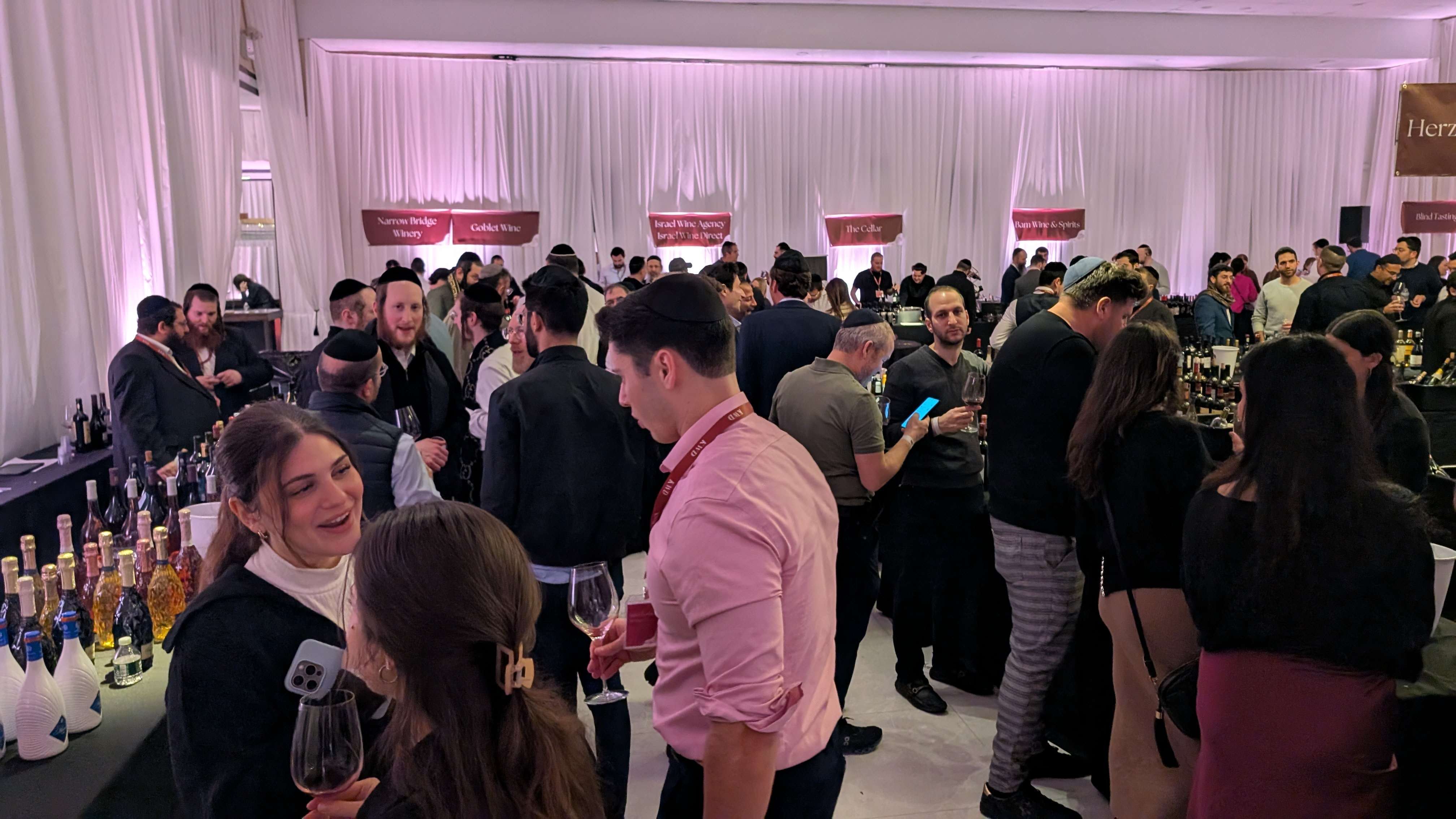
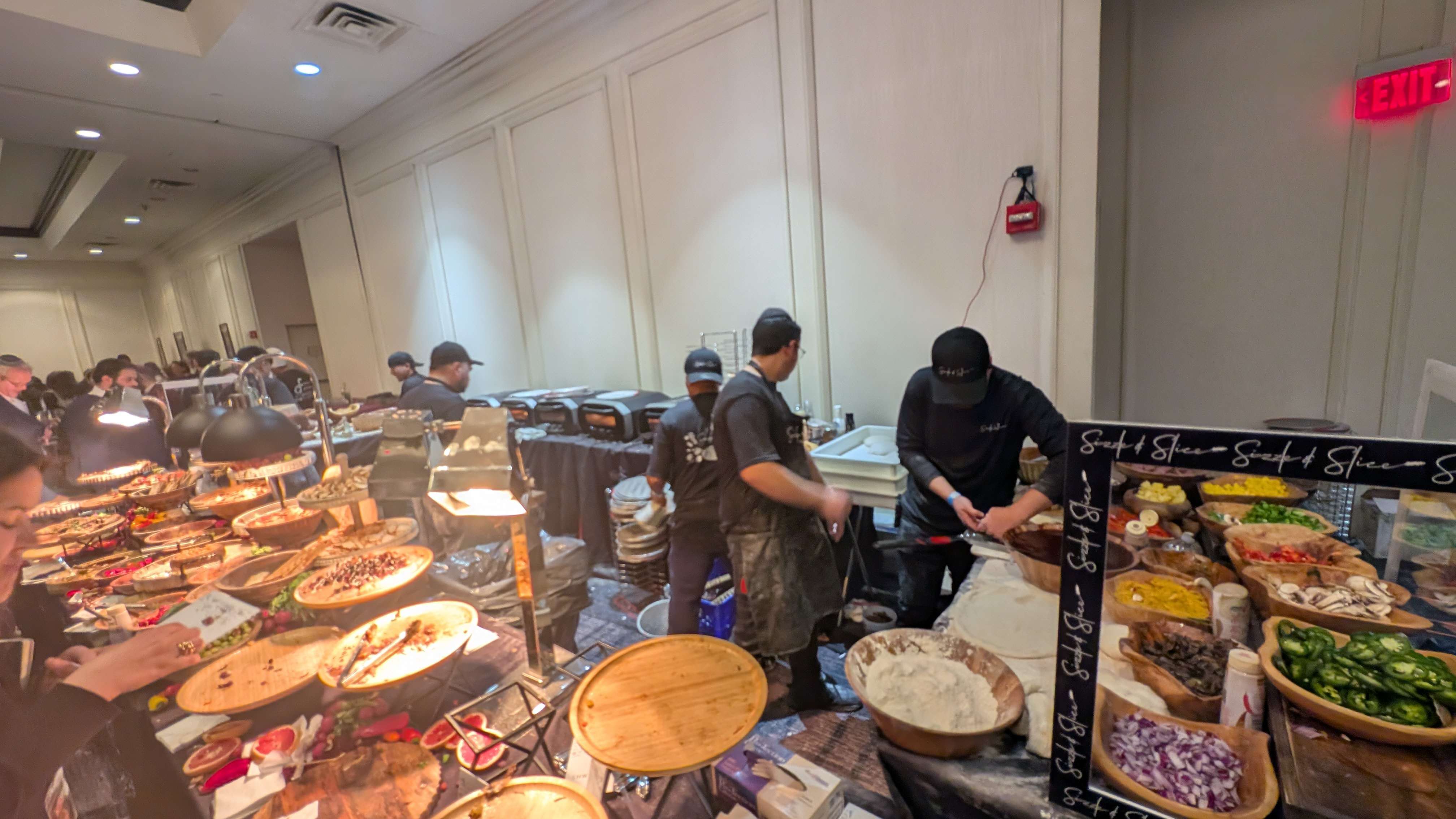
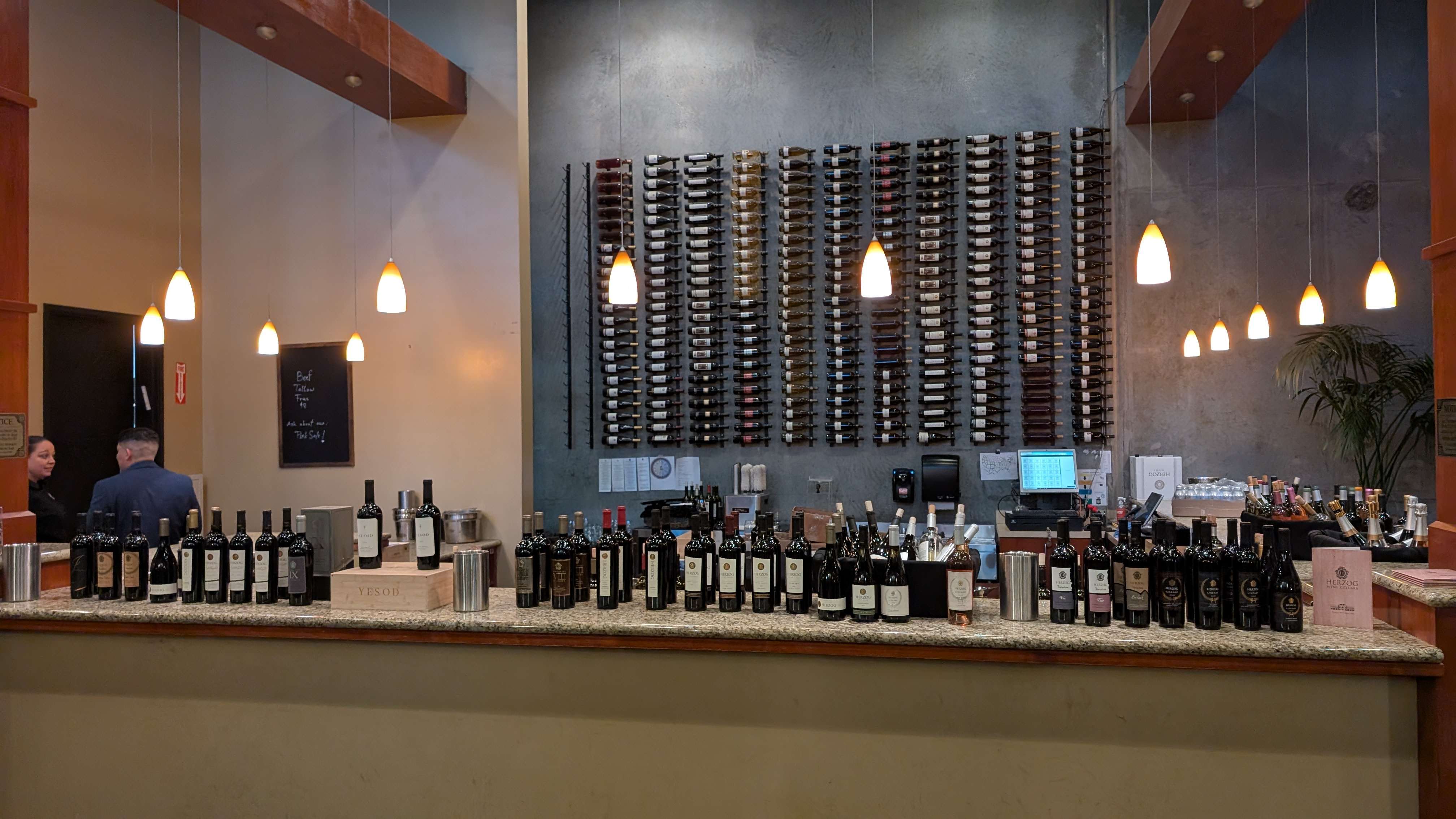
After the perfectly timed, strategized, and executed Kosher Wine Tasting events in 2024, the 2025 events had massive shoes to fill. While there were some clear highlights in 2025, there were also some things missing. We sadly did not have the Jewish Link Wine Guide Grand Tasting, and once again, KFWE chose to do the tasting the day after the Super Bowl. Further, can food stop being a part of these events, period? The food options at KFWE NY/NY were Falafel, Pizza, or fruit. At the KWD event it was cholent? These events are not being presented to most as the Food Extravaganza – that nomenclature should be removed, IMHO.
KWD’s Wine and Food Night


However, let’s zoom in and start talking events. Unlike last year, KWD’s event was first on the list—not last. This was a forced matter because of the return of KFWE LA and the fact that KFWE NJ was hosted the day after the Super Bowl! This forced KWD to have their event the week before. Again, as I spoke about in the preamble post, this was a horrible idea!
Still, I think KWD did a splendid job. I will ignore all food for all of these events because food was a non-factor. In ALL the events, food was essentially a non-starter. The only place that is NOT true was KFWE Oxnard, as the food from Tierra Sur was probably the main event along with Herzog Wines. Still, I will comment on the one word that should never be stated at a wine tasting event – Cholent – even worse, Cholent-Off. Apologies to all the Easties, that is as bad an idea or worse than buying Cholent Thursday night at a 7-11. Maybe next year, forget the food and forget about ideas from a promoter, that is more about himself than the product! Now, let us get to the good stuff!
Let us start with the ONLY things that matter regarding wine tasting. First, the wine glasses were great! There is ZERO point in pouring whatever wines you have and forcing me to taste them in a tiny glass. Bravo! Next, there were no drunk people, at least not by the time I left, which was around 9:15 PM. There was water on all the tables, and the spittoons were emptied somewhat consistently (this was the only minor slight). There were crackers and the tables were not overly packed. When you put this together you have a WINNER!
This year’s KWD was even better wine-wise, IMO. Royal’s wines at the event were mid-level with a few higher-level wines. Royal was able to highlight some real winners, like the 2022 Royaumont, Mevushal, the 2023 Vitkin Pinot Noir, and the excellent ESSA wines. The 2023 ESSA Riesling is quite a wine along with the 2020 ESSA Emunah and the 2022 ESSA Cabernet Franc.
The entire M&M lineup was impressive. That table was the REAL WINNER! M&M continues to impress with solid to great wines. I had already tasted those and posted them; otherwise, I would be screaming their praises.
The wines at Narrow Bridge were nice enough, and I see Josh Klapper’s hand all over them. Good on you all! The wines by Ari had a lovely wine – the 2018 Allegory Cabernet Sauvignon, Mount Veeder, that is a sure BUY IT NOW wine. Sadly, I had to leave and missed the wines from Bam, I had tasted them all before, and I hope to taste them again soon.
Red Garden had a couple of lovely wines. The 2024 Bat Shlomo Sauvignon Blanc is a sure QPR WINNER. The 2024 La Foret Blanche Talpiot, Dry White Wine, is not bad, but is not yet available here.
Happy Hearts also had a lovely wine, the 2024 Puzzle Rose. It is a WINNER. Allied had some nice wines like the 2023 Dalton Wild One and the 2023 Dalton Sauvignon Blanc, Family Collection, which is a WINNER.
River Wine had some lovely Shirah Wines, like the incredible 2021 Shirah Pinot Meunier and others.
Overall, I think the crowds, the passion, and the interest people had in the wines more than in getting drunk made for an enjoyable and successful second event by the KWD crew! Bravo, guys!
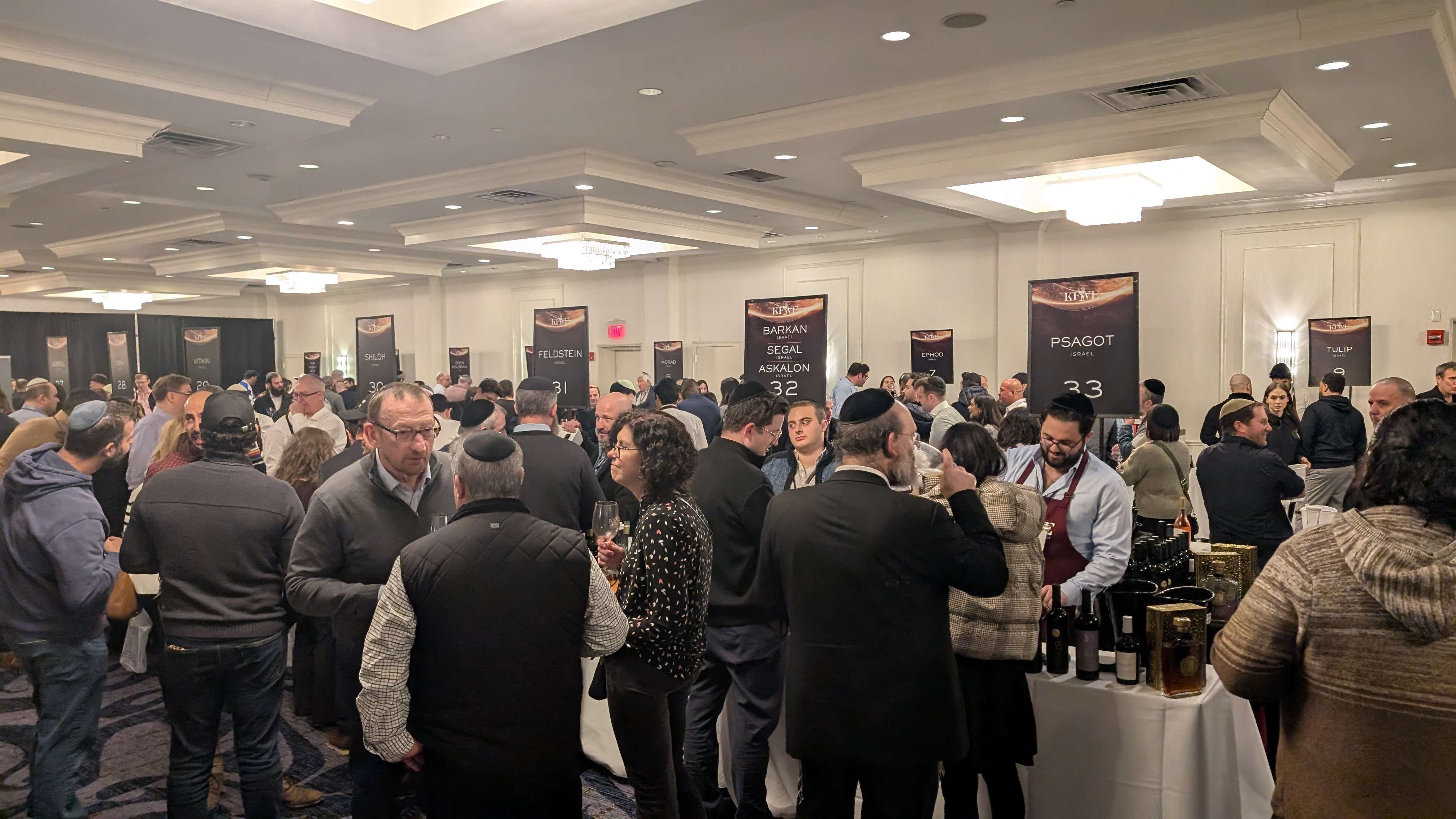
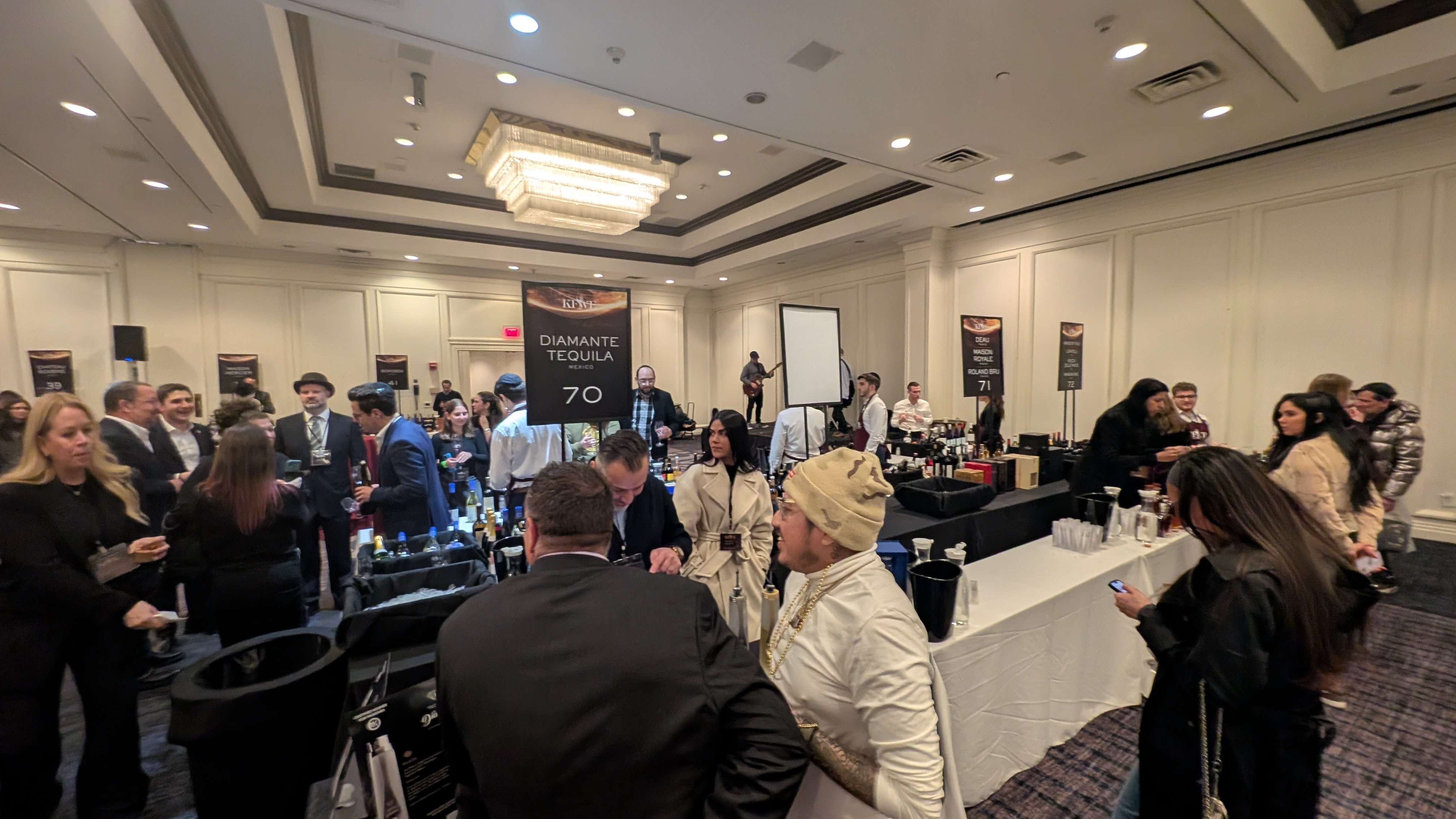
KFWE NY/NJ


The 2022, 2024, and now the 2025 KFWE NY/NJ needs to change the name. I am sorry, guys, there is no Food Extravaganza here. I know, I said it above, and I am repeating myself, but I feel a poor showing of food actually makes the overall event look lackluster. Make more pizza (the only edible food at the event), or just skip the pizza and the food altogether and stop the charades. Worse were the odors of burning dough and frying Garbanzo beans. Try tasting a 2022 Philippe Le Hardi Clos De Vougeot, Grand Cru with Pizza baking in the background. Yeah. If this event is meant to portray the best that Royal Wines has to offer, then let the wine speak and not Pizza (no matter how enjoyable it may be).
Moving past the only real issue, we can move on to the rest of the event, which for me was all roses. As stated above, let us start with the usual list of basic needs for a wine event to work. Let us start with the ONLY things that matter regarding wine tasting. First, the wine glasses were great! There is ZERO point in pouring whatever wines you have and forcing me to taste them in a tiny glass. Bravo! Next, there were no drunk people, at least not by the time I left, which was at closing time. There was water on all the tables, and the spittoons were emptied consistently (at a better rate than at KWD). There were crackers and the tables were not overly packed. When you put this together you have a WINNER! Do not get me wrong, there were far more people at KFWE NJ than at KWD, but overall the flow worked. Finally, unlike previous times at the Hilton (now called something else) – the hall had no lingering smells of new carpet, formaldehyde, paint, or horribly bad smelling cleaning spray or equipment.
This content is for members only. Please Login or Subscribe Here to continue reading!
-

France, January 2025 – Part 1 – Royal
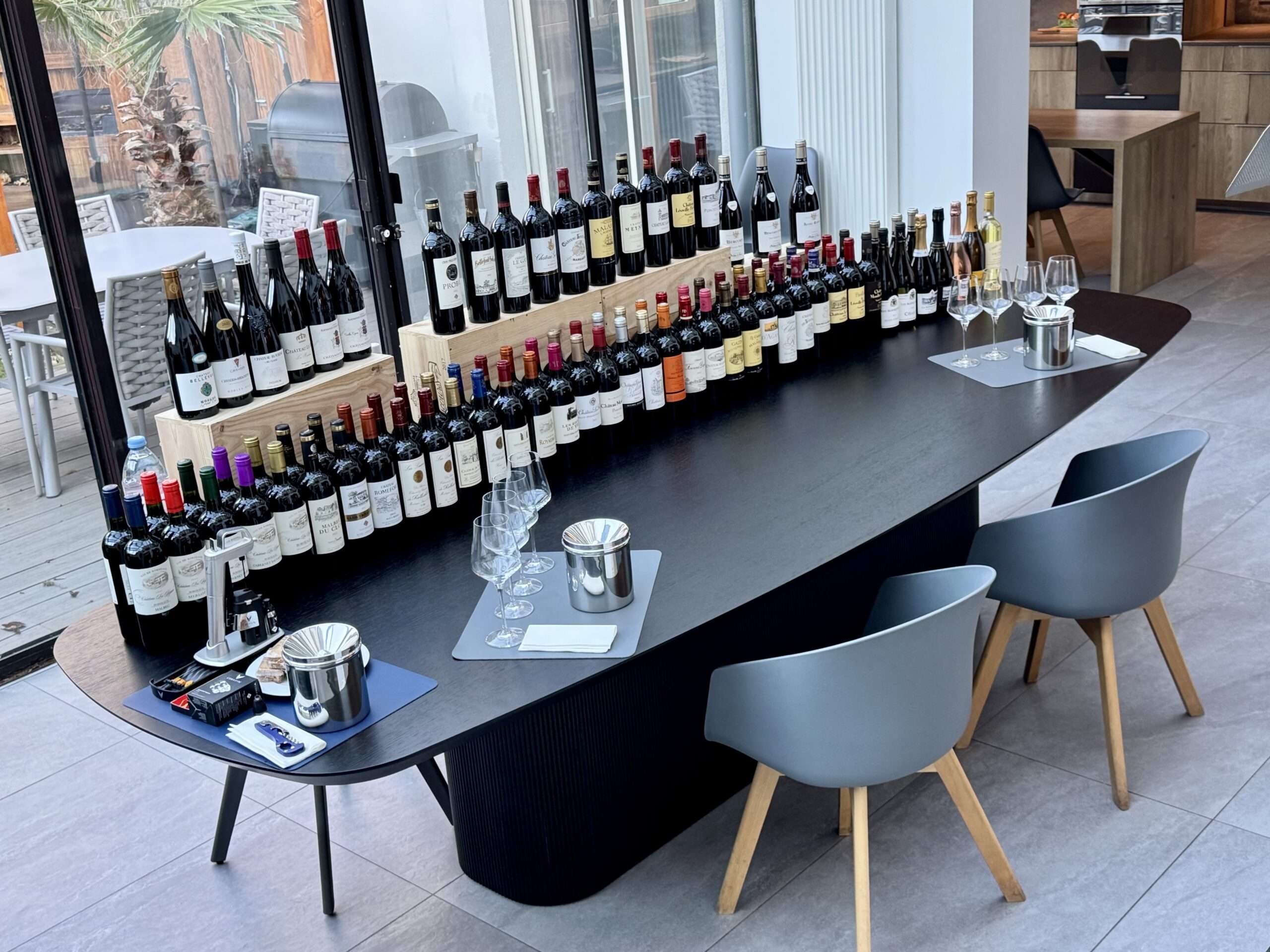
When I first made the decision to bump my visits to France to twice a year, I expected to have less wine to taste per trip. These trips to France are always with my friend David Raccah of Kosher Wine Musings, and he has been doing this twice a year since the start. When I started joining six or seven years ago, I would only come once a year, and often times, in order to accommodate me, we would ask that certain wines be tasted, even though David had already tasted on the last trip. By no means did we retaste all, but here and there – and so I expected the average number of wines that I would taste would drop per trip as they were now spread out over two trips. I was very wrong. Not because of my logic, which was sound, but because Menachem Israelievitch and Royal wines produced an obscene amount of kosher wine for the 2022 vintage. This tasting consisted of an incredible 58 wines and required two full days to complete. Thankfully, 2022 has turned out to be a wonderful vintage for the big Bordeaux wines. I will save my vintage roundup for the end of this series of four posts on this trip, but bottom line – the 2022 big wines are great.
But if I can say a few words specifically about Royal, the sheer number of wines that they produced and the organization and logistics that goes into that is just incredible. Menachem has upped Royal’s game year after year – with no drop in quality at all. There are no “dropped balls.” This is not true of most other kosher producers, most of whom manage a fraction of the production that Mr. Israelievitch does. The win percentage here is incredible. I think there are 40 wines with a score of 91 (or above and of those there are 15 with a 93 or above! I mean WOW. It’s just a stunning showing and just shows that, while Royal has expanded its lineup, it has done so judiciously and with care and we are now reaping the benefits!
This post is late enough (I got back about a month ago but have been buried with work) – so I will skip all of the story telling and maybe just save that for the last post. This one really deserves to be about the wines because they are for the most part phenomenal. Just a couple of words of caution. All of these wines are EXTREMELY young. In fact, as opposed to, let’s say, 2020 where the wines were somewhat enjoyable on release, these wines are far from that. What I am scoring here is based on what I am able to discern from the wine today. Just because a wine gets a 93 does NOT mean it is ready to drink today. Many of these wines will need 10 or even 20 years before they are really hitting their stride – and some even longer. These are the classic French wines of a great vintage that you want to lay down and forget about for a long, long time. I say this because often with the best wines, when they are tasted too soon, they are deeply disappointing. I don’t put drinking windows in my published notes (I am not a Navi and don’t want to be responsible for someone missing the window, as really, this is all just guesswork and an estimation based on experience and in this case a single snapshot of the wine that was tasted at this point in time), but I do keep them for myself – and so if anyone has a question, I am happy to answer it privately – but assume that NONE of the big wines are remotely ready for drinking unless I write otherwise. Also, as I have noted before, some of these tastings are “snapshot” tastings in a very real sense. We are tasting the wine once – and if we are lucky, we can watch it evolve over a couple of hours. But that’s it. Will they change in a year or two? Well, if I had a few days with a wine, I could get a better sense of its evolution – though it would still be imperfect. And of course I am not retasting year after year and posting new notes – unless I just happen to run into an opportunity. In fact, Menachem had us blind taste three wines of the 2021 vintage. I can say that one wine did improve by two points, one wine stayed exactly the same, and one wine dropped a point and a half (and it was a wine I liked!) Now sure – the wine that improved perhaps deserves a better score and the wine that dropped maybe should drop, but it’s not like we got to sit with those wines either – it was just another snapshot tasting – and it just goes to prove my point. No one can 100% predict how a wine will evolve and age. You can only give your best guess – especially with a snapshot tasting such as this. For the most part, I am usually in the ballpark and do not regret my notes. Every once in the while I am surprised that a wine either didn’t live up to or surpassed expectations. Such is life. Lastly while I often make generalizations regarding a given vintage – that doesn’t mean that it a 100% absolute truth for all wines. Having said that – there is vintage typicity. If 2021 had candied Jalapeno notes in MANY (if not most) wines – 2022 has descriptors and characteristics that come up over and over again (ripe, dark, black, sometimes floral, dense, etc.) – and that is something that you cannot escape in Bordeaux.
But I digress – I’ll get back to all of this when I give my vintage wrap up as part of the last post in this series.
Now, on to the notes.
This content is for members only. Please Login or Subscribe Here to continue reading!
1er Cru, 2022 Chateau Roubine, Aloxe-Corton, Baron Edound de Rothschild, Barons Edmond & Benjamin de Rothschild, Blanc de Blanc, Bordeaux, Brut, Cabernet Franc, Cabernet Sauvignon, Cahors, Carte D’Or, Castillon Cotes de Bordeaux, Cave De Tain, Chablis, Champagne, Chateau Bellefont-Belcier, Chateau Bellevue, Chateau Clarke, Chateau d’Agassac, Chateau de Parsac, Chateau Fontenil, Chateau Fourcas Dupre, Chateau Giscours, Chateau Greysac, Chateau La Fleur, Chateau LaGrange, Chateau Larcis Jaumat, Chateau Le Crock, Chateau le Rey, Chateau Leoville Poyferre, Chateau Les Riganes, Chateau Malartic Lagraviere, Chateau Malmaison, Chateau Meyney, Chateau Montviel, Chateau Moulin Riche, Chateau Piada, Chateau Pontet Canet, Chateau Romefort, Chateau Royaumont, Chateau Saint-Corbian, Chateauneuf du Pape, Chevalier de Lascombes, Clos De Vougeot, Clos Triguedina, Cotes de Provence, Crozes Hermitage, Cru Bourgeois, Cru Classe, Cuvee Hautes Terres, Domaine Raymond Usseglio & Fils, Drappier, Fronsac, Gazin Rocquencourt, Grand Cras, Grand Cru Classe de Graves, Grand Cru Classe en 1855, Haut-Medoc, J. de Villebois, La Maison Bleue, Lalande de Pomerol, Le Comte de Malartic, Les Champs Michaux, Les Lauriers de Rothschild, Les Marronniers, Les Roches De Yon, Les Rocheuses, Listrac-Medoc, Malbec, Malbec du Clos, Margaux, Medoc, Mercurey, Merlot, Montagne Saint-Emillon, Morgon, Moulis en Medoc, Pauillac, Pavillon de Leoville Poyferre, Pessac-Leognan, Petit Chablis, Philippe le Hardi, Pomerol, Premier Cru, Premium, Probus, Rose, Royal, Saint Emilion Grand Cru, Saint-Emilion Grand Cru Classe, Saint-Estephe, Saint-Julien, Sancerre, Sauternes, Silex, Vielles Vignes -

The Best and Top 20 Kosher Mevushal wines of 2024
If you have ever wondered what Kosher wine or the Mevushal process is, I made a post these many years ago and nothing has changed about those facts, because Kosher wine is Kosher wine! The Mevushal process has evolved a bit over the years, but the premise is still the same, and the best craftsman in this space are Hagafen Cellars and Herzog Wine Cellars.
Royal Wine Europe does a good job as well, though from time to time, the white wines do not show as well after they go through the Mevushal process. The red wines are indeed done very well.
The whole premise for Mevushal wine is really a U.S. concept. Europe and much of Israel do not care for or need the wine to be Mevushal to serve at restaurants or events. The USA Rabbinic leaders think that there are too many issues and potential concerns at events and restaurants – given the vast number of servers being non-Jewish. As such, they demand Mevushal wines be served at the events. I have been to events where the pourers were all Shomer Shabbat Jews and that is what they do in Europe and Israel, but those are far and few between, here in the USA.
Overall, the 20 Mevushal wines scored higher than my previous post of 2023 options. These top Mevushal wines scored between 92 and 93! The vast majority of these wines come from the Mevushal leader, Herzog, and Hagafen, from the 2021 and 2023 California vintages. This year we have more quality Mevushal wines and we can mainly thank Cali for that!
Last year we introduced the 2021 Covenant Cabernet Sauvignon, Black Label. This year we have its third iteration with the 2023 Covenant Cabernet Sauvignon, Black Label. Not only is it the Mevushal Wine of the Year but it is also a darn good cup of wine! Bravo!
Mevushal – done incorrectly absolutely does cause damage to wine, and I have had many a “cooked” Mevushal wine. However, Herzog and Hagafen do not have these issues. Royal Europe does a good job, but not as well as the previously mentioned wineries. The Covenant Mevushal Cabernet Sauvignon and the Pinot Noir (started in 2023) can be added to that growing list of trustworthy Mevushal Wine Producers.
Also, we do not have examples of Mevushal wines that scored 95 points, again, this is not a cause and effect but rather the issue that people do not yet have Mevushal Pontet-Canet! Mind you, as I stated before, it is not from a lack of desire, on behalf of Royal Wines, they would boil anything to be able to sell more Mevushal wines. Still, so far, of the top wines that I have scored, the highest-scored Mevushal wine is now the 2021 Herzog Cabernet Sauvignon, Alexander Valley, Special Reserve. Besides that bottle, we now have Covenant and the 2022 Royal French wines. Time will tell if we ever get a Mevushal wine with that kind of quality.
More and more wines are Mevushal to meet the needs of restaurants and caterers that want high-end Mevushal wines for their venues and events. The theme of the wines here is mostly Hagafen or Herzog with some smattering of European names as well.
Here is my list of the top 20 Mevushal wines that are available here in the USA. They are listed by score and after that in no particular order. The wine notes follow below – the explanation of my “scores” can be found here and the explanation for QPR scores can be found here:
2023 Covenant Cabernet Sauvignon, Black Label, Sonoma County, CA (M) – Score: 93 (QPR: WINNER)WOW! This is the third Mevushal (Black Label) Covenant Cabernet Sauvignon, and it is lovely! I am also getting used to the amalgamated corks, and I am happy.The nose of this wine is lovely, controlled, ripe, California, creamy, and rich. It shows iron shaving, minerality, rich smoke, tar, anise, black pepper, ripe black and red fruit, lovely pop, and dirt. Bravo. This is the best Mevushal one so far.The mouth of this full-bodied wine is lovely, showing great acidity, nice mouthfeel, creamy and rich, but with good pop, blackberry, plum, cassis, beautiful minerality, graphite, nice smoke, mouth-draping tannin, rich and layered. This is an impressive showing for a Mevushal wine, showing power, plush mouthfeel, finesse, almost elegant (though with all this power it is tough), some sweet oak, but it is not in your face, and nice dirt. Bravo!The finish is long, dirty, ripe, balanced, with sweet tobacco, milk chocolate, graphite, and lovely tannin/acidity. Bravo!!! Drink until 2034. (tasted January 2025) (in San Jose, CA) (ABV = 14.8%)
This content is for members only. Please Login or Subscribe Here to continue reading!
American Oak, Barolo, Baron Edmond de Rothschild, Black Label, Brut, Cabernet Franc, Carte D’Or, Chalk Hill, Champagne, Chardonnay, Chateau Royaumont, Chenin Blanc, Covenant Cabernet Sauvignon, Double Creek, Drappier, Elviwines, Generation VIII, Hagafen Winery, Herzog Cellars Winery, Lake County, Luzzatto, Merlot, Napa Valley, O’dwyers Creek, Pinot Noir, Prix Reserve, Sauvignon Blanc, SIBLINGS Mesorah, Special Edition, Special Reserve, Top Mevushal Wines -

The Top and Best 34 QPR Kosher Wine WINNERS of 2024
In May 2020 I wanted to drive home the need for QPR (Quality to Price Ratio) wines. So I set out to create what I thought a QPR metric should be! Gone were arbitrary price ranges and such. Instead, I let the market define what the QPR price range should be. I did this by grouping the wines by their type (white, red, rose, sparkling, and dessert) and then further refined the grouping by age-ability within the white and red wines. This gave me the following groups:
- Drink “soon” White Wine (Simple whites)
- Rose Wine (always drink soon)
- Drink “soon” Red Wine (Simple reds)
- Mid-range aging Reds (4 to 11 years)
- High-end Red wines (11 and more years)
- High-end White wines (7 and more years)
- Sparkling Wine (No need here for extra differentiation)
- Dessert Wine
I then made the mistake of trying to create an Orange wine range/group – that was a HUGE mistake. Again, the wines themselves were not the issue, the issue revolved around trying to group such a small sample set into its group. They will go into their respective white wine category, next year.
Throughout the year, I posted many QPR posts, for almost all of the main categories. I will continue down this road until I find a better way to categorize and track wines that are QPR WINNERS. Talk about WINNERS, that secondary QPR score was a 2.1 revision to my QPR scoring, and that is explained in this post. All the wines listed here are QPR WINNERS from my tastings in 2023.
Let us discuss the approach
I have heard from a few of you. I do not understand your QPR (Quality to Price Ratio) scoring. So, let us take another shot at this! Every time a customer comes into a shop or goes online to buy kosher wine, they have a choice of a few thousand wines, online, or many hundreds in a store. The question is how does a buyer differentiate one wine from the next?
If they like Terra di Seta wines, as I do, and it costs 30 dollars, then he/she will compare other wines to that wine, in regards to the wine and the price. That is the same for any wine they like and any wine they are looking at buying. Price matters! Now, the real question is how can you compare two wines to each other. Any two wines in the world of kosher wines? What characteristics can you use to compare them?
Let us say they like the 2022 Elvi Wines Clos Mesorah. It is a red wine from Montsant, Spain. OK, what other wine can you compare with it? You can compare other Montsant kosher wines, like the Cellar Capcanes wines. However, the Cellar Capcanes wines have an issue – they have been poor for many years! As the ratio states it is QUALITY to price! Quality is primary; once you have a good wine, you can compare it with similarly good wines.
OK, so we need equal or comparably equal quality and that is it??? So, let us say there exists a rose from Montsant that scores the same quality score as Clos Mesorah, are they comparable (by the way no such wine exists!)? What about a white wine – same? Can/should someone compare them? The answer is no, of course. People will compare similar items. OK, are we then forced to compare ONLY Montsant wines with Montsant wines? Of course not, that is NOT how people think. People will compare like-scored red wines with like-scored red wines. Further, there are literally SIX Monstant Kosher red wines on the market. How can one compare six wines to each other? It has no value.
So, the question remains how do we compare two wines? What criteria can we use to compare them? The first step is for us to agree that people will compare wines that are similar in style, but not in locale, region, or price. So what is that characteristic that they will use to compare two arbitrary kosher wines? Price IS NOT the answer.
So, let us recap – we have two similarly scored wines (AKA quality) but they are very different in many ways. Let us look at three of the wines below, two of which are from the greater Medoc region:
- 2022 Chateau d’Agassac Cru Bourgeois, Haut-Medoc – Score: 93+ (QPR: WINNER)Drink until 2038
- 2022 Chateau Fourcas Dupre, Listrac-Medoc – Score: 93 (QPR: WINNER)Drink from 2034 until 2040
- 2022 Chateau Royaumont, Lalande de Pomerol – Score: 93 (QPR: WINNER)Drink from 2030 until 2038
These wines sell for between 38 dollars and 60 dollars. So, are these wines comparable? I would state they are, and further state that wine buyers compare them every time they read my lists and other lists that like these wines. Again, the primary requirement is quality – these all scored roughly the same quality score.
So, next, would you at least compare two Medoc wines to each other? The Chateau Fourcas Dupre and the Chateau d’Agassac? I would say yes for sure. Well, why is the Royaumont any different? Of course, they are very distinct wines, but in the end, what do oenophiles buy such wines for?? To store them and share them at a later date, meaning that wine buyers classify wines by regions, but ultimately they classify them by their ability to age gracefully or not! This means some wines age beautifully, and many will be good to enjoy in the coming years.
So, now you see the logic to the categories I use to compare wines – this is the list once again:
- Drink “soon” White Wine (Simple whites)
- Rose Wine (always drink soon)
- Drink “soon” Red Wine (Simple reds)
- Mid-range aging Reds (4 to 11 years)
- High-end Red wines (11 and more years)
- High-end White wines (7 and more years)
- Sparkling Wine (No need here for extra differentiation)
- Dessert Wine
Essentially, ignoring sparkling, rose, and dessert wines, there is white wine and red wine. Each of those two major categories is broken into their age-ability. Red wines have three age ranges while white wine has two. Then there are the other three aforementioned groups, rose, sparkling, and dessert wines.
Once you have scored a wine – IRRELEVANT to the price – this is KEY, you must place that wine into one of the 8 categories listed above. Once you have done that, any wine in that category is available for comparison. Using the median approach, wines are stacked and ranked by their price, within that category, and some rise above others, by having an equal or better quality for a lower or equal price. Please read more about this here and here.
The Summary
Before we get to the list of the best QPR wines for this past year, I wanted to give you some raw stats. I tasted more than 1200 wines this past year. In actuality, it is probably far more, I just did NOT care to write notes on hundreds more because all it would have said was NO. I made sure to taste all the Israeli wines at three KFWE, and while some were worthy of notes, none garnered these scores. The pain was all I remember. In the end, 188 wines were scored with a QPR score of WINNER, for the blog year 2024.
I have stated it over and over again now, there is no way we can buy all the good wines out there unless you have a local warehouse to store them and you drink two or more bottles a day. That is the excellent news about Kosher Wine today! I hope we have not yet hit peak QPR WINNER Wine.
This year, the list came to a total of 34 names, and none had to dip below 93 in the scores, which is a large number and better scores overall than last year, but again, the pool from where they are culled continues to grow, and the diamonds in the rough are getting harder and harder to find. This year, there are 34 or so QPR WINNERS who scored 93 this year but not in a single area.
The 4 regions that encompass the 34 WINNERS are in order of size, France (27), Spain (4), USA (2), and Hungary (1). Within France, it is not all Bordeaux! There are wines from Bordeaux, Burgundy, and Chateauneuf du Pape.
Of the 34 WINNER, 4 of them are white, 28 are red, and 2 are sweet. However, at the lower price and quality QPR WINNERS (think 20 dollars 91 scoring wines), you will find that white wines are the majority!
This year we have 9 wines that are a WINNER in Europe and the rest of the world and NOT in the USA.
- The 2020 Chateau Haut Brisson) is because of pricing here in the USA.
- The 2023 Domaine Raymond Usseglio & Fils Chateauneuf du Pape, Blanc is not the same here in the USA as it is in Europe. I have no idea what happened to it but the quality is vastly different.
- The 2021 Tokaj-Hetszolo Tokaji Aszu 6 Puttonyos is because of pricing here in the USA.
- The 2020 Chateau Haut Brisson is because of pricing here in the USA.
- The 2022 Chateau Royaumont is because the wine is Mevushal here and not as good, though still a WINNER, but not at the same quality.
- The 2022 Les Roches De Yon-Figeac is because the wine is Mevushal here and not as good.
- The 2022 Chateau Gazin Rocquencourt is because the wine is Mevushal here and not as good.
- The 2022 Chevalier de Lascombes is because the wine is Mevushal here and not as good.
- The 2022 Château Olivier Grand Cru Classe is because of pricing here in the USA.
- The 2022 Chateau Haut-Marbuzet is not available at all here in the USA.
Sadly, there were no new Sparkling or Rose wines to make it to the score of 93 and to meet its counterpart pricing. To me this is a HUGE issue in the kosher wine market! The kosher wine market has lifted up one of the previous sad wine categories, white wine! Which is HUGE! Sadly, we have not moved from there. We have a dominating red and white kosher wine scene. What is lacking sorely, is quality, sparkling wines! The rose wines will never reach the upper echelons, at least in the Kosher wine markets! However, there is actual demand for sparkling wines, and sadly, the products being sold are nice, but the prices are too high, or the quality is too low.
Maybe, Avi Davidowitz, from Kosher Wine Unfiltered, can create a list like that for Israel, this year, a bunch of wines became available there, and a proper QPR list would be worthwhile!
The wines on the list this year are all available here in the USA, and in Europe, and a few can be found in Israel, as well. The wine notes follow below – the explanation of my “scores” can be found here and the explanation for QPR scores can be found here:
2022 Elvi Wines Clos Mesorah Garnatxa, Montsant – Score: 95 (QPR: WINNER)The nose of this wine is lovely. It pops with intense brightness, followed by a massive attack of ripe but controlled fruit, dense minerality, rich salinity, intense graphite, lovely cloves, cinnamon, warm spices, loam, dirt, earth, lovely raspberry, strawberry, and ripe/bright red berries. WOW! With time, the wine becomes even more complex, showing floral notes, ripe fruit, and lovely sweet spices. Bravo!The mouth of this medium-bodied wine is so elegant, complex, and singular in grape, and there is nowhere to hide in this bottle; it is complex, lithe, rich, and layered but intensely refreshing. This wine is the Pinot Noir of the Rhone and Spain; there is nowhere to hide, and yet the wine is so impressive. This wine is pure black magic; it is ripe, lithe, tart, acidic, elegant, and dirty, all in the same glass, and yet this is a wine that does not exist in Kosher. Sure, there are lovely blends, but a wine this ripe that is also elegant, lithe, and smoky, you want to drink it all!The mouth is lovely, ripe, layered, elegant, and toasty, with sweet spices, lovely raspberry, and strawberry, nice umami, really fun, expressive, and captivating; it is so unique and special, with umami, and mouth-drawing elegance, WOW! Bravo! The finish is long, dirty, earthy, smoky, and umami-dense, with great graphite and ripe, mouth-draining tannin. Dirt, minerality, graphite, ripe and tart red fruit, and intense acidity linger long. Drink from 2030 until 2036. (tasted December 2024) (in Clos Mesorah, Spain) (ABV = 15%)
This content is for members only. Please Login or Subscribe Here to continue reading!
6 Puttonyos, Black Label, Blanc, Bourgogne, Chateau d’Agassac, Chateau Fayat, Chateau Fourcas Dupre, Chateau Gazin Rocquencourt, Chateau Haut-Brisson, Chateau Haut-Marbuzet, Chateau LaGrange, Chateau Malartic Lagraviere, Chateau Marquis d'Alesme Becker, Chateau Montviel, Chateau Moulin Riche, Chateau Olivier, Chateau Puyblanquet, Chateau Rayne Vigneau, Chateau Royaumont, Chateau Teyssier, Chateau Trianon, Chevalier de Lascombes, Clos Mesorah, Covenant Cabernet Sauvignon, Covenant Winery, Domaine de Chevalier, Domaine du Chateau Philippe le Hardi, Domaine Raymond Usseglio & Fils, Echo de Roses Camille, el26, Elviwines, Four Gates Winery, Garnatxa, Hautes-Cotes de Beaune, Herenza Reserva, Jean-Philippe Marchand, L'Esprit de Chevalier, Le Nardian, Les Roches De Yon, Madame de Rayne, Nuits Saint Georges, Pinot Noir, Tokaj-Hetszolo, Tokaji Aszu, Top QPR Wines -

The Best and Top 25 Kosher Wines of 2024, including the Wine of the Year, Winery of the Year, the Best Wine of the Year, the Best Mevushal Wines of the Year, and Best QPR Wine of the Year Awards
First, I must start this by saying I am sorry for this being two months late. The late tasting of the 2022 wines in Paris pushed all the dates forward. Such is life! It was worth tasting those wines in their correct place. As stated below, I love at KFWE, but it is not a place to taste wines for a blog or a post. It is a place to taste wine and know if I should taste it in the correct setting. It is an excellent filter to help fine-tune the wines to sit down with.
Like last year, I wanted to make this post short and sweet – so the criteria are simple. I could care less about price, color, or where it was made. All that matters is that it is/was available this year sometime to the public at large, that I tasted it in a reliable environment, not just at a tasting, and that it scored a 94 or higher. PLEASE NOTE the improved quality of the top wines this year! This is the best year – that I have posted about – in regards to scoring. All 25 wines are 94 or above. The closest we had before was the 2021 blog year, which had a fair number of 93+ scored wines.
We are returning with the “Wine of the Year,” “Best Wine of the Year,” “Winery of the Year,” “Best White Wine of the Year,” “Best QPR Wine of the Year”, along with the – “Best Mevushal Wine of the Year.” Wine of the Year goes to a wine that distinguished itself in ways that are beyond the normal. It needs to be a wine that is readily available, incredible in style and flavor, and it needs to be reasonable in price. It may be the QPR wine of the year, or sometimes it will be a wine that has distinguished itself for other reasons. The wines of the year are a type of wine that is severely unappreciated, though ones that have had a crazy renaissance over the past two years. The Best Wine of the Year goes to a wine well worthy of the title.
The Mevushal wine of the year is something I dread. I understand the need for a wine that can be enjoyed at restaurants and events. Still, when we start seeing Château Gazin Rocquencourt and Chevalier de Lascombes go Mevushal – we know we have a problem. As I have stated in the past, if this is what needs to happen, then please sell both options as many do with Peraj Petita/Capcanes, Psagot wines, and many others. Still, it is a wine; as such, it needs a best-of-the-year moniker, so we do it again!
This past year, I tasted more wines than I have ever, in the past. Now, to be clear, I tasted thousands of Israeli (and other) wines but did not write notes on them. At this point, I refuse to post notes that demean the Israeli wine situation. I understand that goes against my long-term stance, but the situation there also goes against any logical or even human stance. As such, if the wine is good, I post. Otherwise, I am not adding value. I still think, long-term, Israel needs to change its winemaking style. However, as long as folks buy the wines, they will stay as they are. Enough said.
I spent a fair amount of time tasting all the US, French, Southern Hemisphere, and European wines I could get my hands on, and I feel that is where I added the most value, IMHO. For those who like the Israeli wine style – other writers/bloggers can point you in some direction. Thankfully, the 2022 vintage did pull up the overall quality from Europe, so we have some good options.
There are wines from the 2018 and 2020 Bordeaux vintages that snuck in, along with many from the 2022 vintage. Also, there are wines from around the United States and Europe. There are even a couple from the 2021 Bordeaux vintage. This proves wrong the idea that all of the 2021 vintage was a waste of time.
Now, separately, I love red wines, but white wines – done correctly, are a whole other story! Sadly, in regards to whites, we still had no new wines from Germany, still. Thankfully, we have some fantastic entries from ESSA, Domaine de Chevalier, Marciano Estates, Chateau de Rayne Vigneau, Domaine Raymond Usseglio & Fils, Chateau Gazin Rocquencourt, and Le Nardian. Some of these wines that scored well were ONLY the French versions. The USA versions of Chateau Gazin Rocquencourt are Mevushal and the Domaine Raymond Usseglio & Fils – it is a very different animal than what I tasted/enjoyed in Paris. However, they all scored a 93 or lower, and I do not see the point in putting a white wine in – just to cover that base. Therefore, this year, I am going with the “white” 2021 Tokaj-Hetszolo Tokaji Aszu 6 Puttonyos, Tokaj. I hope to post a roundup soon of the top white wines out there like I did last year.
The wines on the list this year are all available here in the USA, and in Europe, and a few can be found in Israel, as well. The wine notes follow below – the explanation of my “scores” can be found here and the explanation for QPR scores can be found here:
The 2024 Kosher Winery of the Year
This award continues to get harder and harder each year. The sad, cold, hard truth is that there are too few great kosher wineries. When I started this award some five years ago, I thought it would only get easier. Sadly, there are a few truths that limit my ability to give out this award.
First, as much as we have been blessed with great Kosher European wines in the past 6 years, most of those blessings come under the auspices of single-run kosher wines. Chateau Leoville Poyferre, Château Smith Haut Lafitte, you name it, are all based upon kosher runs. What we have in Europe, kosher-winery-wise, is Terra di Seta, Cantina Giuliano, and Elvi Wines (including Clos Mesorah), Domaine Roses Camille, which only became 100% kosher in 2020. Still, for all intent and purpose, Domaine Roses Camille has been producing the vast majority of their wines in kosher since 2011.
The requirements to receive this award are simple, the winery must be kosher, not a kosher-run, the quality must be consistent, and the wines must be readily available. The last requirement is the main reason why Four Gates Winery has yet to win the award, but at this point, it is only a matter of time, as kosher wine availability is becoming less of an issue overall, given the sheer number of cult-like kosher wineries that exist today. Also, I may be forced to start playing with percentages instead of wholly kosher wineries if the people understand what I mean.
This year’s winner starts to break down one of my unspoken laws. Never give awards to one of your best friends, but Josh and Chana Rynderman have forced my hands. No, they have not done so physically or even by voice; it is all in their work. This award is worthy on so many levels. I have written about ESSA Wine before, as well as Kos Yeshuos Winery. Both are worthy of this award, and one could not exist without the other.
It is crazy to think that Kos Yeshuos started “unofficially” in 2015! I was not even scoring wines with numbers back then! Ten years ago, Kos Yeshuos made a lovely Vin Gris from Cabernet Sauvignon, and the game was afoot! From there, he made wine for sale in 2016, the first “official” vintage of Kos Yeshuos, with two reds, a Syrah and a Grenache (I had just turned over to numerical scores and started to dabble with QPR). The 2016 Syrah was excellent last year!
This content is for members only. Please Login or Subscribe Here to continue reading!
6 Puttonyos, best kosher wines, Black Label, Cabernet Sauvignon, Chateau Fayat, Chateau Haut-Marbuzet, Chateau La Gaffeliere, Chateau LaGrange, Chateau le Gay, Chateau Leoville Poyferre, Chateau Malartic Lagraviere, Chateau Marquis d'Alesme Becker, Chateau Moulin Riche, Chateau Olivier, Chateau Pontet Canet, Château Pontet Labrie, Clos Mesorah, Covenant Cabernet Sauvignon, Domaine Roses Camille, Domaine Roses Louise, Echo de Roses Camille, el26, Elviwines, ESSA Wine Co., Four Gates Winery, Garnatxa, Gevrey Chambertin, Jean-Philippe Marchand, La Rochelle, Marciano Estate, Merlot, Sublim, Tench Vineyards, Tokaj-Hetszolo, Tokaji Aszu, Top 10, top kosher wines
-

ESSA Wine’s latest wines – May 2025
Share This:
Like This:
Altira, Blanc Fume, Cabernet – Merlot, Cabernet Franc, Cabernet Sauvignon, Emunah, ESSA Wine Co., Malbec, Petit Verdot, Seaside Riesling, SemillonNo comments on ESSA Wine’s latest wines – May 2025 -

Seder 2025
Share This:
Like This:
-
France, January 2025 – Part 3 – The Wines of Christophe Bardeau
Share This:
Like This:
-
France, January 2025 – Part 2 – IDS
Share This:
Like This:
-

The Best/Top kosher wines for Passover 2025 in all price ranges
Share This:
Like This:
-
Kosher Wine Tasting events of 2025 – Wrap-up
Share This:
Like This:
-

The Top and Best 34 QPR Kosher Wine WINNERS of 2024
Share This:
Like This:
6 Puttonyos, Black Label, Blanc, Bourgogne, Chateau d’Agassac, Chateau Fayat, Chateau Fourcas Dupre, Chateau Gazin Rocquencourt, Chateau Haut-Brisson, Chateau Haut-Marbuzet, Chateau LaGrange, Chateau Malartic Lagraviere, Chateau Marquis d'Alesme Becker, Chateau Montviel, Chateau Moulin Riche, Chateau Olivier, Chateau Puyblanquet, Chateau Rayne Vigneau, Chateau Royaumont, Chateau Teyssier, Chateau Trianon, Chevalier de Lascombes, Clos Mesorah, Covenant Cabernet Sauvignon, Covenant Winery, Domaine de Chevalier, Domaine du Chateau Philippe le Hardi, Domaine Raymond Usseglio & Fils, Echo de Roses Camille, el26, Elviwines, Four Gates Winery, Garnatxa, Hautes-Cotes de Beaune, Herenza Reserva, Jean-Philippe Marchand, L'Esprit de Chevalier, Le Nardian, Les Roches De Yon, Madame de Rayne, Nuits Saint Georges, Pinot Noir, Tokaj-Hetszolo, Tokaji Aszu, Top QPR Wines -
The Best and Top 25 Kosher Wines of 2024, including the Wine of the Year, Winery of the Year, the Best Wine of the Year, the Best Mevushal Wines of the Year, and Best QPR Wine of the Year Awards
Share This:
Like This:
6 Puttonyos, best kosher wines, Black Label, Cabernet Sauvignon, Chateau Fayat, Chateau Haut-Marbuzet, Chateau La Gaffeliere, Chateau LaGrange, Chateau le Gay, Chateau Leoville Poyferre, Chateau Malartic Lagraviere, Chateau Marquis d'Alesme Becker, Chateau Moulin Riche, Chateau Olivier, Chateau Pontet Canet, Château Pontet Labrie, Clos Mesorah, Covenant Cabernet Sauvignon, Domaine Roses Camille, Domaine Roses Louise, Echo de Roses Camille, el26, Elviwines, ESSA Wine Co., Four Gates Winery, Garnatxa, Gevrey Chambertin, Jean-Philippe Marchand, La Rochelle, Marciano Estate, Merlot, Sublim, Tench Vineyards, Tokaj-Hetszolo, Tokaji Aszu, Top 10, top kosher wines