• The 2020 Kosher rose season is open and once again I am underwhelmed – part 1

    It is not yet summer but here in NorCal, it feels more like summer than spring, and the weather is making shipments really hard at this time of year. Normally, I would have been in Israel by now, one way or the other, and I would have at least had two tastings with the gang. Sadly, with the times we live in now, neither of those wonderful ideas is possible. Sad and strange days we live in. Also, this is round 1, there will be another 15 roses I will get through over the next week or so.

    While rose wine in the non-kosher market is exploding – especially Rose wine from Provence; a wine region of France, the kosher market this year will be more subdued. In the past, distributors brought in as much as 60+ kosher rose wines, this year with the issues I brought up in my previous post – there is less of an appetite for all those wines.

    QPR and Price

    I have been having more discussions around my QPR score with a few people and their contention, which is fair, in that they see wine at a certain price, and they are not going to go above that. So, instead of having a true methodology behind their ideas, they go with what can only be described as a gut feeling. The approaches are either a wine punches above its weight class so it deserves a good QPR score. Or, this other wine has a good score and is less than 40 dollars so that makes it a good QPR wine.

    While I appreciate those ideals, they do not work for everyone and they do NOT work for all wine categories. It does NOT work for roses. Look, rose prices are 100% ABSURD – PERIOD! The median rose price has gone up this year and it is around 22 bucks – that is NUTS! Worse, is that the prices are for online places like kosherwine.com or onlinekosherwine.com, with free or good shipping options and great pricing, definitely not retail pricing.

    As you will see in the scores below, QPR is all over the place and there will be good QPR scores for wines I would not buy while there are POOR to BAD QPR scores for wines I would think about buying, based upon the scores, but in reality, I would never buy another bottle because the pricing is ABSURDLY high.

    Also, remember that the QPR methodology is based upon the 4 quintiles! Meaning, that there is a Median, but there are also quintiles above and below that median. So a wine that is at the top price point is by definition in the upper quintile. The same goes for scores. Each step above and below the median is a point in the system. So a wine that is in the most expensive quintile but is also the best wine of the group gets an EVEN. Remember folks math wins!

    Still, many of the wines have a QPR of great and I would not buy them, why? Well, again, QPR is based NOT on quality primarily, it is based upon price. The quality is secondary to the price. So, wines that are drinkable with an 88 or 89 score, though wines that I would not buy, have a low enough price to get a GOOD or GREAT score. Does that mean that I would buy them because they have a GREAT QPR? No, I would not! However, for those that really want roses, then those are solid options.

    Please remember, a wine score and the notes are the primary reason why I would buy a wine – PERIOD. The QPR score is there to mediate, secondarily, which of those wines that I wish to buy, are a better value. ONLY, the qualitative score can live on its own, in regards to what I buy. The QPR score defines, within the wine category, which of its peers are better or worse than the wine in question.

    Finally, I can, and I have, cut and paste the rest of this post from last year’s rose post and it plays 100% the same as it did last year. Why? Because rose again is horrible. There is almost no Israeli rose, that I have tasted so far, that I would buy – no way! Now, I have not tasted the wines that many think are good in Israel, the Netofa, Vitkin, and Recanati roses. Yes, there is ONE rose I would “buy” by my qualitative scoring approach, which is why I used the word almost above. That wine would be the 2019 Bat Shlomo Rose, but at some 28 or more dollars a bottle, it is highway robbery for that score.

    This content is for members only. Please Login  or Subscribe Here to continue reading!

    Like This:

    , , , , , ,
    3 comments on The 2020 Kosher rose season is open and once again I am underwhelmed – part 1
  • Terra di Seta keeps on crushing it with another great QPR wine – the 2015 Terra di Seta Chianti Classico, Gran Selezione, Assai

    Another week and another home run by Terra Di Seta. Last week I posted how the 2018 Terra di Seta Chianti Classico was a great QPR wine and this week it is the same story, different wine. This week we are talking about the 2015 Terra di Seta Chianti Classico, Gran Selezione, Assai.

    Many people know this wine as the Assai wine, but that is kind of like knowing Mike Trout as a baseball player and not one of the best, but really quiet, baseball players on the planet. The point here is that yes, Terra di Seta called this wine Assai, but it is a Chianti Classico Gran Selezione! This is not a simple or trifle matter. Sadly, this is the only kosher Chianti Classico, Gran Selezione, but thankfully, it happens to be a great wine, year after year, other than the 2012 vintage, which I was not a fan of.

    Interestingly, Chianti Classico Gran Selezione only came into reality a few years ago, 2014 to be exact. Terra di Seta’s first Chianti Classico Gran Selezione, was in 2011, which was 30 months prior to 2014 when the new D.O.C.G designation came into reality. The rules for Chianti Classico Gran Selezione are simple. First, the vines have to be the best of the best of the winery’s vines that MUST be inside of Chinati Classicop’s region. Next, it must have aged in the cellar for 30 months. That does NOT mean the wine was aged 30 months in barrels, what it means is that it must lie in the cellar, whether in barrel or bottle for at least 30 months. Also, there are some non-kosher wines that have the Gran Selezione designation for wines made back in 2007 and maybe earlier. All it means is that the winery followed the requirements that meet the designation, even if the destination was not in effect at that time.

    Drinking Window

    This wine may well have been released now, but please, I beg you not to drink it. It is not even close to being ready. I have the window opening in three years and I do not think it will be enough. It may require 2024 to be a good starting window. This wine is painfully young, the tannin, acidity, and overall structure, and yes, the fruit, are unbearable. I do not mind drinking young wines, but this wine scared me to no end. The fruit was so overbearing within the first 12 hours that it was shocking. My notes are all down below, you can clearly read how shocked I was. However, once the wine’s aromas and fruitiness calmed down, the brilliance of Chianti Classico came through. Beware of the drinking window PLEASE!

    QPR Greatness

    So, before, I sign off on this post and drop the score and wine notes, I will once again bring up the subject of QPR, a post that keeps on giving. These past two wine posts, both from terra di Seta, are the perfect examples for what QPR is all about, and how my new scoring system works.

    This content is for members only. Please Login  or Subscribe Here to continue reading!

    Like This:

    ,
    4 comments on Terra di Seta keeps on crushing it with another great QPR wine – the 2015 Terra di Seta Chianti Classico, Gran Selezione, Assai
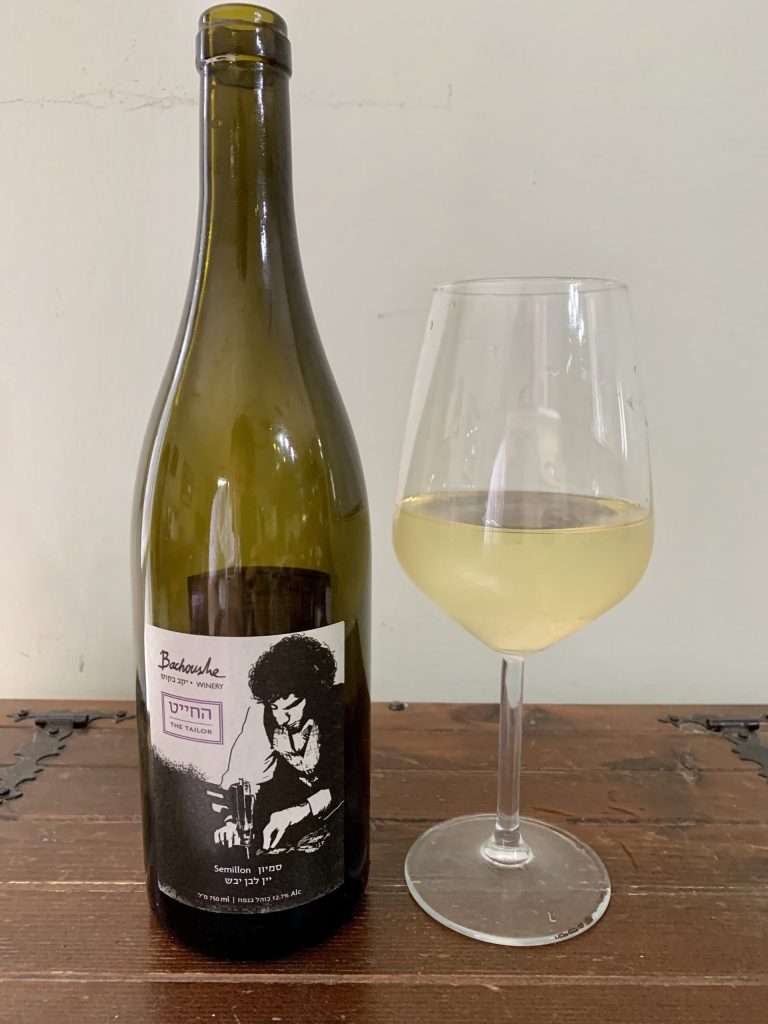
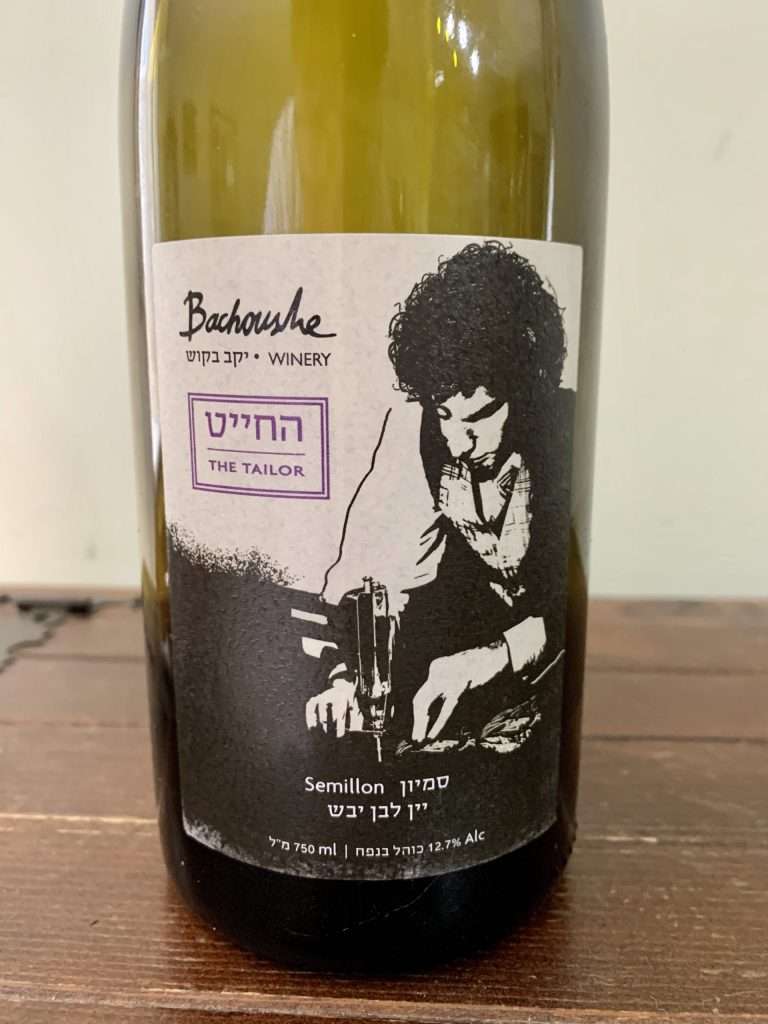
  • 2017 Backoushe Winery The Tailor Semillon

    2017 Backoushe Winery The Tailor Semillon – and a possible future change in the way I score
    It’s been a while since I wrote a straight wine review – months in fact. I am sorry for that. Not sure if that is going to change any time soon as I am really trying to evaluate whether or not to change my scoring system after some intense conversations on methodology with my friend David Raccah, which resulted in this post on his kosherwinemusings.com site.

    There are a number of things holding me back from switching my rating system. First – in Israel, there are no massive online stores that sell everything (or almost everything – like there are in America. Pricing and availability varies GREATLY depending on which store you buy from. And quite frankly there are few stores that I trust with storage even on recently released wines. I have witnessed wine stores getting delivery and the cases of wines sitting outside in the heat for hours until someone brings them in. This leads me to often buy direct from the winery – which sometimes is more expensive – or to frequent the same stores that I trust. In any event, the playing field is much more complex in terms of determining mean price.

    All if this is a preamble to say that until I figure out how to get the data I need, I will likely just use my current system, which counts value as a factor in the final score. And now – on to the wine in question.

    This content is for members only. Please Login  or Subscribe Here to continue reading!

    Like This:

    No comments on 2017 Backoushe Winery The Tailor Semillon – and a possible future change in the way I score
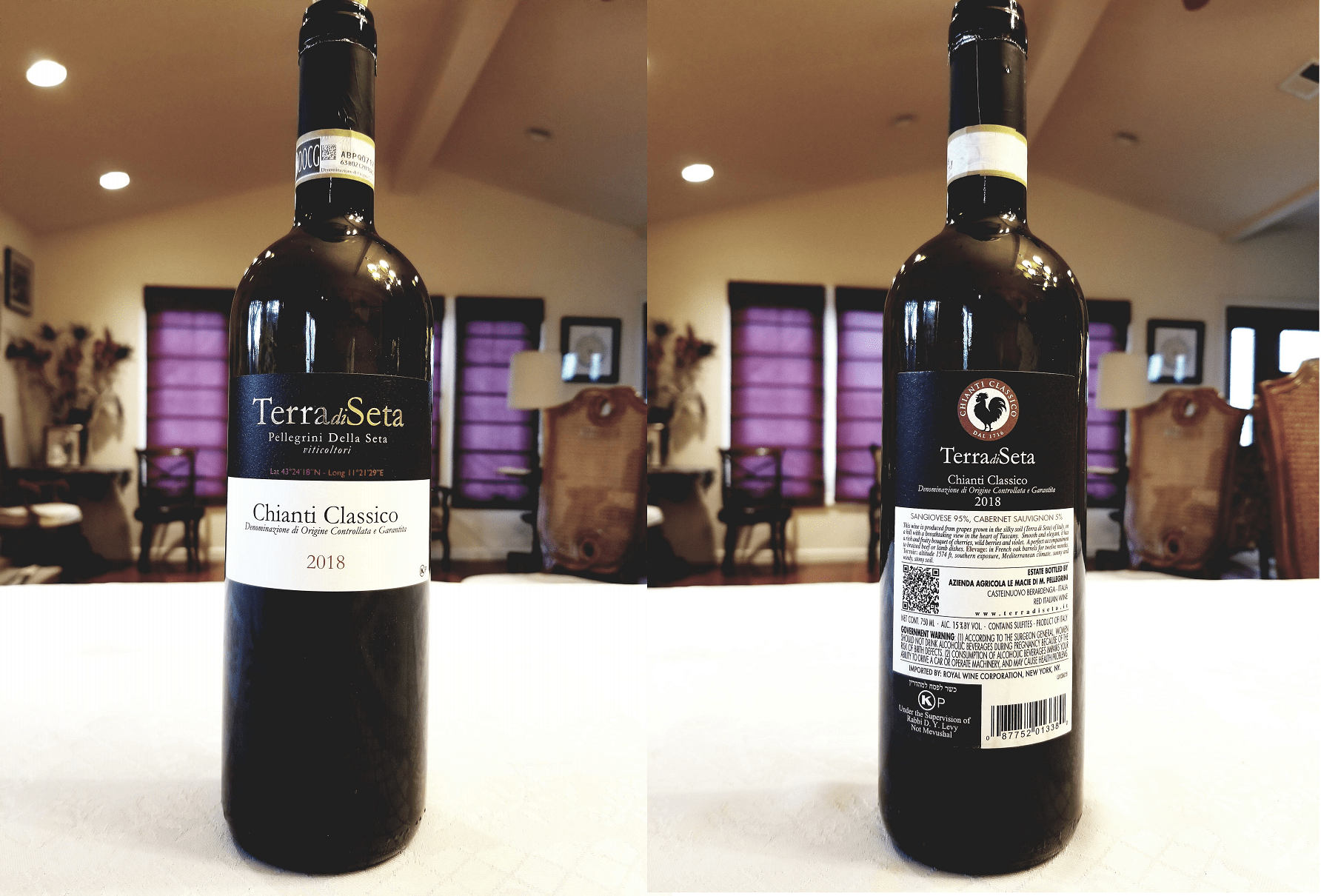
  • Cantina Terra di Seta continues its stranglehold on the QPR mountaintop with the 2018 Cantina Terra di Seta Chianti Classico

    This content is for members only. Please Login  or Subscribe Here to continue reading!

    Like This:

    ,
    15 comments on Cantina Terra di Seta continues its stranglehold on the QPR mountaintop with the 2018 Cantina Terra di Seta Chianti Classico
  • The kosher wine business in the new Coronavirus world

    This content is for members only. Please Login  or Subscribe Here to continue reading!

    Like This:

    2 comments on The kosher wine business in the new Coronavirus world
  • QPR Scoring on kosher wine musings explained – revised (2.0)

    So, my buddy, Avi Davidowitz of Kosher Wine Unfiltered, and I have been harping on the absurd price of wines in the kosher wine world. I do it yearly, in my year in reviews. I have also done it, in a positive light, in my QPR (Quality to Price Ratio) wine posts. Avi does it on every score by baking the QPR score into the qualitative score itself, but by also calling out whether he would buy the wine again or not.

    However, over the past couple of months, I have personally spent an absurd amount of money to taste wines and they were all a waste of my money. Now, while that is my own personal cross to bear, it is getting out of control. Kosher wine prices continue to rise and the values continue to plummet. I literally, screamed about this in my year in review.

    However, until this point, all I have been doing is preaching this subject, and extolling the good, in regards to the QPR score. It has come time to make clear what is a logical buy and what is illogical.

    Quality to Price Ratio Valuation

    Now, to be clear, just because a wine is 150 dollars it does not make it a good wine, and that is clear by the wine’s score, and score alone, whose methodology I define here. I am NOT going to change my wine scores, those are qualitative in nature and need no new tweaking. If a distributor or winery, or BOTH, wants to price a GREAT wine at 200 dollars that is their prerogative.

    Value is defined in the dictionary to mean: the regard that something is held to deserve; the importance, worth, or usefulness of something. Far too many people hold something in high regard based upon its price or its label or other such characteristics. That is not an objective or even a logically subjective approach or methodology for defining value or regard for an item’s worth, in the world of wine.

    Initially, there have been many drafts of this post and methodology, the focus was on price, and even I fell into that mistake. In the end, value, as it is defined below works for any price point.

    So, stated simply, the QPR score is based SOLELY on the wine’s qualitative score and its price in comparison to other wines with equal or greater quality scores, within the same wine category. Simple.

    This content is for members only. Please Login  or Subscribe Here to continue reading!

    Like This:

    29 comments on QPR Scoring on kosher wine musings explained – revised (2.0)
  • Seder 2020

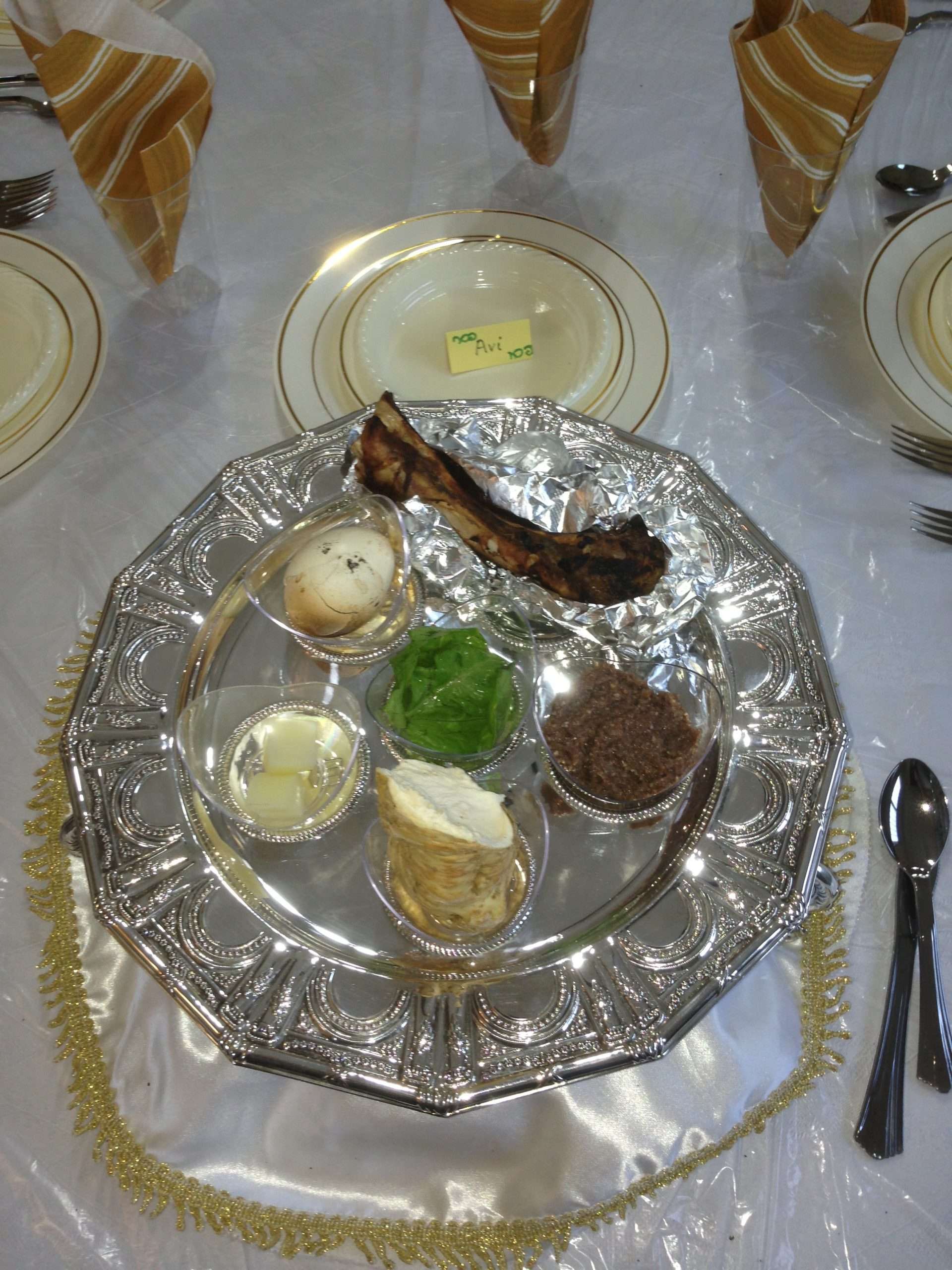
    Wine writing is something that I take pleasure in ordinarily. It allows me to crystallize my thoughts about whatever topic it is that I am writing about. If I happen to be writing about specific bottles, as opposed to a general topic, it actually helps me to commit the notes to memory – as well as the circumstances in which they were tasted – whether they be a winery visit, a festival, or a wine dinner. And therein lies the reason I have not written these last few weeks. These are times that I really would rather forget.

    We are all living in a surreal period. While Pesach (Passover) is a time where families and friends come together, this year, many of us will be spending the holiday with only our nuclear families. I consider myself lucky in that regard. We are six – with my wife, three daughters and my son, and we have been treating the last few weeks as a bonding experience. There are many seniors and singles who will be by themselves. And even they are lucky, as many families have suffered tragic losses these last few weeks. On top of that, the hospitality sector, which includes the food and wine industry, is perhaps the hardest hit outside of the airlines – and I count many winemakers, restaurateurs, and cooks among my friends who are having a very difficult time. And so, these are times that I would rather forget than commit to memory.

    Having said that, a number of people have written to me asking me to post a Pesach wine list. As in previous years, I will leave that to my friends David Raccah and Yossie Horwitz, each of whom has published their picks for purchases this year. Instead – what I will try to do is provide some sort of strategy for the unique situation we are in.

    Regardless of the circumstances we find ourselves in, we have a commandment to drink the four cups at the Seder – and the Seder is supposed to be a festive meal. As most of us are likely having scaled back Sedarim with fewer participants this year, an adjustment is likely necessary in the number of wines we open over the course of the meal. And so I will give you my strategies depending on how many bottles you intend on opening. In general though, I tend to stick with lighter bottles, as there is a lot to drink, eat and much to discuss -so RosĂ©s and Pinot Noirs usually for the center of attraction.

    This content is for members only. Please Login  or Subscribe Here to continue reading!

    Like This:

    No comments on Seder 2020
  • The best/top kosher wines for Passover 2020 in all price ranges

    I understand that these are incredibly trying times, however, people ask me for this list so I am putting it out there. My hope is that it brings happiness to someone. Even if it does not, as I always say, this blog is for me, and I mean no disrespect in posting this here and at this time. My hope is that it finds the value to some. My sincere best wishes for health, success, and safety to all!

    As many have read on these pages, a few wine events have come and gone, – with the last couple being canceled given the world we live in today. As I walked around KFWE this year – I was asked again for a list of my top kosher wines for Passover, so here it goes! This is my list of great and reasonably priced kosher wines.

    A few caveats first, this is MY list! This is not a list that will make many happy. These wines are the wines that make me happy. No wines here would be considered overripe, over sweet, or all over the place. The wines here are listed in the order of cost. That said, the top line wines – what I call Top Flight wines, are not defined by cost at all. In that list, you can find a 2011 Yarden Blanc de Blanc or the 2013 Yarden Brut Rose, both are great sparkling wines. At the same time, the list includes some of the best high-end kosher wines I have ever tasted that go for $100 or so a bottle. The list of Top Flight wines is ALL wines that I would buy without hesitation, no matter the cost (if I can afford it of course).

    Passover is a time of year when Jews buy the most wine, along with Rosh Hashanah, and the American New Year. That is why all the kosher wine events happened a month or two before the Passover festival. It gives the wineries and distributors a chance to showcase all their wines that each appeal to different market segments. So, no there are no sweet or semi-sweet baseline wines here. There are many very good 15 or so dollar bottles of wine, that can be bought at Skyview Wines, Gotham Wines, Suhag Wine, and of course onlinekosherwine.com, kosherwine.com and Gary’s store, along with the other wine stores I have listed on the right-hand side of this blog (as always I NEVER make money from them and I never know or care what people buy, the list is whom I buy wines from and so I can recommend them to others).

    Also, the amount of money you spend does not define the value or quality of the wine. Take for example the less than 10 dollars 2018 Chateau Riganes Bordeaux, white or red, or the slightly more expensive Herenza Crianza, and many others. These are great wines and the price is only an added benefit. However, there are many low priced wines that are not on this list, as they lack the quality required, IMHO.

    Seeing the list and checking it twice (could not help myself), I am sure there will be a question – what defines a wine as a Top Flight wine and why are there wines that are not on it? The Top Flight wines, is a list of wines that personally was wowed when tasting them. That does not mean that the 2018 Chateau Riganes Bordeaux, as nice as it is may or may not be, can compare to another wine on the 50 dollars and above list – that would not be fair. What it does mean was that when I tasted one of these Top Flight wines, I was wowed, and I said this is a wine that everyone should get – no matter the price. In the end, this is not about which is better than the rest it is a way to whittle down the list of wines that I enjoyed from a massive set of thousands of kosher wines available here in America. That is why I made the list. In hindsight, I am sure I will have missed some wines. If you do not see a wine you love and it scored a 90 or higher on this blog somewhere, then I can assure you that it was probably an oversight on my part.

    Also, this is a PSA – please do not buy 2018 rose wines! PLEASE! They are muted and a waste of your hard-earned money. Sadly, the 2019 roses I have tasted so far are a WASTE of time. The best of them are still in France and not here in the USA yet.

    Arba Kosot (The Four cups of Passover)

    Finally, it the Jewish custom to drink four cups of wine on Passover, but to power down these wines are far too hard for me (the concept there is to drink the base quantity of wine to fulfill your requirement – which is a Revi’it, within a certain time period). In the past, I was drinking red, Israeli wines that were simple to drink, not complex or impressive. However, with time, I found a better option, drink the majority of a small cup that fulfills the Revi’it quantity of wine. This way, I can drink an Israeli, not Mevushal, red wine – like a Netofa wine. This is explained more below. This year, I think I will go with Yarden Rose Brut Sparkling wine. It is Israeli, not mevushal, “red”, and lovely wine, and an acid BOMB!

    This content is for members only. Please Login  or Subscribe Here to continue reading!

    Like This:

    , , , , , , , ,
    17 comments on The best/top kosher wines for Passover 2020 in all price ranges
  • Assorted French wines I had before my travel to KFWE NYC and L.A.

    After the tasting through the current portfolio of Les Vins IDS with Benjamin Uzan, we continued with other wines. I said then that I would revisit the wines that I and Elie Cohen had collected for this tasting, along with some wines that Ben Sitruk brought, that he sells on his site. I was once again joined by Elie Cohen, Ben Sitruk, and Elie Dayan, a few of the French kosher wine forum members.

    To say that Victor wines are an enigma would be an understatement. They are the USA importer of some Taieb’s wines. Other Taieb wines are either imported by Royal Wine (Laurent Perrier) or Andrew Breskin’s Liquid Kosher for the Burgundies.

    However, Victor Wines also makes their own wines and there are many of them. The distribution of their wines and the Taieb wines inside the USA is problematic and haphazard at best. Onlinekosherwine.com has started to sell a few. Other than that the ONLY place I have ever seen all the wines or even most of the wines in a single place is the Kosher Kingdom on Aventura BLVD in Miami/Aventura, Florida. Of course, that makes sense since Victor wine’s headquarters is in Hollywood, FL, not far from Miami or Aventura, Florida.

    The family that runs Victor Wines has been the in meat and restaurant business for many years according to their website.

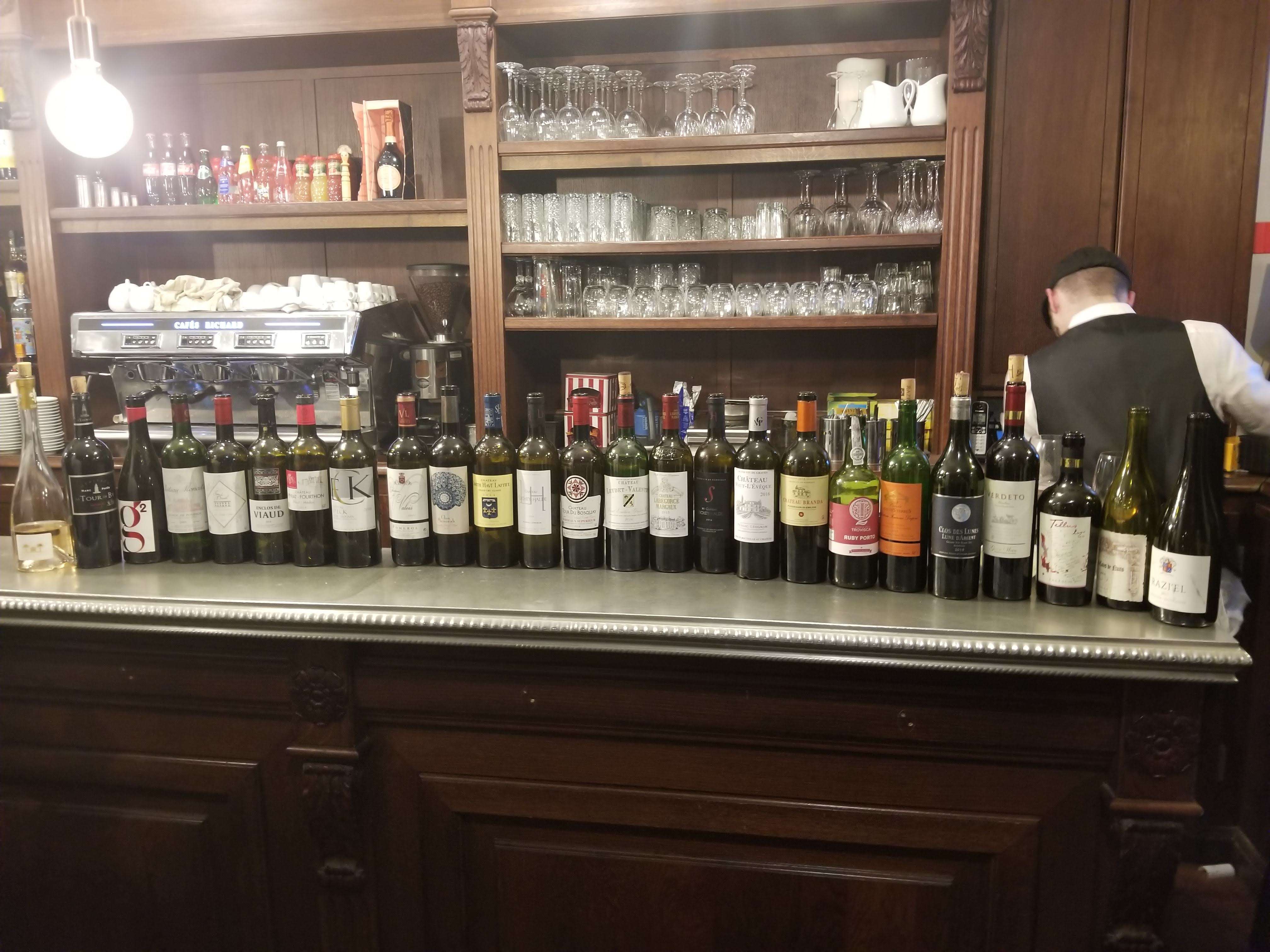
    Ari Cohen bought a bunch of the wines, ones that were not available at the family’s restaurants. Then we bought the rest of the wines at the restaurant and we were ready to taste them. Overall, I was not impressed. The wineries where they make the wines are not that impressive but I am always looking for good news. Also, Ben brought in some wines, like the WONDERFUL 2010 Chateau Peyrat-Fourthon. Sadly, the 2010 La Demoiselle D’Haut-Peyrat, the second label of Chateau Peyrat-Fourthon, was dead. We also tasted the Chateau Gardut Haut Cluzeau, which is another name for Grand Barrail that I tasted a few times with Nathan Grandjean.

    Finally, we had dinner the next night and we brought tons of wines over and there were really only a few wines that were either interesting or new to me and those are also listed below.

    Many thanks to Arie Cohen and Ben Sitruk for bringing a couple of wines to taste, including the Chateau Peyrat-Fourthon wines and the Chateau Gardut Haut Cluzeau. Thanks to Jonathan Assayag for bringing a wine I have never tasted to the dinner, the 2005 Chateau Moncets, Lalande de Pomerol. The wine notes follow below – the explanation of my “scores” can be found here:
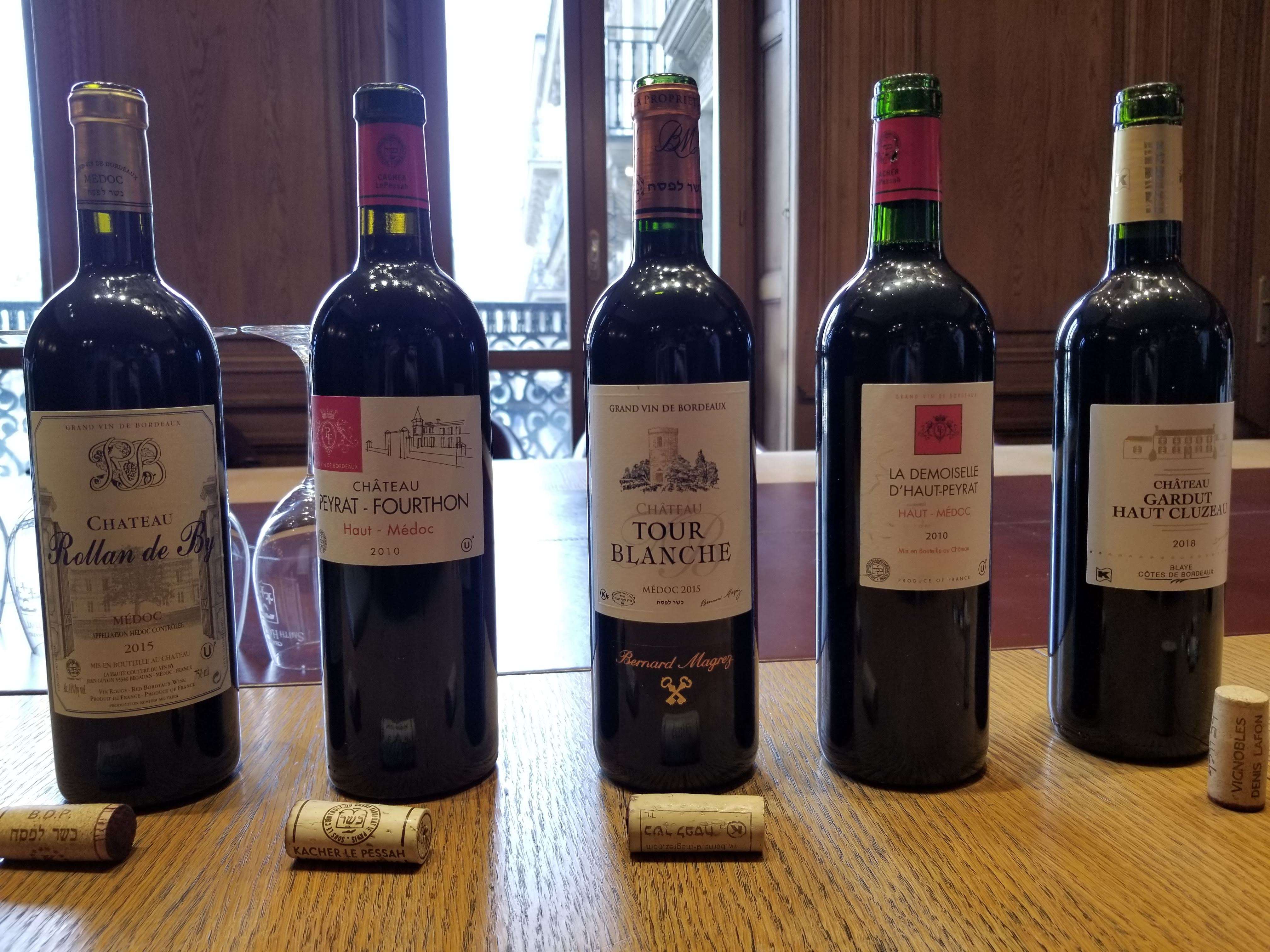
    2015 Chateau Rollan de By, Medoc, 2010 Chateau Peyrat-Fourthon, Haut-Medoc, 2015 Chateau Tour Blanche, Medoc, 2010 La Demoiselle D'Haut-Peyrat, Haut-Medoc, 2018 Chateau Gardut Haut Cluzeau

    2010 La Demoiselle D’Haut-Peyrat, Haut-Medoc – Score: NA Sadly this wine was dead

    2015 Chateau Tour Blanche, Medoc – Score: 70 This wine is all over the place, just a pure mess, sad. The fruit and mouthfeel are black with hints of red notes, but besides that, the wine is really not that interesting at all. Sad.

    This content is for members only. Please Login  or Subscribe Here to continue reading!

    Like This:

    , , , , ,
    No comments on Assorted French wines I had before my travel to KFWE NYC and L.A.
  • An Evening with M & M Importers

    Over the past year or so, I have been trying to sit down and write a full article on M&M Importers in the US. Besides being the US importer for IDS wines, they also have imported a number of French kosher productions on their own. Even more impressive, they have begun contracting their own kosher productions in Italy. They started with bringing in the last kosher run of the company formerly known as Falesco, now known as Famiglia Cotarella. Actually Falesco still exists – but they have split the brand in two with the Merlot (Montiano) and Cabernet Sauuvignon (Marciliano) under the Famiglia Cotarella brand, while other wines such as their Syrah (Tellus – of which I recently learned there was a kosher production of in 2016, though that wine IS NOT imported by M & M – which from David’s notes, looks like a good move by them) remaining under the Falesco label. At the same time, they started production at a number of Italian wineries, with their first release 2018 Botteotto, Montepulciano D’Abruzo, a second press production at Valle Reale. A number of the upcoming releases are very interesting, including the first press Montepulciano from Valle Reale’s San Calisto vineyard, as well as about 20 other wines, including a Brunello (to be released sometime in the next year or two), two Chiantis – a regular Classico to be released this September and a Reserva coming out in another couple of years, 2018 Falesco/Famiglia Cotarella reds, as well as a return of the white Ferentano made of 100% Roscetto (which has not been made kosher since ’05 – I think),  and many others. In light of all of this, I planned on meeting up with Ralph Madeb and David Motovich, the proprietors of M & M, to go through their current releases, AND even more importantly I planned a trip to Italy to immediately follow my NY trip to taste through all of this new kosher production and speak with the various winemakers. Unfortunately, the Coronavirus has put those plans on hold for now – though I fully intend on making that trip as soon as the Italy ban is lifted. In the meantime, I did not want to hold up this post – as there is plenty of wine that I tasted through while in NY.

    The truth is, I have known Ralph Madeb for about 30 years. He was very friendly with a cousin of mine and was in my wife’s class in High School. He was a character back then and nothing has changed. Super warm and friendly – really typifying the reception you get from the Syrian community of Brooklyn, which I grew up around. (I still have fond memories of eating fresh Lachmajin out of the oven at a friend’s house.) At some point Ralph became Dr. Madeb, a urologist who spent some time in Rochester doing his residency before returning home to open his practice. The extended Madeb family has long been involved in wine and has bought most of the high-end kosher wine productions en primeur. When the opportunity arose to become the importer of IDS wines, which is responsible for the famed kosher runs of Smith Haute Laffite among others, Dr. Madeb and his partner Mr. Motovich decided to take the opportunity and be involved in the kosher wine industry up close. This past week, we tasted through 14 wines – of which one was a library wine that is on my all-time favorite list and which happens to also be imported by M & M, the 2005 Valandraud. Another was a wine produced in Israel by the new Tabernacle winery, as one of the owners was at the dinner and wanted people’s opinions (I had already tasted these wines and thoughts can be found here.)

    Also at the dinner was the US representative of Aegerter, Martin Sylvestre. Currently Aegerter has released three kosher wines, all of the 2018 vintage. These wines are excellent – but super young. It’s nice that we are finally getting a wide variety of kosher Burgundy! In fact, during our conversation, Mr. Sylvestre   expressed interest in perhaps even producing a greater number of kosher run Burgundies from the various sub-appellations. It would be a truly wondrous thing if all of a sudden we were blessed with a Clos-Vougeot! Of course currently, this is just talk. But, you never know….

    One other interesting note, M & M has picked up distribution of the remaining Gefen Hashalom wines that had not had distribution until now. That translates to the Hans Wirsching Silvaner, which arrived in NY the same day as the dinner – and, much more importantly, the 2014 Von Hovel Rieslings (both the Hutte Oberemmel and Scharzhofberg) – which has not officially been sold outside of Europe until now. M&M bought up the remaining 3000 bottles from the winery, and they should be in NY soon. The 2014 Von Hovel wines are the absolutely best kosher Rieslings ever produced – and rank up there with the best kosher whites ever produced period. So for those of you in the US, this is truly excellent news.

    Here are my notes on the M&M wines:

    This content is for members only. Please Login  or Subscribe Here to continue reading!

    Like This:

    ,
    No comments on An Evening with M & M Importers