-

And the winner of KFWE 2023 (at least so far) goes to the Big Apple
Before we get to judging I need to restate the obvious, Royal Wines is the 800-pound Gorilla of the kosher wine market. The interesting fact is that some might say that the KFWE events are self-motivated and self-aggrandizing, and while this may be true, they are also the leading system for kosher wine self-education that we have! Also, Royal is the only company I know making a large-scale wine tasting before the Passover run. I hear there may be one in March, time will tell. Until then, Royal stepped up, even if it was self-motivated, any motivation that sells/promotes kosher wine is a WIN-WIN for all kosher wine buyers. Finally, making these events on the backend of what is now the COVID-19 wave, shows we have finally returned and that kosher wine will once again have a voice that it desperately needs, no matter the motives. So, BRAVO Royal, and now to the scoring!
One more aside, and I repeat this concept down below, It is great to want wine education and to have events that promote wines but what is even better is TALKING about wine, kosher wines. Two years ago, I dropped the ball, sure the 2021 Virtual-KFWE was a logistical mistake, and I covered that but I missed highlighting the best part of the Virtual-KFWE and something I think Royal should continue, in different ways going forward. True wine, region, and winery education! The Virtual-KFWE included guided wine tastings with Jay Buchsbaum, Erik Segelbaum, and Gabriel Geller. The videos were worth the price of admission! I continue to state this as I missed stating that in my post, and I missed seeing the forest from the trees. With that said, Royal should go back to this, but I think on a smaller scale, think real bottles of wine, as part of a wine club, that promotes different regions, and different wineries, while promoting Royal Wines and having personal guided tastings with folks like in the virtual KFWE. Just a thought! OK, now, I mean it, on to the scoring!!
KFWE 2023 Scoring
Before I go further, I wanted to define to you my criteria for grading a wine tasting:
- The Venue, of course, its ambiance, and setup
- The wine selection
- The wine glasses
- The number of humans at the tasting
- the food served
- Finally, the reactions of the participants, though for me that is less important to me, as I judge the tasting based more upon the body language of the participants than what they say.
Now, some of these variables are subjective, rather than just objective. Take for example #1, the venue, it is highly subjective though also somewhat objective. Pier 60 is a nice place, but in comparison, the Petersen museum of the past was far more beautiful, but it had its issues as well. Sometimes too much space is actually not a good thing. The Hollywood Palladium, showed its age and issues, this year and left L.A. a bit behind the Eightball. Now, again, this is subjective, some people hate cars. They hated how big the Petersen was, and how spread-out the food and wine were. I loved the Petersen, loved the cars, and while the food and wine were spread out and difficult to find, the roominess and vast space to sit and enjoy art and wine at the same time, was truly impressive. Further, NYC needs a place to sit down, I think the VIP in both places were great for room to sit and relax but the general admission in LA was far better in its use of the space in the middle of the area, allowing for many couches and places to sit and relax.
The App is dead, long live the app!
Thankfully, this has been put to pasture and that is where it belongs. There were too many hoops to jump through from the logistics to the actual content and info. Nice idea, poor implementation. Until it is 100% rock solid – leave it off the menu as it adds more headaches than value to the customer.
Mother Nature took kindly to KFWE in NYC and LA (well mostly)
A quick footnote here, before we dive into the highly contested and dispassionate discussion around which KFWE is the best KFWE, we need to thank the good mother! Mother nature really threw us a pair of bones this year! Yes, I know that flying from NYC to LA was a bit torturous for some, and yes, I missed my upgrade by one, but come on, it was that or we get 0-degree weather and KFWE NYC would have looked more like a Flatbush Shtiebel during the summer, AKA empty!
The weather in L.A. was just divine! Clear skies, 70+ degrees, the only issue I had was that this was all inside. The Petersen of old would have hosted the trade and VIP on the massive rooftop deck, sunshine, and clear skies, I know there were issues with it, but I think that is where the KFWE L.A. needs to return. NYC’s weather was a warm 40 degrees and for February in NYC I will take that all day! It made going between Pier 60 (General Admission) and the VIP much more comfortable.
Venue (Pier 60 versus Hollywood Palladium)


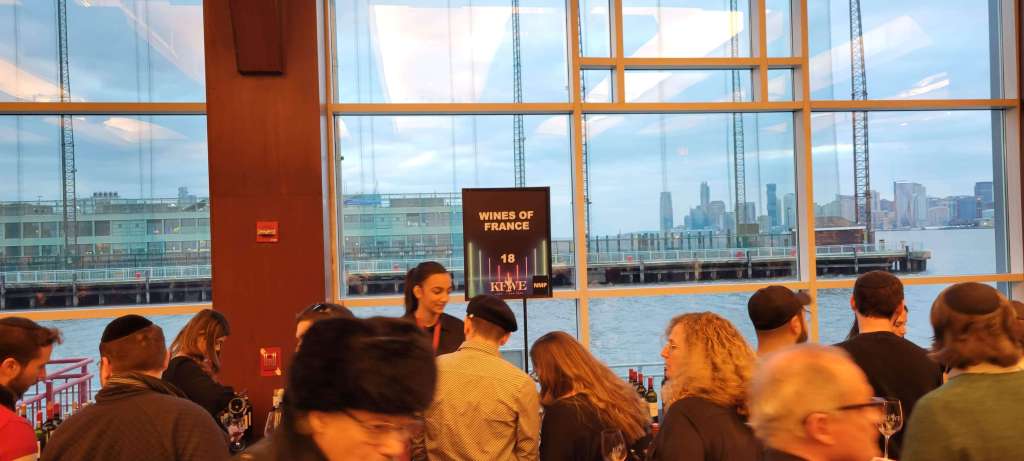
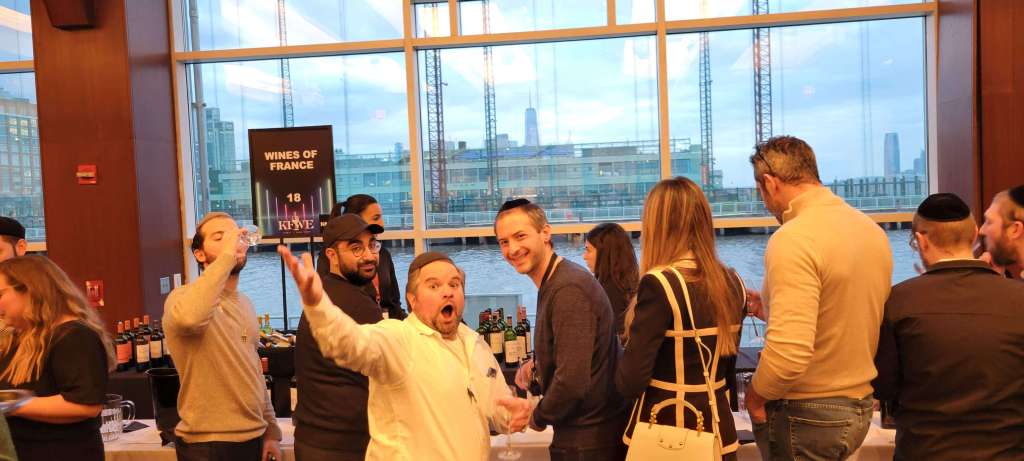
The NYC KFWE was once again housed in Pier 60, while the VIP room was once again in the Current, Pier 60’s newest event space located next door near Pier 59 at Chelsea Piers. The walk over there was fine as the weather was quite acceptable for February.
The main two issues I had with KFWE NYC were a lacking of seating and a lack of a trade tasting. I find that at public tastings like KFWE, I can never get any real notes down. Further, the lack of a trade does not let us folks get a feel for what is being poured, overall. Still, trade is not what NYC is about and I get that.
KFWE LA had ample seating in both General Admission (GA) and VIP, and they had a trade tasting that allowed me to taste the Herzog wines, and a few others, in a professional manner.
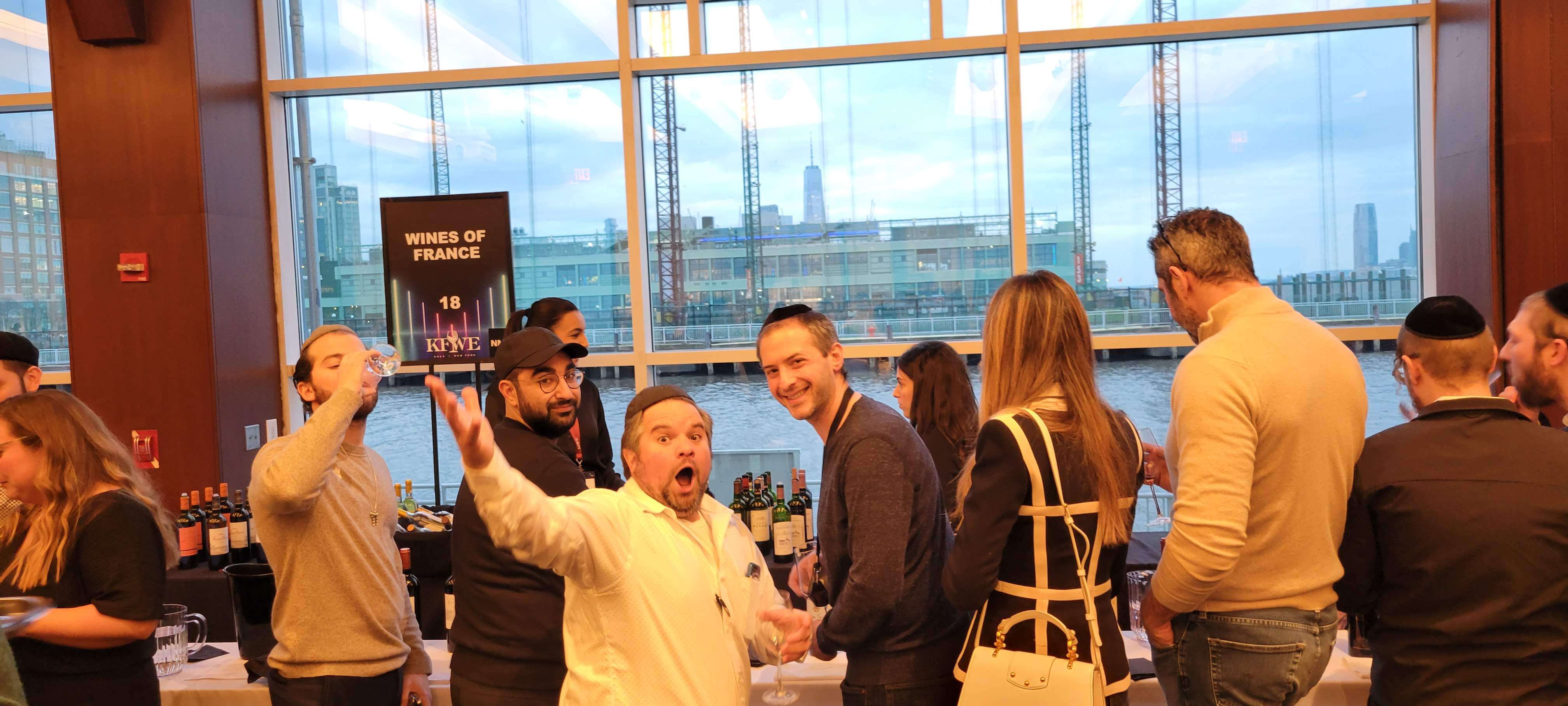
Now, let us get to space, NYC GA had ample space because they had pourers that were well-trained, quick, and precise. They moved the tasters as well, via verbal queues, such that the folks behind those at the table were served quickly. Overall, it was the best showing at a KFWE in a long time. The professionalism showed by these pourers was top-notch.
This content is for members only. Please Login or Subscribe Here to continue reading!
10 comments on And the winner of KFWE 2023 (at least so far) goes to the Big Apple -

A tasting of Taieb JP Marchand Burgundies, a massive Domaine Roses Camille vertical, two Taieb Bordeaux verticals, and more!
I am sorry for the long title, I really could not succinctly summarize the tasting I had last week with Neal and Andrew Breskin in not-so-sunny San Diego. Neal and I flew in from different parts of the country on a no so warm Monday morning, I picked up Neal at the airport, and we made our way to Andrew Breskin’s home, the proprietor and founder of Liquid Kosher.
I had been bugging Andrew that it was time to meet again for a tasting of the new 2021 Jean-Philippe Marchand Burgundies. I had tasted them with Avi Davidowitz in Paris, but as I said in that post, I was hoping to taste them again with the opportunity to see if they evolve with a bit of time, after opening. While I liked them in Paris, I was wondering if they would evolve with a bit more time. As stated in that post, we both flew home the next day and we did not have the chance to see them evolve over a day or so.
Thankfully, my calendar worked out, and we arrived on the day of Rosh Chodesh Shevat. The morning started with me picking up some breakfast at this lovely, but expensive bakery in La Jolla called Parisien Gourmandises. Before I continue with the story, please visit this place, when/if you are in the San Diego area. I do not like to say I am a picky eater, however, my opinions of food/food establishments, when traveling can be a bit coarse. I have recently been in Florida and Paris for different wine tastings and this bakery had better croissants and flaky dough pastries than either the bakeries in Paris or the wonderful bakery in Fort Lauderdale called Moran Patisserie Bakery. The people, food, and overall ambiance are really impressive, and aside from the actual location (a small room inside a potpourri store – you have to be there to understand), the food is worth the price of admission. Now on to the rest of the story!
I then picked up Neal at the airport, as stated above, and 20 minutes later we were ensconced under the shade of lemon trees and tasting wonderful wines.
The schedule was open-ended and after a lovely cup of coffee and Parisien Gourmandises pastries, we were ready to settle down for a day of wine tasting.
Pre-Dinner tasting


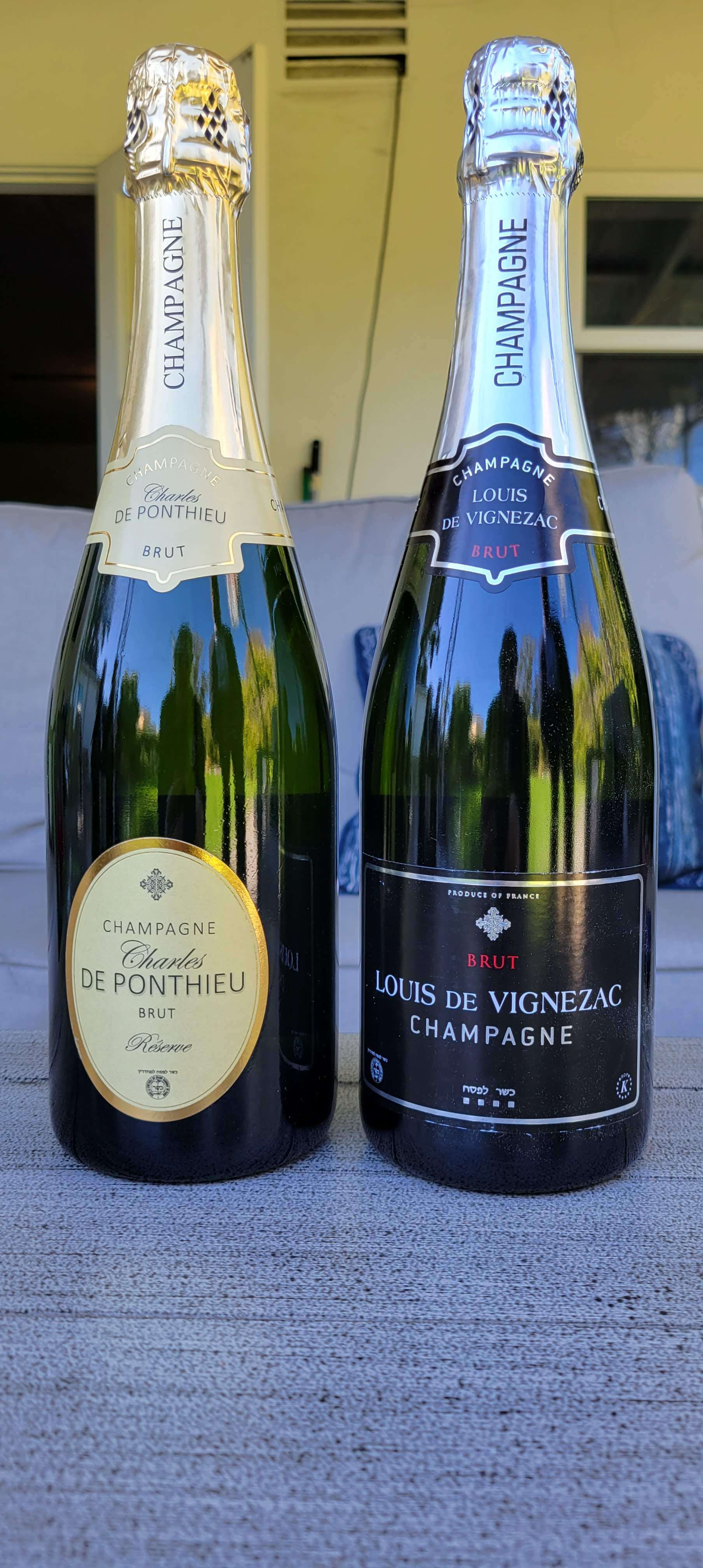
We started the tasting with two Champagne, one of them was simple enough and lacking in bubbles while the other one was nice and very accessible. The first one was N.V. Louis de Vignezac, Cuvee Special, Brut and the second was N.V. Champagne Charles de Ponthieu.
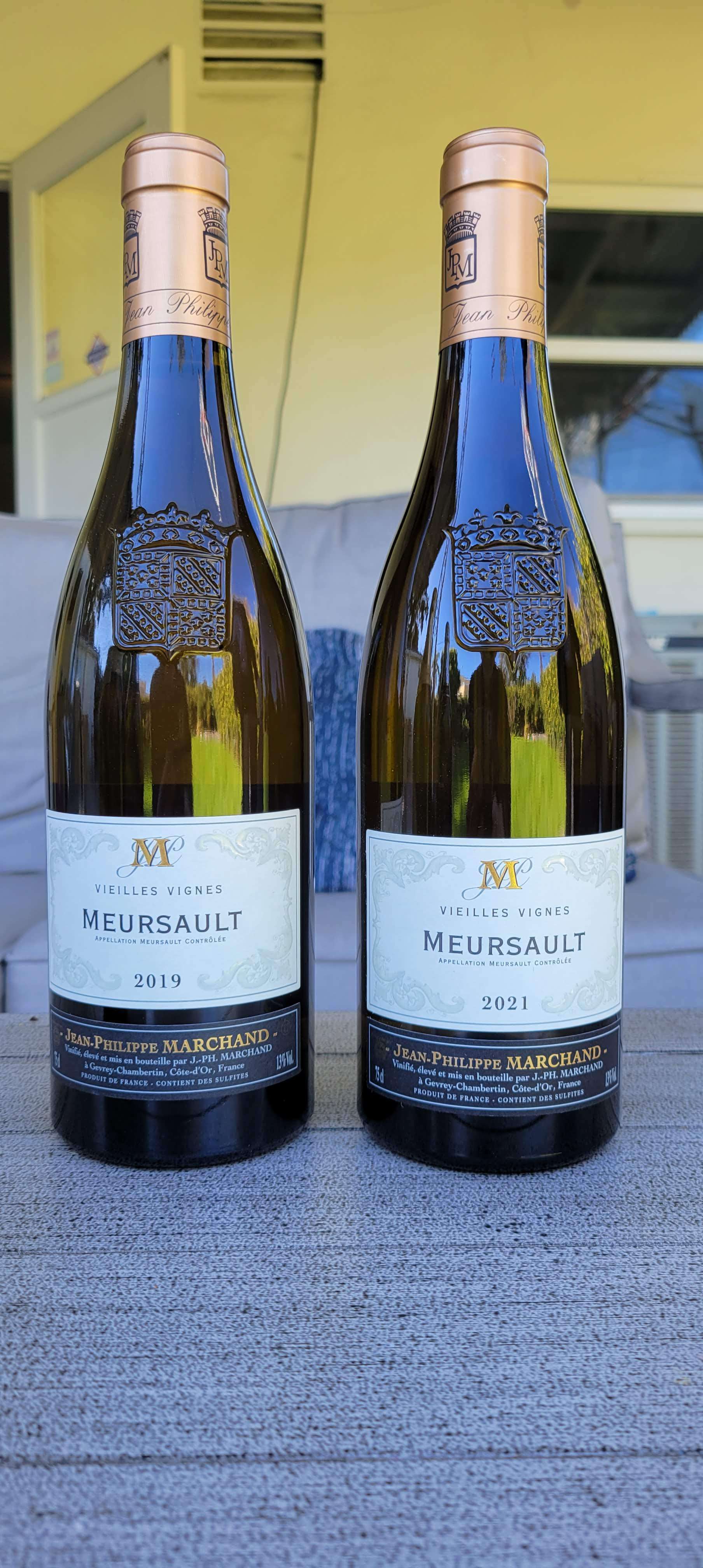
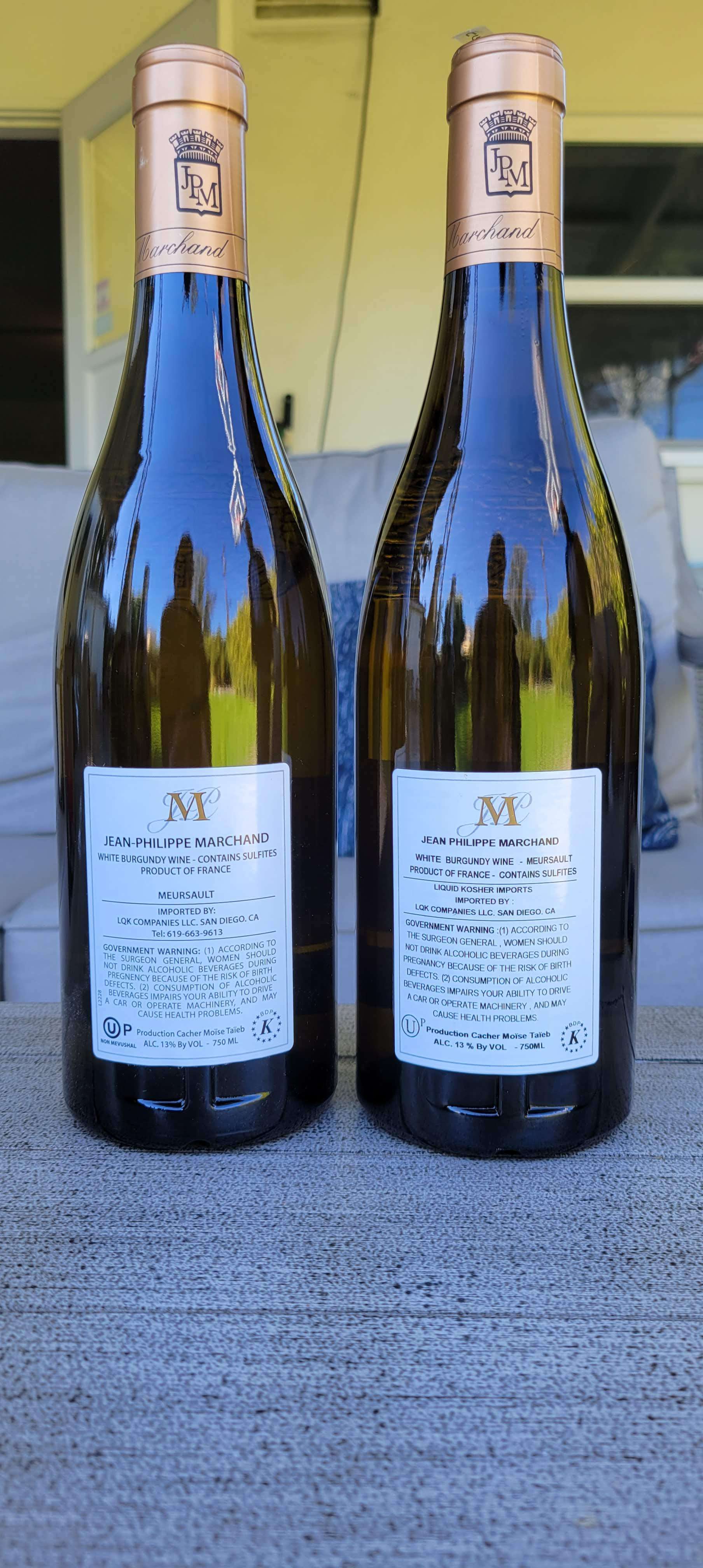
After those two aperitifs, it was time for some Burgundy! We started with the 2019 Jean-Philippe Marchand Meursault followed by the 2021 Jean-Philippe Marchand Meursault. Having the opportunity to taste the two of them side-by-side was quite a treat! I had not tasted the 2019 Meursault in 2 years. I had it with Andrew and Gabriel Geller later in 2021 as well, but I have less of a memory of that time.
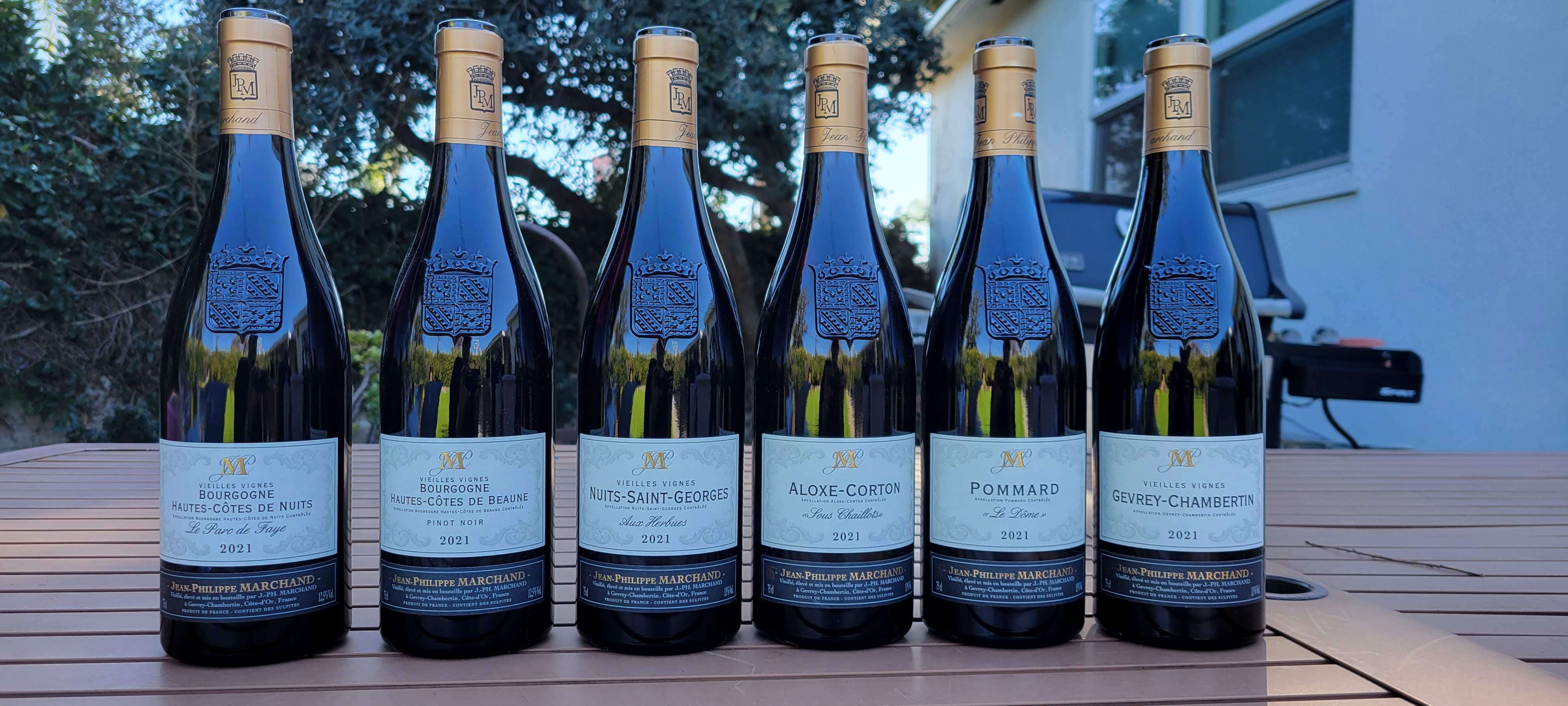
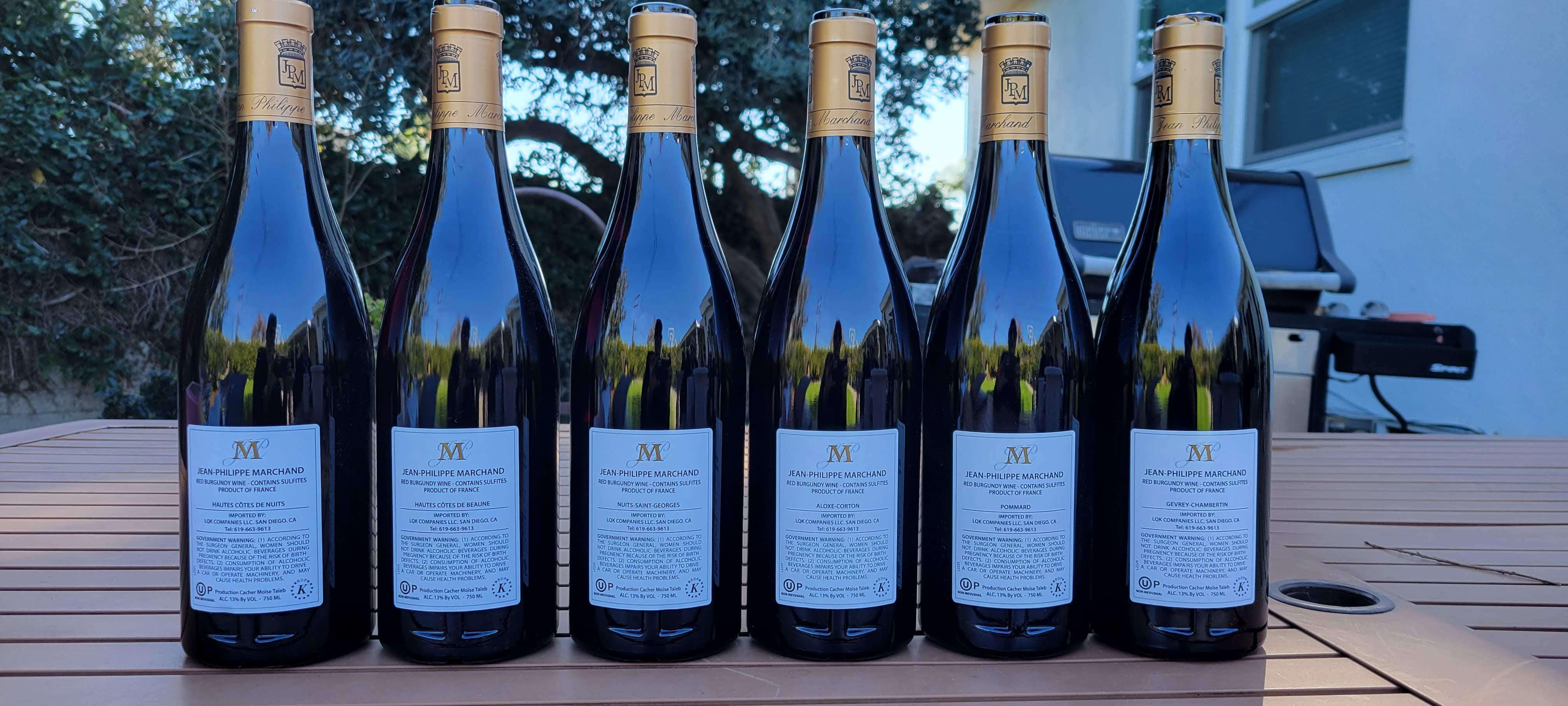
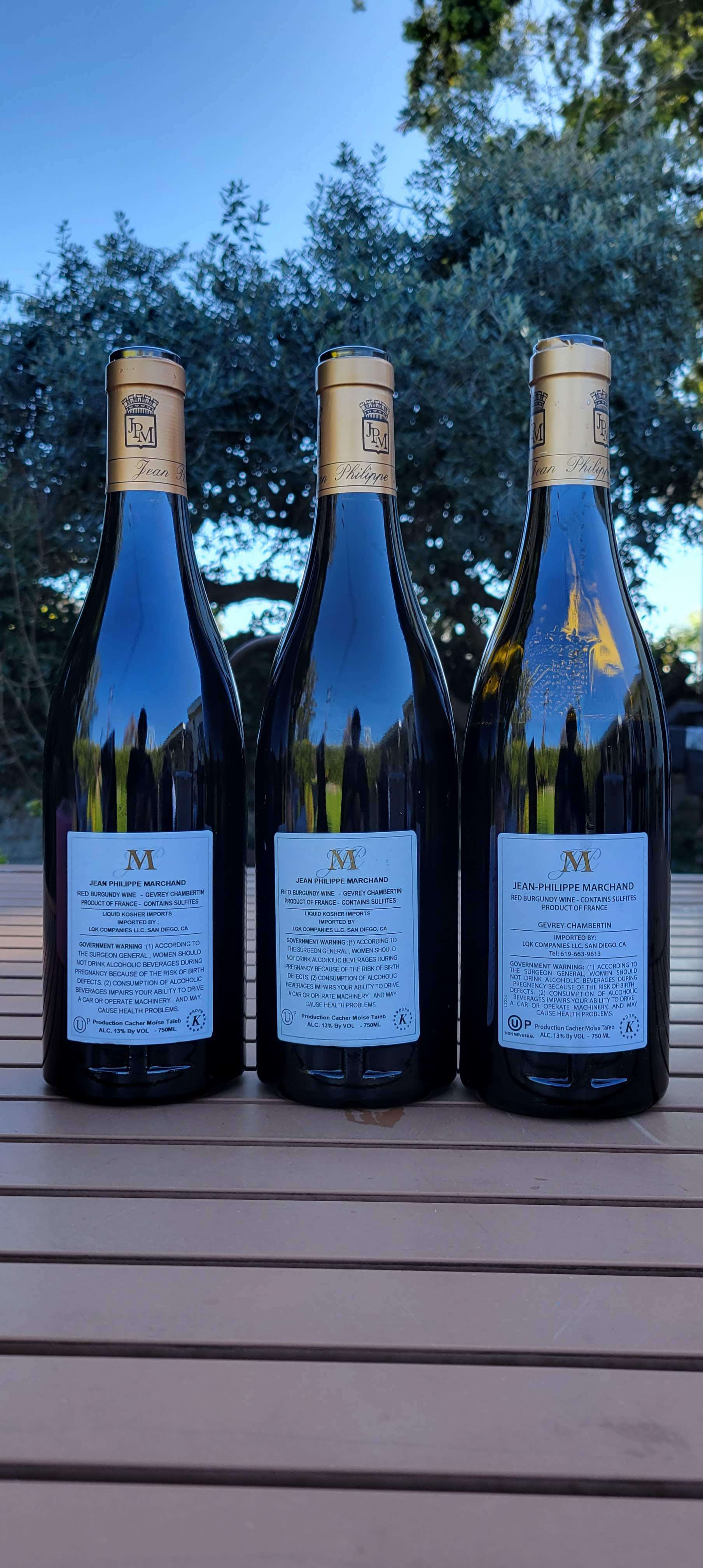
We then started in on all of the 2021 Jean-Philippe Marchand red Burgundies and they were an exact match to the wines I had in Paris in late November 2022. They are all lovely wines with a floral approach. Even the 2017 and 2019 Gevrey Chambertin that we had later that night followed that approach. The Gevrey has more weight but overall their approach is more for the ethereal Pinot Noir than the full-bodied one.
Once we had tasted the Pinot Noir we had the opportunity to taste some soon-to-be-released Domaine Roses Camille wines, including 2016, 2017, and 2018 vintages. To be fair, I am never a fan, interested in tasting unreleased wines as they may change before being bottled. Thankfully, the 2016 and 2017 vintages are already bottled, while 2018 was a tank sample.
All the Domaine Roses Camille wines were exceptional but as I stated before I wanted the opportunity to taste them again the following day. So after our initial tasting of the wines, Andrew got some plastic Ziplock bags and bagged me some 30 ml of each wine and labeled each bag to boot! This assured me two things, I will have wine to taste the next day, as the wines were open for the dinner that was fast approaching, and I knew what each wine was, the following day!
The bags worked like a charm, Andrew placed them in a box and moved them to the garage where they stayed until the following morning – bravo my man!
Dinner – AKA SoCal RCC Jan 2023


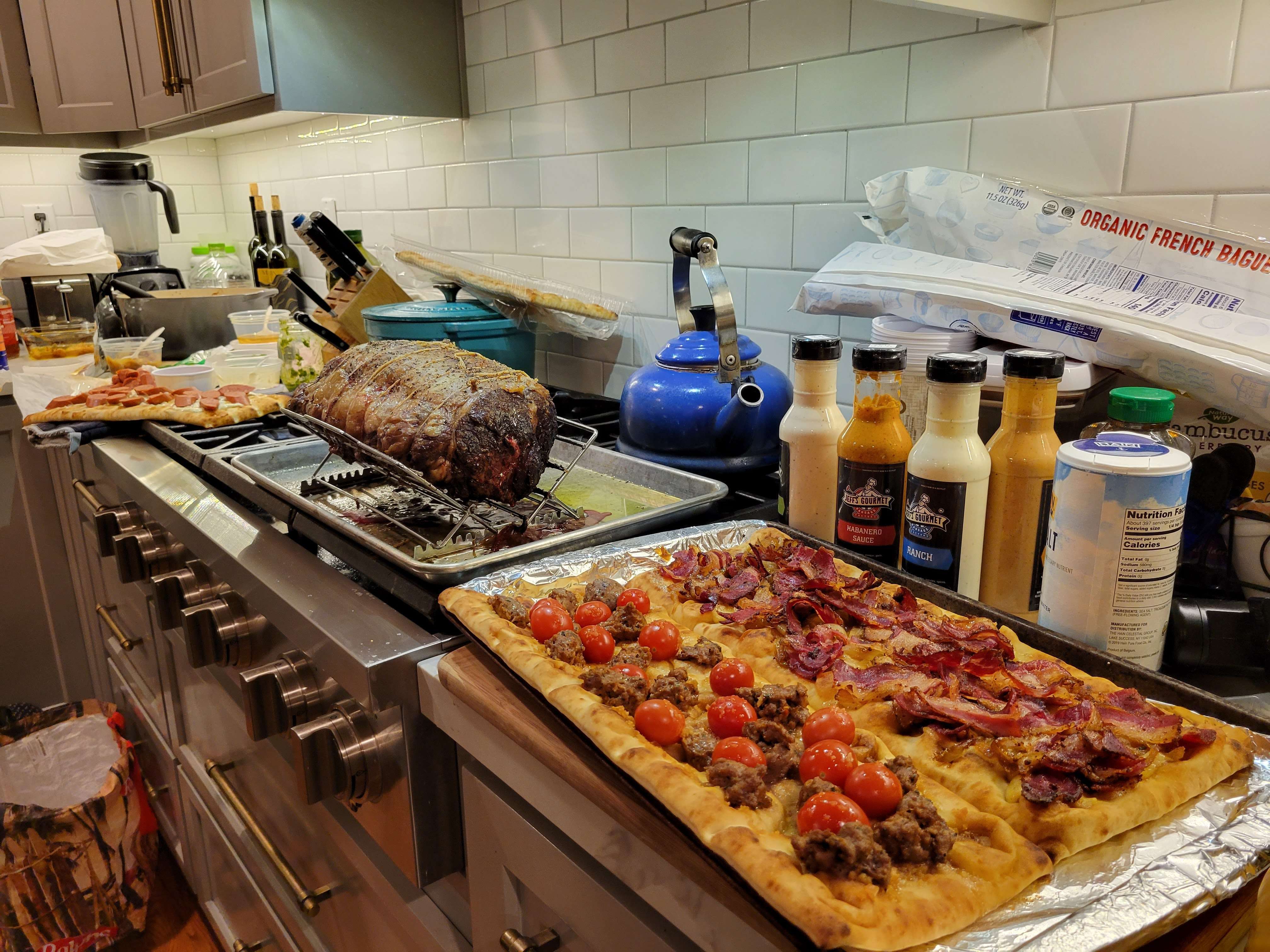
After all the wines were tasted and bagged it was time to focus on dinner. Andrew had already started on the beautiful ribs and was getting the rib roast prepared. It was about that time that I looked at the rib fat/sauce and I started skimming off the obvious fat and then worked on cooking it down a bit and thickening it with some simple starch slurry.
After that, Andrew started cooking some nice Gnocchi and then pan-seared them. I helped a bit with this and the potatoes. I laugh because there is this Italian chef who lives in Australia (Vincenzo Prosperi of Vincenzos Plate) that loves to rant about other chefs who do things that are not exactly Italian! LOL, he tore apart some chefs for doing this very thing, but honestly, I found them very enjoyable!
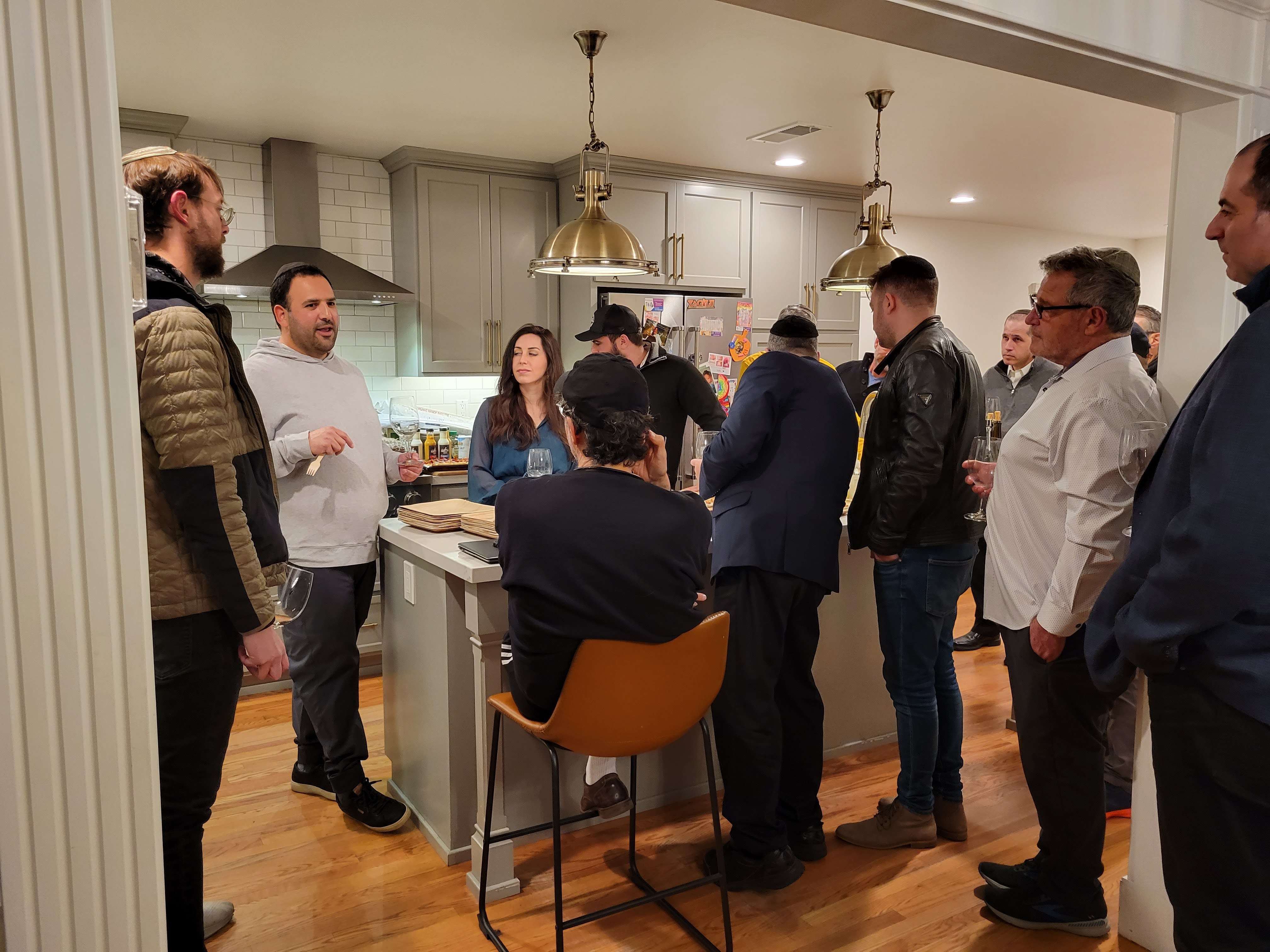
Soon after Neal and I finished helping here and there the guests started to arrive. The first was Elan Adivi, who works with Jeff’s Sausage and he came armed with a basket full of sausage, charcuterie, and rectangle pie crusts. He made some pretty good pizzas and he topped them with the only green things that graced any of our plates, some arugula, though to be honest, no one went hungry that night!
The evening started with some lovely sushi and the Champagnes we tasted earlier along with some 2019 La Chablisienne, which was a nice enough Mevushal Chablis.
After the Sushi, it was red meat and wine all the way, which is the only way an RCC should be! The Ribs and the Rib Roast were just awesome, and my sauce reduction was not bad either! The Pizzas turned out quite nicely, as well. There was also some very interesting beef jerky, but I did not catch where they were sourced from, I think Andrew had them flown in from Holy Jerky in Five Towns, the stuff was solid!
First I tried the Burgundies again, as well I wanted to see if they had evolved over a few hours, but nothing had changed much. Next, I enjoyed tasting the three Gevrey Chambertin from Jean-Philippe Marchand. Much like the 2019 Jean-Philippe Marchand Meursault I had not tasted the 2017 or 2019 Jean-Philippe Marchand Gevrey Chambertin for many a year.
Of the three, at their current place, I would still go for the new 2021 Gevrey, which is quite surprising to me but also makes me happy to see that there were some good wines from the 2021 vintage.
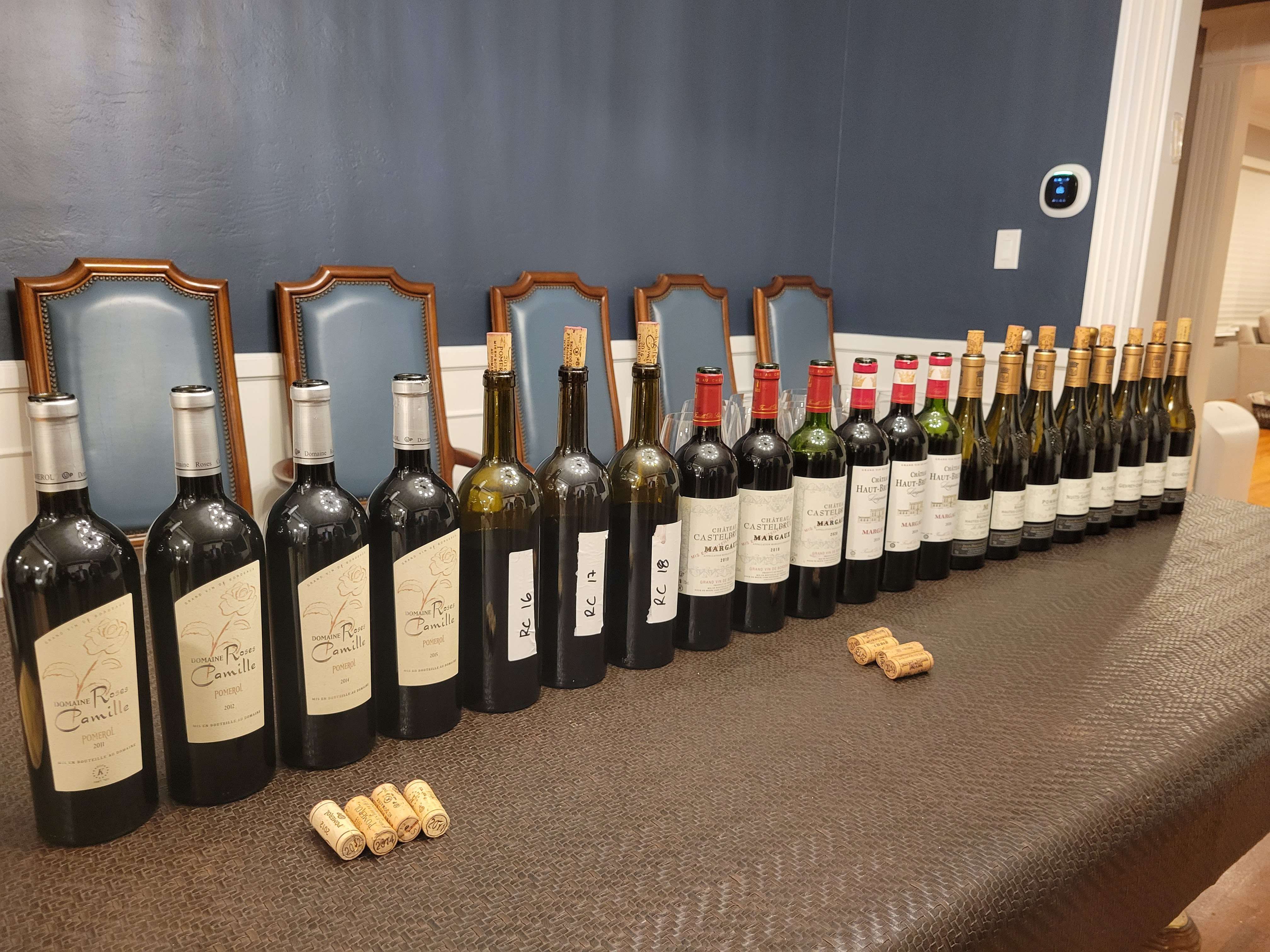
I then tasted the two mini-verticals of Chateau Castelbruck, Margaux, and Chateau Haut-Breton Larigaudiere. We had 2018, 2019, and 2020 vintages of the Chateau Castelbruck, and Chateau Haut-Breton Larigaudiere. The two wine verticals had not evolved very far from what I had over the past three years. Some wines evolve over a short period, and while these did change slightly from previous tastings, the evolution was more about which fruit emerged ahead of another rather than moving into a drinking window or showing tertiary notes.
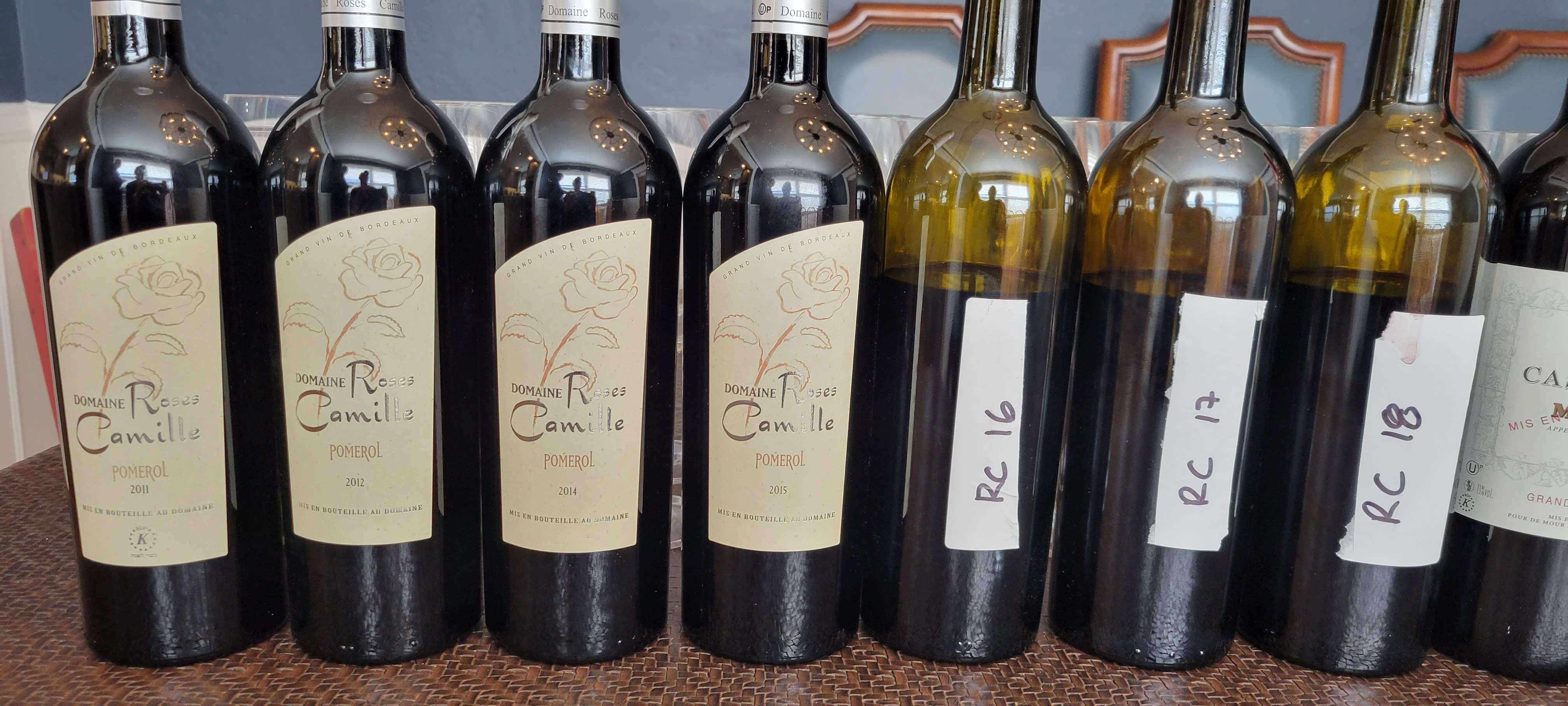
Domaine Roses Camille Vertical


Unlike the smaller Chateau Castelbruck, and Chateau Haut-Breton Larigaudiere verticals the Domaine Roses Camille was larger and therefore one that showed a more obvious effect in the years past.
Each of 2011, 2012, and 2014 vintages had clearly evolved with the 2011 vintage almost entering a drinking window. The younger wine (2015) followed the same script as the Taieb Bordeaux and did not change much, if anything, at this point. The even younger wines were all new to me so they may have evolved since being bottled but I would not know.
It was great getting to taste these wines all side by side and seeing the impact of a season on the same vineyard. AKA, Horizontal tasting 101!
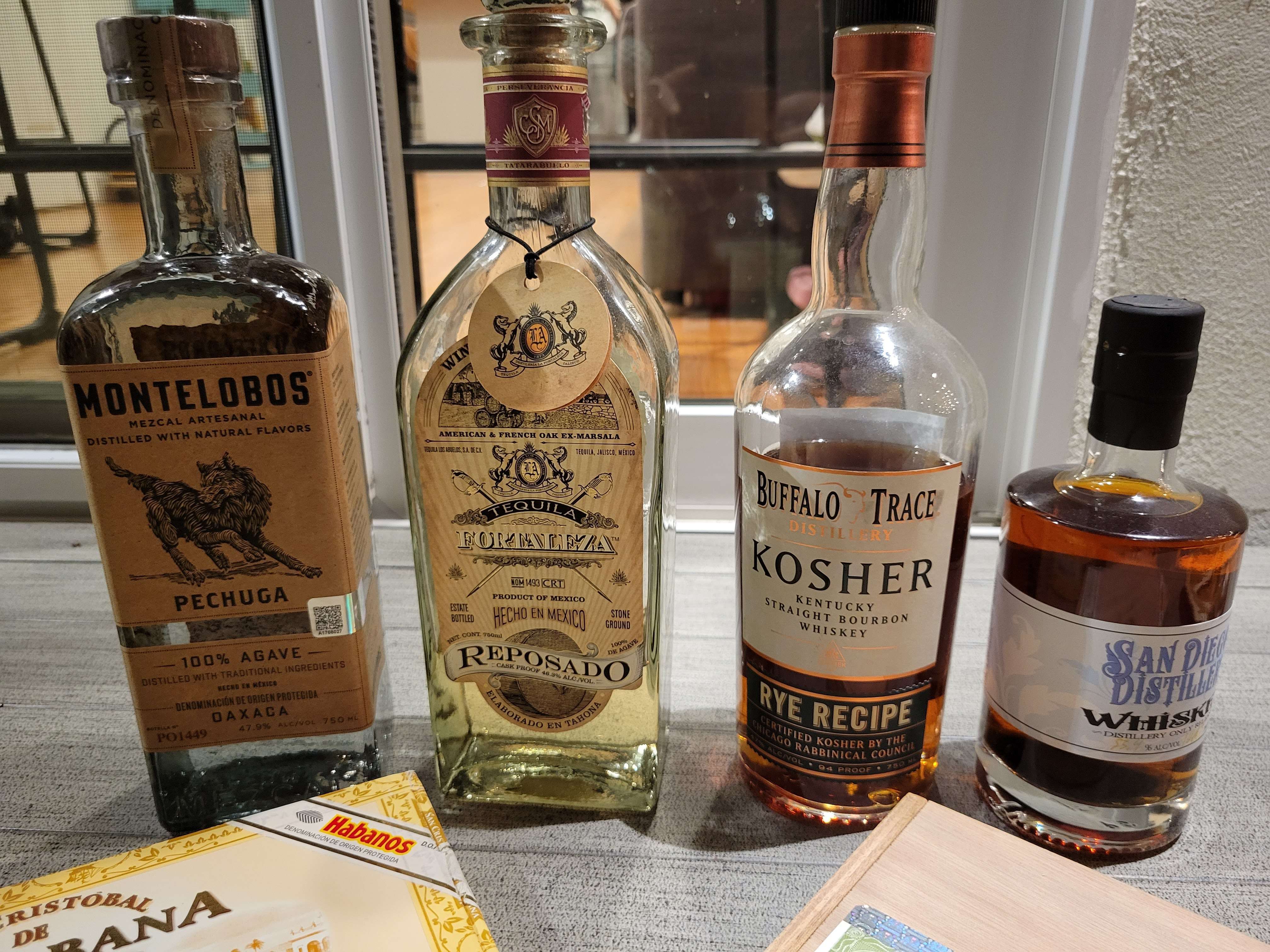
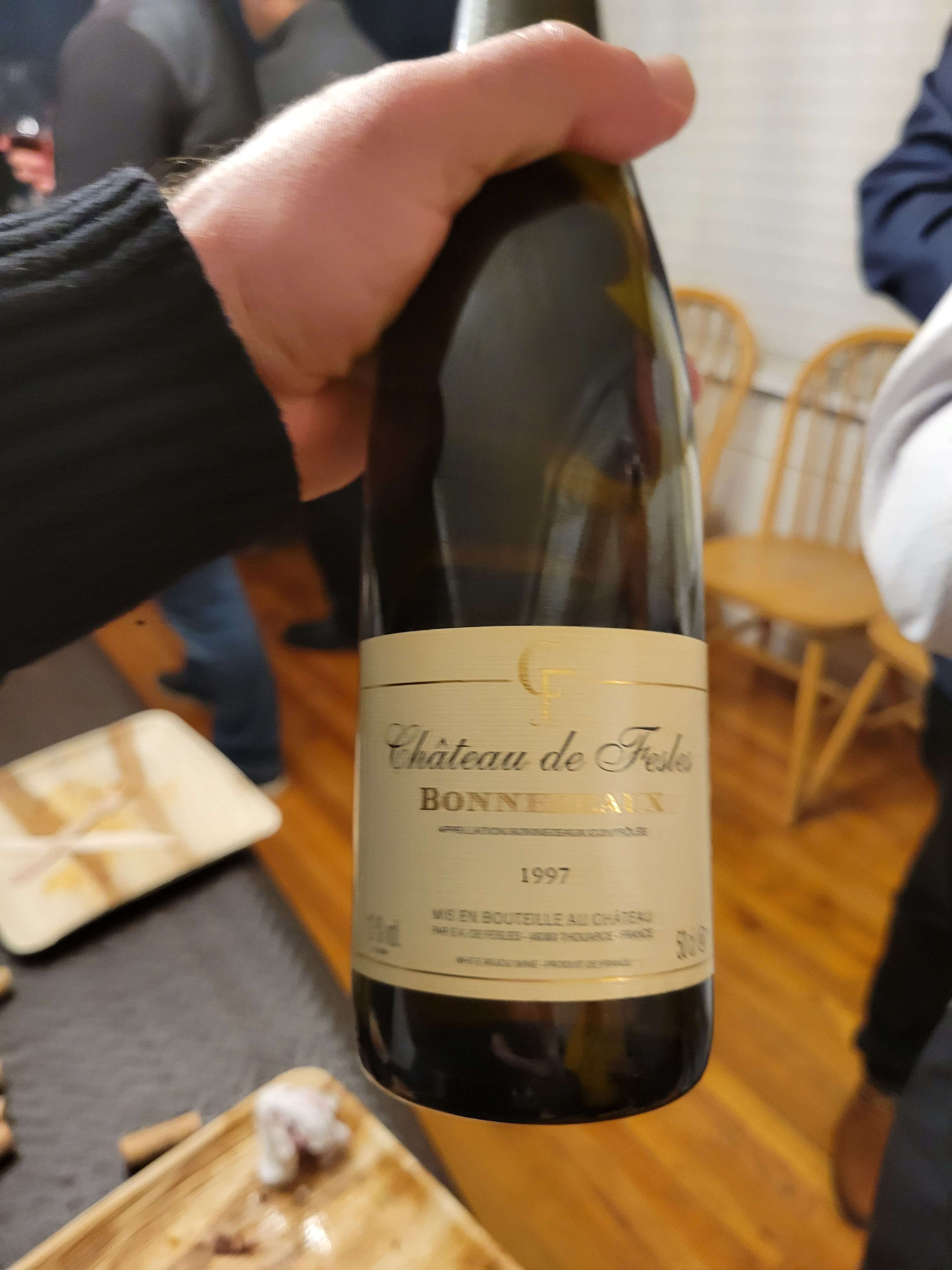
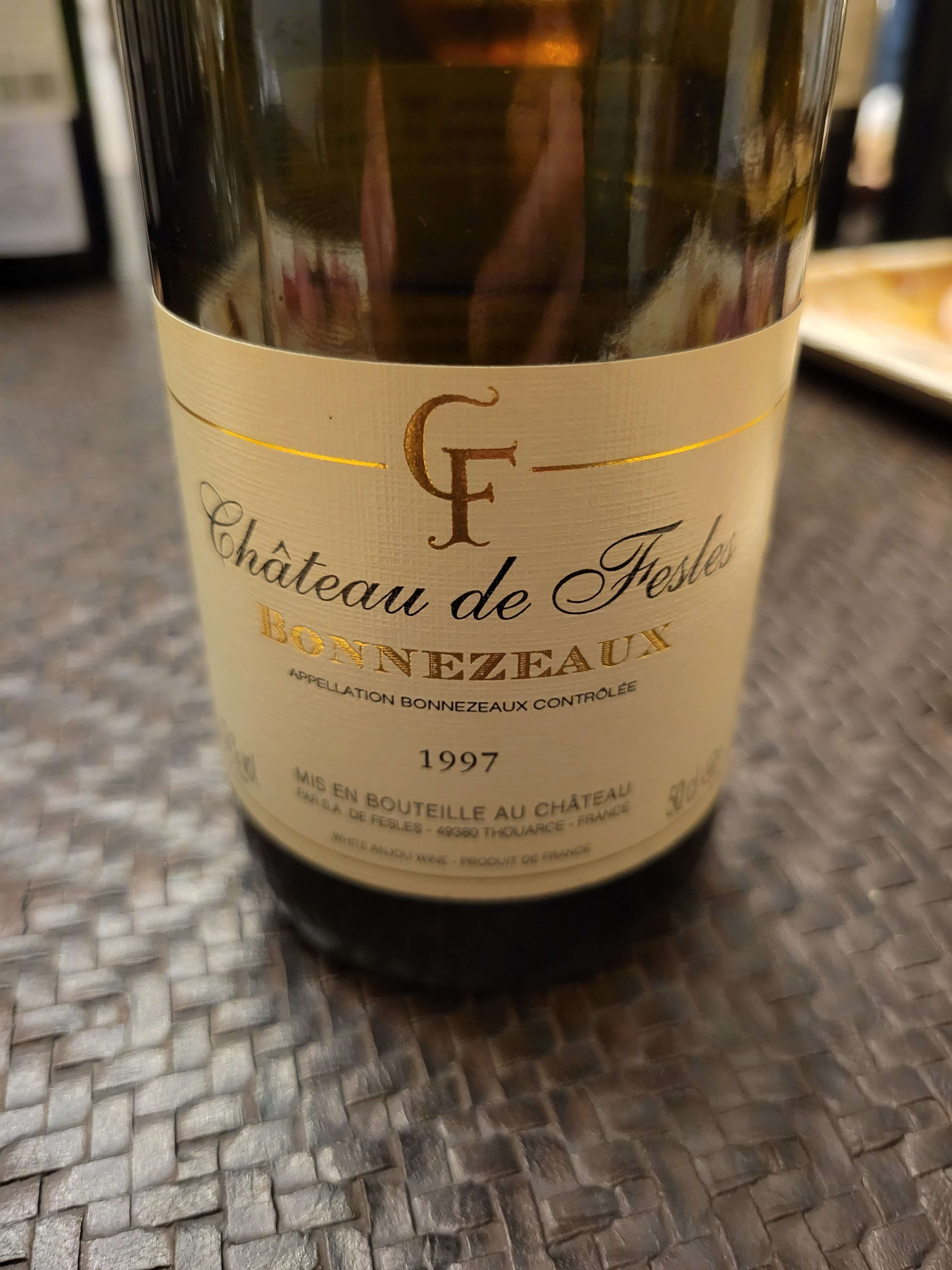
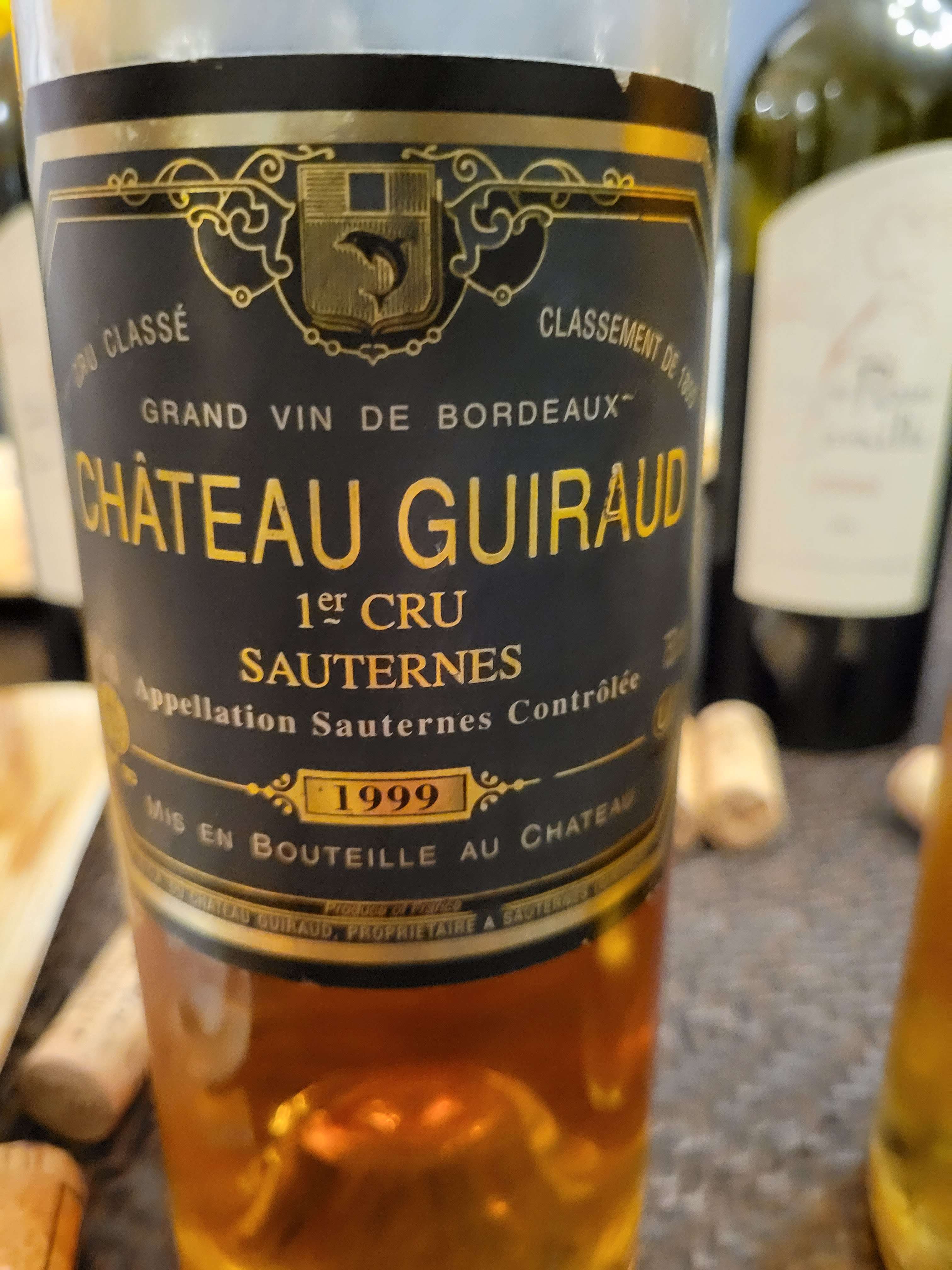
After the DRC work, I tried the famous 1997 Chateau de Fesles Bonnezeaux, it had clearly passed its prime but it was nice enough indeed! If you have any still, drink NOW!! I also tried some Montelobos Mezcal Pechuga – it was smoked with kosher Turkey Breast!!! LOL!! Yeah, it was fun! There were some 1999 and 2001 Chateau Guiraud passed around but I missed them and that is fine, I know them well.
It was great hanging out with Shimon Weiss from Shirah Winery and Alex Rubin (a winemaker helping the guys), and I first met Alex on my way to Josh’s wedding in the plane jetway! Life is such a small world! If any of this sounds familiar, in some manner, you have a great memory! Indeed, in August of 2012 found me, along with the aforementioned Shimon Weiss, and Jonathan Hajdu with the same awesome hosts getting together for an awesome event! It was a lunch to truly remember!
Second Tasting
Noon, the next day, I crashed at Andrew’s place, once again, and I tasted through the Burgundies from the plastic bags some had indeed evolved and improved, but none took a step backward.
Once I was done tasting through the wines I bid my adieu and made my way to the airport! The sad fact is that if you have no status you get what you pay for! I was done a few hours before my flight home, but I flew down using Southwest and I have no status with them, so changing a ticket the day of, would have cost me an arm and leg, so I sat in the terminal and waited for my plane. Of course, the plane was eventually delayed, but my plane was so empty they had to distribute us across the plane – so yeah, I was fine! It is all about perspective – right?
My thanks to Andrew and Shauna Breskin for hosting the tasting and for putting up with me and everyone else who crashed their home for more than 24 hours! Also, I used many of Andrew’s lovely pictures – thank you, sir!!! The notes speak for themselves.
The wine notes follow below, in the order, they were tasted – the explanation of my “scores” can be found here and the explanation for QPR scores can be found here:
N.V. Louis de Vignezac Cuvee Special, Brut, Champagne – Score: 89 (QPR: EVEN)The nose of this wine is very yeasty, with baked goods, lemon/lime, and green apple. The mouth o this medium-bodied wine is ok but uni-dimensional, with nice minerals, green/yellow apple, and lime, but not much more than the acid and the fruit to grab you. The mousse is ok, not bracing and not attacking, but the acidity is great. The finish is long, and tart, with pear, apple, and lime. Drink now. (tasted January 2023) (in San Diego, CA) (ABV = 12.5%)
N.V. Champagne Charles de Ponthieu, Champagne – Score: 91 (QPR: GREAT)The nose of this wine is screaming with bright fruit, rich minerality, slate, rock, baked goods, pear, and apple. The mouth of this medium-bodied wine is fresh, with great fruit focus, a lovely small bubble mousse, pear, apple, lime, baked apple pie, and lovely yeast, with floral notes. The finish is long, fruity, balanced, tart, lovely, refreshing, and focused. Nice! Drink now! (tasted January 2023) (in San Diego, CA) (ABV = 12.5%)
2019 La Chablisienne Chablis, Cuvee Casher, Chablis (M) – Score: 90 (QPR: EVEN)The nose of this wine is nice enough with nice minerality, smoke, and saline, pear, and apple. The mouth of this medium-bodied wine is ok, a bit cooked, funky, and fruity, with apple, pear, and lemon/lime. The finish is long, cooked, and flinty, nice! Drink UP! (tasted January 2023) (in San Diego, CA) (ABV = 12.5%)
This content is for members only. Please Login or Subscribe Here to continue reading!
Kosher Dessert Wine, Kosher French Wine, Kosher Red Wine, Kosher Sparkling Wine, Kosher White Wine, Kosher Wine, Wine, Wine TastingAloxe-Corton, Aux Herbues, Bonnezeaux, Bourgogne, Chablis, Champagne, Charles de Ponthieu, Chateau Castelbruck, Chateau de Fesles, Chateau Haut Breton Larigaudiere, Cuvee Special, Domaine Roses Camille, Gevrey Chambertin, Hautes-Cotes de Beaune, Hautes-Cotes de Nuits, Jean-Philippe Marchand, La Chablisienne, Le Dome, Louis de Vignezac, Meursault, Nuits Saint Georges, Pommard, Sous Chaillots -

Teperberg Winemakers and their Wines
It’s funny. I live in Beit Shemesh, which is about 35 minutes from Jerusalem and 45 minutes from Tel Aviv. By far the closest winery to me geographically is Teperberg – which is only a 6 minute drive (beating out Tzora, which is about 8 minutes away). But, I haven’t been there to taste wine ever. Why? There are two reasons. First, they have no tasting room and no easy way to really host anyone who came to taste. This will change in the very near future, as I am told that they are very close to finishing a formal visitor’s center and tasting room, which should make tasting at the winery an enjoyable experience.
The second reason I haven’t really visited is that, quite frankly, for the last 10 years or so the winery made a conscious shift in style, in what I assume was a push to increase sales. And while that was very much successful – Teperberg is now Israel’s third largest winery, producing about 10 million bottles of wines per year – the style really didn’t appeal to me. That is not a commentary on the winemaking. All the wines at Teperberg over the years have been professionally made by three excellent winemakers, Shiki Rauchberger, Olivier Fratty, and Dani Friedenberg.
Luckily, that has changed somewhat. As I noted previously, in 2019 Dani Friedenberg started producing his own wines through the winery. In 2019 and 2020, he produced two wines, a Granache and a Ramato, which is a Pinot Gris made using skin maceration. While I reviewed the 2019 wines, I never got around to tasting the 2020 vintage on release – though I will be correcting that in this post, as Dani invited me to the winery to taste through his new releases as well as few standard Teperberg releases. For 2021, Dani is adding a Barbera to his lineup, which is exactly what I am looking for in an Israeli wine – and quite frankly, the regular Teperberg wines that we tasted were all very nice as well.
As a bonus, at a meeting of a wine tasting group that I belong to where we taste many current releases all blind, I tasted a new wine by Olivier Fratty, the second winemaker at Teperberg. As opposed to Dani, Olivier’s wines are his own private label and not being sold through Teperberg – but I figured it would be nice to include notes on those as well, as it really does show that the team at Teperberg is capable of producing some really nice wines!
Anyhow – enough talking – here are the wines I tasted:
This content is for members only. Please Login or Subscribe Here to continue reading!
-

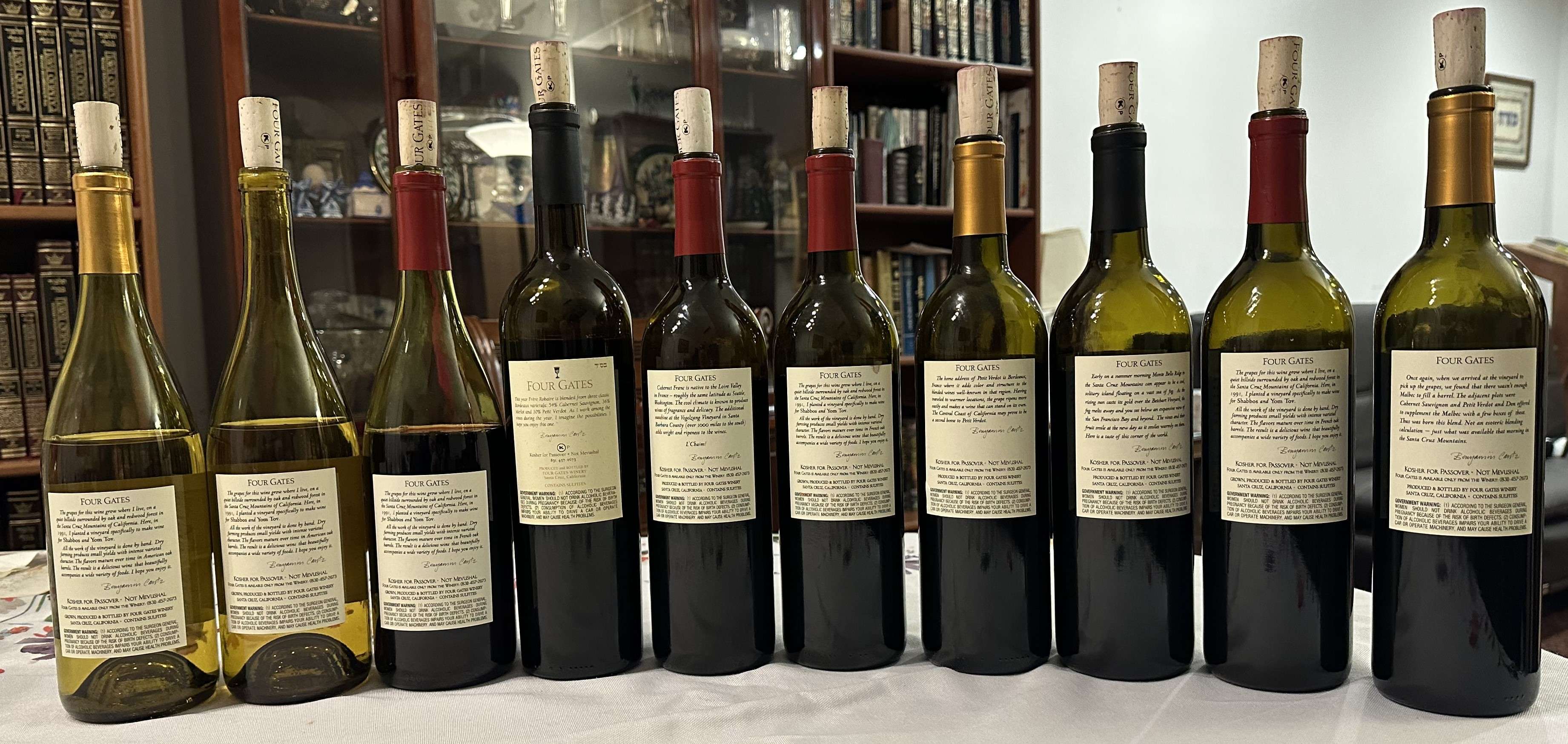
Four Gates Winery’s January 2023 new releases
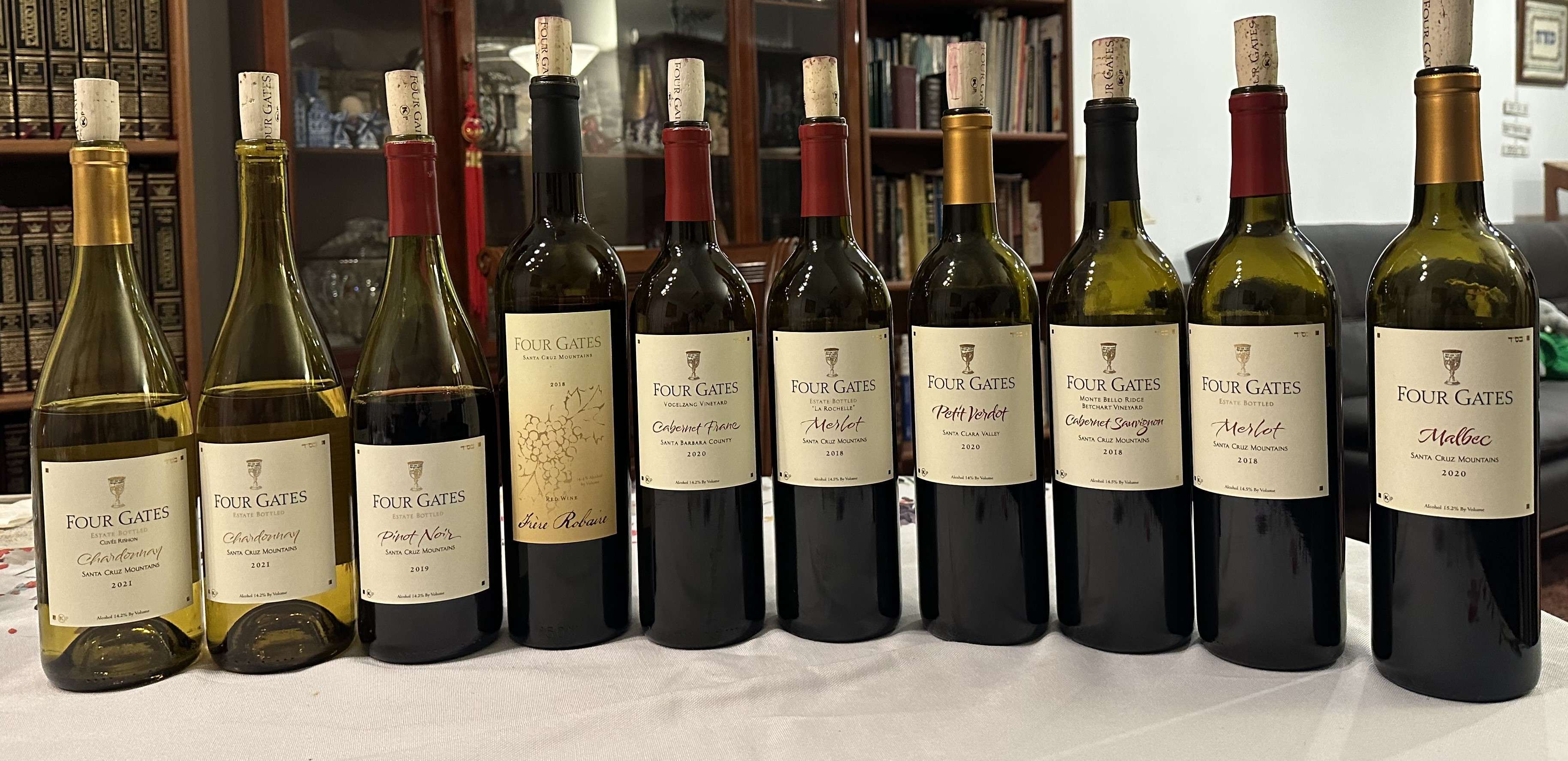
As you all know, I am a huge fan of Four Gates Winery, and yes Benyamin Cantz is a dear friend. So, as is my custom, as many ask me what wines I like of the new releases, here are my notes on the new wines.
I have written many times about Four Gates Winery and its winemaker/Vigneron Benyamin Cantz. Read the post and all the subsequent posts about Four Gates wine releases, especially this post of Four Gates – that truly describes the lore of Four Gates Winery.
Other than maybe Yarden and Yatir (which are off my buying lists – other than their whites and bubblies), very few if any release wines later than Four Gates. The slowest releaser may well be Domaine Roses Camille.
Four Gates grapes versus bought grapes
It has been stated that great wine starts in the vineyard, and when it comes to Four gates wine, it is so true. I have enjoyed the 1996 and 1997 versions of Benyamin’s wines and it is because of the care and control that he has for his vineyard. That said, the Cabernet Sauvignon grapes he receives from Monte Bello Ridge show the same care and love in the wines we have enjoyed since 2009.
I have immense faith in Benyo’s wines which are sourced from his vineyard and the Monte Bello Ridge vineyard. The other wines, that he creates from other sources, are sometimes wonderful, like the 2010 Four Gates Syrah that I tasted recently, and I would have sworn it was a Rhone wine, crazy minerality, acid, and backbone, with fruit NOT taking center stage, though ever so evident, the way is meant to be! Others, while lovely on release may well not be the everlasting kind of Four Gates wines.
One new wine
This year we have the return of Petit Verdot is from the Santa Clara Valley AVA, and another Malbec from the same vineyard as in 2019, in Santa Cruz, but not from the Four Gates vineyards. There is a new Cabernet Franc, all the way from Santa Barbara County, not a location I normally associate with Cabernet Franc, but it is a REAL WINNER, in all ways! That ends the list of wines I call – not Four Gates wines. I state this because the Four Gates Cabernet Sauvignon, is also not from the Four Gates vineyard, but for all intent and purpose, of what I care about, the quality is as good or better than the Four Gates vineyard and it has proven itself as such for more than a decade!
The rest of the wines are the normal suspects, though this year’s crop feels riper than the 2017s, still, the Cabernet and Merlot are incredibly beautiful wines. There are two Chardonnay and they are both sold under the Four Gates label, there is no Ayala this year. Next, you have the 2019 Pinot Noir, a bit riper than I like it but a solid wine. Then you have the 2018 Merlot and the 2018 Merlot, La Rochelle, both are beautiful wines! The true star of this release is the 2018 Cabernet Sauvignon, a shockingly ripe but true wine, the fruit is clean, expressive, and true to its nature, a lovely and very unique wine. Finally, there is the 2018 Frère Robaire, which while nice, is a step back from what I expect from a Frère Robaire.
Prices and Quantities
I have heard it over and over again. That I and others caused Benyo to raise his prices. First of all that is a flat-out lie. I never asked for higher prices, but when asked about the value of his wines, the real answer I could give was more than 26 dollars.
Let us be clear, all of us that got used to 18/26 dollar prices and stocked up on his wines in those days should be happy. The fact that he raised prices, is a matter of basic price dynamics, and classic supply and demand. Four Gates has been seeing more demand for wines while the quantity of what is being made is slowing down.
The law of Supply and Demand tells you that the prices will go up, even if you beg for lower prices.
Four Gates Winery is one of the few cult wineries in the kosher wine world that releases wines every year. Sure there have been crazy cult wines, like the 2005 and 2006 DRC wines, or some other such rarities. His wines are in a class of their own, especially when it is his grapes, and there is less of it out there.
This year, the prices reached their highest Zenith, and it took some 30 minutes to fully sell out. The lower-priced wines sold out in the usual 8 or so minutes while the Cabernet and Merlot and Frère Robaire were the last to go. Still, the crazy prices people paid for the Auction wines that just finished selling this past Sunday show the intense demand for Four Gates wines.
My thanks to Michel and Sima Rynderman for hosting the tasting and for putting up with me and Benyo crashing their home and keeping them both up far later than we should have!! Also, Michel’s awesome Apple phone was used to take lovely pictures – thank you, sir!!!
The notes speak for themselves. Again, this year, I “liked” all the options for sale, though I did not buy the Malbec in case anyone is asking. The wine notes follow below, in the order, they were tasted – the explanation of my “scores” can be found here and the explanation for QPR scores can be found here:


2021 Four Gates Chardonnay, Cuvee Rishon, Santa Cruz Mountains, CA – Score: 92 (QPR: WINNER)This is a very unique wine from Four Gates. This is a Chardonnay that was picked early, hence the “Cuvee Rishon” name. It is very different than previous vintages – very cool! The nose of this wine is fruity, not oak-bomb, with rich gooseberry, guava, melon, and Asian Pear, very fun, with rich saline, orange blossom, jasmine, and spice. The mouth of this medium-plus-bodied wine is not in line with the nose, with a lovely mouthfeel, great acidity, sweet oak, spice, orange, nectarines, green/yellow apple, Asian pear, and lovely sweet oak, sweet baking spices, and more saline. The finish is long, tart, ripe, balanced, and refreshing, with lovely vanilla, cloves, nutmeg, sweet oak, and yellow blossom lingering long. Bravo!! Drink until 2030. (tasted December 2022) (in San Jose, CA) (ABV = 14.2%)
2021 Four Gates Chardonnay, Santa Cruz Mountains, CA – Score: 91.5 (QPR: GOOD)The nose of this wine is fruity, not oak-bomb, with rich guava, melon, Asian Pear, honeydew, rich saline, orange blossom, jasmine, and spice. The mouth of this medium-plus-bodied wine is more in line with the nose, with a slightly fuller mouthfeel than the Cuvee Rishon, nice acidity, sweet oak, spice, orange, lemon/pomelo, yellow apple, Asian pear, and lovely sweet oak, sweet baking spices. The finish is long, tart, ripe, balanced, and refreshing, with lovely vanilla, cloves, nutmeg, sweet oak, and yellow blossom lingering long. Bravo!! Drink until 2028. (tasted December 2022) (in San Jose, CA) (ABV = 14.2%)
2020 Four Gates Petit Verdot, Santa Clara Valley, CA – Score: 91 (QPR: EVEN)This is what Petit Verdot should smell and taste like, clean lines, not over the top, and well-balanced. The nose of this wine is lovely, with bright fruit, smoke, herbs, lovely baking spices, roasted animal, soy sauce, lovely violet, rosehip, and nice black, red, and blue fruit. Nice! The mouth of this medium to full-bodied wine is layered, and lovely, with ripe boysenberry, raspberry, ripe strawberry, and ripe plum, all wrapped in sweet tannin, cedar, smoke, and intense acid, well balanced, with gripping tannin, and nice fruit focus. Bravo! The finish is long, bright, tart, ripe, and balanced, with more smoke, leather, roasted meat, and great fruit. Drink until 2026. (tasted December 2022) (in San Jose, CA) (ABV = 14%)
2020 Four Gates Malbec, Santa Cruz Mountains, CA – Score: 88 (QPR: POOR)The nose of this wine is too ripe for me but this will hit the spot for those that like this style. The nose of this wine changes quickly and turns very fruity, too ripe, with zinberry, ripe blackcurrant, leather, meat, smoke, tar, and over-the-top fruit. The mouth of this full-bodied wine is too ripe for me, almost fig-like, with dried fig, blackcurrant, smoke, dried plum, and mouth-draping tannin with nice sweet oak. The finish is long, ripe, over-the-top, and smoky. Drink by 2026. (tasted December 2022) (in San Jose, CA) (ABV = 15.2%)
2020 Four Gates Cabernet Franc, Santa Barbara County, CA – Score: 92.5 (QPR: WINNER)This wine is sourced from Santa Barbara County and it shows. The nose of this wine starts with nice bell pepper, spice, cloves, cinnamon, gravel, hints of jalapeno, and nice red fruit. The mouth of this medium-bodied-plus is ripe, with nice ripe strawberry, raspberry, plum, and hints of elderberry, with a bit too much green notes, nice acidity, good fruit focus, nice acidity, refreshing, with good mouth-draping tannin, and some elegance, nice! The finish is long, tart, ripe, and fruity, with good acidity, nice leather, vanilla, and good red/blue fruit. Drink until 2030. (tasted December 2022) (in San Jose, CA) (ABV = 14.2%)
This content is for members only. Please Login or Subscribe Here to continue reading!
-

The Top 24 QPR Kosher Wine WINNERS of 2022
In May 2020 I wanted to drive home the need for QPR (Quality to Price Ratio) wines. So I set out to create what I thought a QPR metric should be! Gone were arbitrary price ranges and such. Instead, I let the market define what the QPR price range should be. I did this by grouping the wines by their type (white, red, rose, sparkling, and dessert) and then further refined the grouping by ageability within the white and red wines. This gave me the following groups:
- Drink “soon” White Wine (Simple whites)
- Rose Wine (always drink soon)
- Drink “soon” Red Wine (Simple reds)
- Mid-range aging Reds (4 to 11 years)
- High-end Red wines (11 and more years)
- High-end White wines (7 and more years)
- Sparkling Wine (No need here for extra differentiation)
- Dessert Wine
I then made the mistake of trying to create an Orange wine range/group – that was a HUGE mistake. Again, the wines themselves were not the issue, the issue revolved around trying to group such a small sample set into its group. They will go into their respective white wine category, next year.
Throughout the year, I posted many QPR posts, for almost all of the main categories. I will continue down this road until I find a better way to categorize and track wines that are QPR WINNERS. Talk about WINNERS, that secondary QPR score was a 2.1 revision to my QPR scoring, and that is explained in this post. All the wines listed here are QPR WINNERS from my tastings in 2022.
Let us discuss the approach
I have heard from a few of you. I do not understand your QPR (Quality to Price Ratio) scoring. So, let us take another shot at this! Every time a customer comes into a shop or goes online to buy kosher wine they have a choice of a few thousand wines, online, or many hundreds in a store. The question is how does a buyer differentiate one wine from the next?
If they like Terra di Seta wines, as I do, and it costs 30 dollars then he/she will compare other wines to that wine, in regards to the wine and the price. That is the same for any wine they like and any wine they are looking at buying. Price matters! Now, the real question is how can you compare two wines to each other? Any two wines in the world of kosher wines? What characteristics can you use to compare them?
Let us say they like the 2018 Elvi Wines Clos Mesorah, the 2022 wine of the year (AKA best-priced QPR wine). It is a red wine from Montsant, Spain. OK, what other wine can you compare with it? You can compare other Montsant kosher wines, like the Cellar Capcanes wines. However, the Cellar Capcanes wines have an issue – they have been poor for many years! As the ratio states it is QUALITY to price! Quality is primary; once you have a good wine, you can attempt to compare it with similarly good wines.
OK, so we need equal or comparably equal quality and that is it??? So, let us say there exists a rose from Montsant that scores the same quality score as Clos Mesorah are they comparable? What about a white wine – same? Can/should compare them? I will tell you that no one would act in such a manner. People will compare items. OK, so are we then forced to compare Montsant wines with Montsant wines – again I will tell you no! People will compare like-scored red wines with like-scored red wines.
OK, but what is “like” – that is the body of work that my QPR approach works to answer. If you agree that people will attempt to compare items that are similar in nature but not locale, region, or price, what is that characteristic that they will use to compare two arbitrary kosher wines? Price IS NOT the answer.
So, let us recap – we have two similarly scored wines (AKA quality) but they are very different in many ways. Let us look at three of the wines below, two of which are from the greater Medoc region:
- 2020 Chateau Clarke, Baron Edmond de Rothschild, Listrac-Medoc – Score: 92.5 (QPR: WINNER)Drink from 2025 until 2032. (tasted November 2022) (in Paris, France) (ABV = 13.5%)
- 2020 Chateau Fourcas Dupre, Listrac – Medoc – Score: 92.5 (QPR: WINNER) Drink from 2024 until 2035. (tasted November 2022) (in Paris, France) (ABV = 12.5%)
- 2019 Chateau Royaumont, Lalande de Pomerol – Score: 92.5 (QPR: WINNER)Drink from 2024 until 2032. (tasted December 2022) (in San Jose, CA) (ABV = 15%)
These wine price from 38 dollars to 55 dollars. The question you need to ask is are they comparable? I would state they are and I would further state that wine buyers compare them every time they read my lists and other lists that like these wines. Again, the primary requirement is quality – and these all scored the same quality score.
So, next, would you at least compare two Listrac-Medoc wines to each other? The Chateau Fourcas Dupre and the Chateau Clarke? I would say yes for sure. Well, why is the Royaumont any different? They are very different wines, of course, but in the end, what do oenophiles buy such wines for?? To store them and share them at a later date, meaning that wine buyers classify wines by regions but ultimately they classify them by their ability to age gracefully or not! Meaning some wines age beautifully and many are good to enjoy in the coming years.
So, now you see the logic to the categories I use to compare wines – this is the list once again:
- Drink “soon” White Wine (Simple whites)
- Rose Wine (always drink soon)
- Drink “soon” Red Wine (Simple reds)
- Mid-range aging Reds (4 to 11 years)
- High-end Red wines (11 and more years)
- High-end White wines (7 and more years)
- Sparkling Wine (No need here for extra differentiation)
- Dessert Wine
Essentially, ignoring sparkling, rose, and dessert wines, there is white wine and red wine. Each of those two major categories is broken into their age-ability. Red wines have three age ranges while white wine has two. Then there are the other three aforementioned groups, rose, sparkling, and dessert wines.
Once you have scored a wine – IRRELEVANT to the price – this is KEY you are then required to place that wine into one of the 8 categories listed above. Once you have done that any wine in that category is available for comparison. Using the median approach wines are stacked and ranked by their price, within that category, and some rise above others, by having an equal or better quality for a lower or equal price. Please read more about this here and here.
The Summary
This year, the list came to a total of 24 names, and none had to dip below 92+ in the scores, which is a large number and better scores overall than last year, but again, the pool from where they are culled continues to grow, and the diamonds in the rough are getting harder and harder to find. There are 24 or so WINNER that scored 92+ this year but not in a single area.
Like last year, we return with QPR for France, the prices for many wines there, are dirt cheap! There is also QPR for the USA, which is the default. Finally, some wines are QPR here in the USA but not in France.
Of course, the first wine on the list is the 2022 Wine of the year! Elvi Wines is a perennial producer of QPR WINNER wines and a most deserving winner of the 2021 Winery of the year!
Maybe, Avi Davidowitz, from kosher wine unfiltered, can create a list like that for Israel, this year, a bunch of wines became available there, and a proper QPR list would be worthwhile!
The wines on the list this year are all available here in the USA, and in Europe, and a few can be found in Israel, as well. The wine notes follow below – the explanation of my “scores” can be found here and the explanation for QPR scores can be found here:
2018 Clos Mesorah, Montsant – Score: 94 (QPR: WINNER)The nose of this wine shows more black fruit than the 2019 vintage, with lovely blackberry, smoke, root beer, and roasted animal, more than 2019, with some red fruit, a bit bluer, with white and pink flowers that emerge after time, raspberry, and mineral. The mouth on this full-bodied wine is rich, layered, elegant, and a bit riper than 2019, with rich salinity, sweet oak, black olives, blackberry, plum, boysenberry, root beer, dark currants, anise, and rich mouthfeel and fruit structure, that gives way to saline, roasted herbs, and graphite. The finish is long, dark, brooding, smoky, earthy, forest floor, and blackcurrants, with dirt, loam, clay, leather, and rich spices. Bravo!! Drink from 2027 until 2036. (tasted November 2021) (in Montsant, Spain) (ABV = 15.5%)
2020 Château Olivier Grand Cru Classe, Pessac-Léognan – Score: 94 (QPR: WINNER (France), GOOD (USA))The nose of this wine is quite nice, a wine I would drink, with a bit of soy sauce, rich salinity, mushroom, earthy, and dirty, like a rich and redolent mud pen, with a bit of heat, and lovely smoke. With time, the heat drops off, ripe, muddy, mushroom haven, lovely! The mouth of the full-bodied wine is dense, layered, rich, and concentrated, with rich extraction, dark and brooding, with juicy blackberry, ripe strawberry, mushroom, forest floor, wet leaves, rich salinity, soy sauce, umami, just a fun, ripe, savory, and dirty wine. The finish is long, dark, and brooding, but well controlled, one of those rare ripe/dirty/earthy controlled monsters, with dense minerality, scraping graphite, ripe fruit, and leather, Bravo! Drink until 2035. (tasted November 2022) (in Paris, France) (ABV = 14.5%)
2019 Chateau Tour Seran, Medoc – Score: 94 (QPR: WINNER (France))This is one of the best wines of our blind tastings here in the hotel. The nose of this wine is lovely, and perfectly balanced, with licorice, smoke, black and red fruit, char, toasty oak, loam, lovely mushroom (that comes out after a few hours), and forest floor. The mouth of this full-bodied wine is dense, ripe, layered, and rich with good acidity, richly extracted, but savory, not overly ripe, a real joy, with blackberry, ripe raspberry, currants, dense loam, forest floor, with scraping minerality, graphite, tar, and rock, this is too much fun! The finish is long, and mineral-driven, with good fruit focus, great graphite, and rock. Drink until 2036. (tasted November 2022) (in Paris, France) (ABV = 14%)
2019 Clos Mesorah, Montsant – Score: 93.5 (QPR: WINNER)This wine is beautiful with lovely floral notes of rosehip, violet, tisane tea, and red and blue fruit, with roasted herb, smoke, roasted animal, rhubarb, dried cherry, and lovely forest floor notes. The mouth on this medium-plus bodied wine is lovely with screaming acidity, lovely dark raspberry, plum, tart currant, mouth-draping tannin, rhubarb, dark cherry, with lovely green notes, rich saline, mineral, spice, roasted herb, lovely blackberry, smoke, and rich graphite. The finish is long, green ripe, blackberry, with saline, smoke, blueberry, leather, cloves, cinnamon, and sweet oak, bravo!!! Drink from 2026 until 2034. (tasted November 2021) (in Montsant, Spain) (ABV = 15.5%)
2020 Chateau Lafon-Rochet, Saint-Estephe – Score: 93.5 (QPR: WINNER (FRANCE), USA(EVEN))This wine is a blend of 55% Cabernet Sauvignon & 45% Merlot.The nose of this wine is a less ripe wine, with savory notes, lovely green and red fruit, elegant redolence, minerality, lovely iron shavings graphite, beautiful pencil shavings, with incredible raspberry, cherry, and rich smoke. The mouth of this medium-bodied wine is lovely, elegant, extracted, rich, and beautiful with ripe and juicy cherry, elegant tart/juicy raspberry, beautiful smoke, intense and elegant charcoal/graphite, just lovely, with red fruit, loam, and mouth-scraping tannin. The finish is long, red, ripe, and smoky, with great tobacco, rosemary, savory notes, dark chocolate, loam, leather, and lovely smoke. Drink from 2023 until 2033. (tasted November 2022) (in Paris, France) (ABV = 13%)
2016 ElviWines Herenza Rioja, Reserva, Rioja – Score: 93.5 (QPR: WINNER)This is what I crave in wine – balance, complexity, elegance, and all bottled for a price that makes it a WINNER! The nose of this wine is beautiful, balanced, complex, and lighter than 2014, but still bold, rich, and expressive, soy sauce, umami, rich mushroom, loam, spices, blue and red fruit, and sweet anise, lovely! The mouth on this medium-bodied wine is not as bold as the 2014 and it starts a bit ripe, with time the wine opens to show balance, dark blueberry, plum, candied/spiced raspberry, and rich sweet spices give way to a mouth-draping elegance, sweet tannin, plush mouthfeel, and rich loam, clay, and earth, beautiful. The finish is long, and balanced, with leather, sweet tobacco, root beer, sweet baking spices, cloves, cinnamon, sweet cedar, dark chocolate, and rich searing acidity that brings this wine altogether. Bravo!! Another smash! Drink from 2024 until 2032. (tasted November 2021) (in Montsant, Spain) (ABV = 14.5%)
This content is for members only. Please Login or Subscribe Here to continue reading!
Anthony Girard, Chalk Hill, Chateau Castelbruck, Chateau Clarke, Chateau Clement-Pichon, Chateau Fourcas Dupre, Chateau Labegorce, Chateau Montviel, Chateau Olivier, Chateau Royaumont, Chateau Tour Seran, Chateau-Lafon-Rochet, Chianti Classico, Clos Lavaud, Clos Mesorah, Covenant Winery, Domaine du Chateau Philippe le Hardi, Echo de Roses Camille, Elviwines, Gevrey Chambertin, Herenza Reserva, Herzog Cellars Winery, Lake County, L’indiscrete, Le Hurevent, Les Crais, Pavillon de Leoville Poyferre, QPR, Riserva, Sancerre, Solomon Blanc, Special Edition, Special Reserve, Terra di Seta, top kosher wines, Vignobles Mayard -

RCC Israel # 43 – Shevat 5783
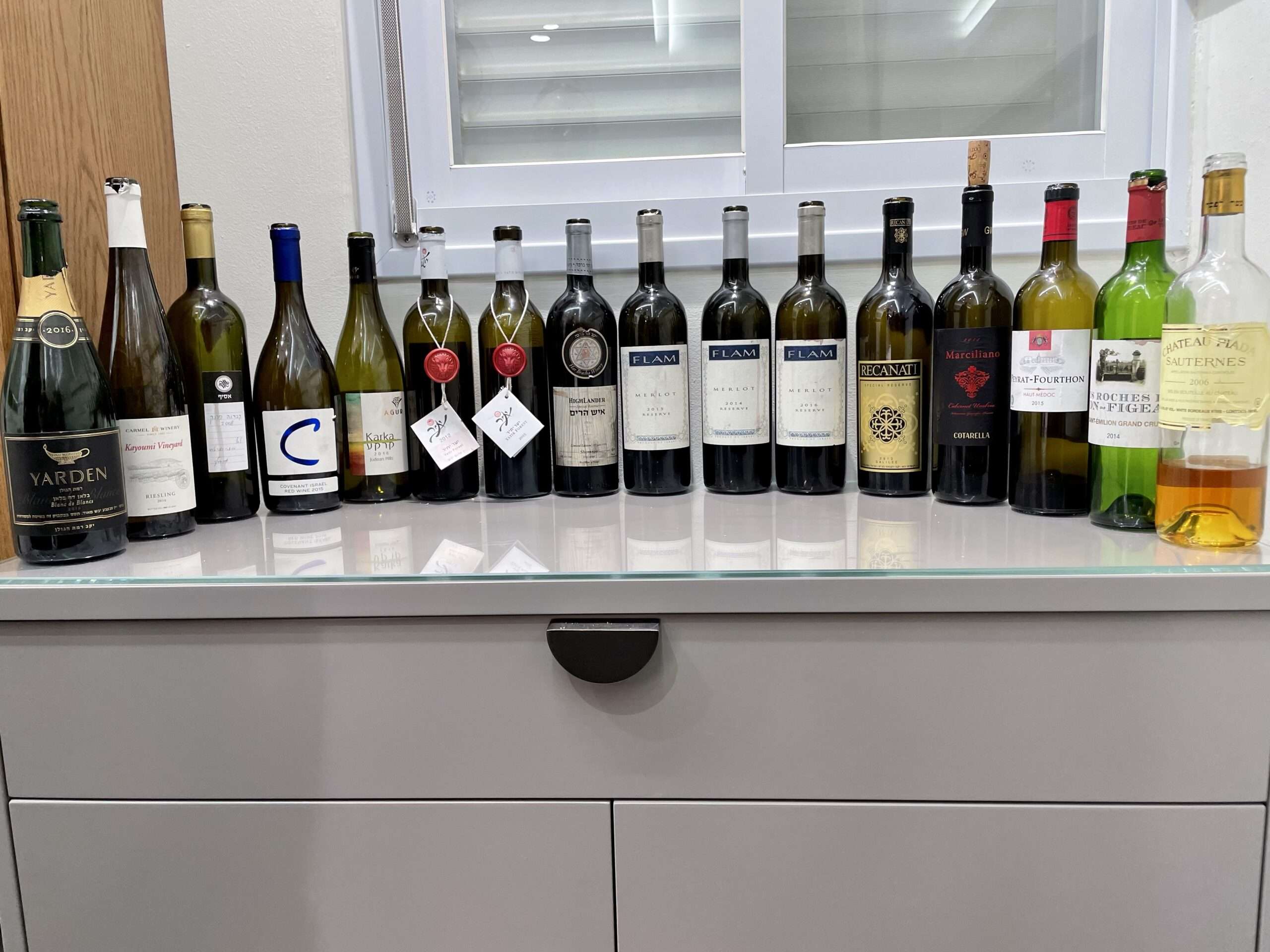
I have three posts that I am working on simultaneously regarding various tastings – but before I could finish any of them a new month has begun – and that means an RCC has taken place. Again, we had the pleasure of having Chef Amrom Pitterman cook for us, and again, I hosted it in my home in Beit Shemesh rather than in Jerusalem. Each course was inventive and delicious, and Amrom also made allowances for those diners with special requests (like Keto/Low carb friendly alternatives). Everything turned out great. You’ll find pics of the various dishes below.
This month we ended up with 15 participants – which we have not had in a long time. I guess things are completely back to normal. I have to remember that 15 is simply WAY to many people – with optimum being 10-12. Any more and you can’t have a conversation with everyone at the table at once – and the pours for each bottle are smaller than is ideal. In any event, I think people still enjoyed themselves.
The wines were a mixed bag this month. We had a lot of Israeli wines with some French and Italian thrown in. Not all of the wines were hits, but such is life. What’s important is that the evening as a whole was interesting and people had fun eating, drinking and discussing.
Here are the wines we enjoyed:
This content is for members only. Please Login or Subscribe Here to continue reading!
Agur, Asif, Blanc de Blancs, Blue C, Cabernet Franc, Carmel, Chateau Piada, Covenant Israel, Famiglia Cotarella, Flam, Forest, Golan Heights Winery, Har Bracha, Haut-Medoc, Highlander, Karka, kayoumi, Les Roches de Yon-Figeac, Marciliano, Merlot, Peyrat-Fourthon, Recanati, Reserve, Riesling, Saint-Emilion Grand Cru, Sauternes, Special Reserve, Umbria, Yarden, Yatir -

My top 25 kosher wines of 2022, including the Wine of the Year, Winery of the Year, the Best Wine of the Year, and the Best Mevushal wines of the year awards
Like last year, I wanted to make this post short and sweet – so the criteria are simple. I could care less about price, color, or where it was made. All that matters is that it is/was available this year sometime to the public at large and that I tasted it in a reliable environment, not just at a tasting, and that it scored a 93 or higher.
We are returning with the “wine of the year”, “best wine of the year” “Winery of the Year”, and “Best White wine of the year”, along with a last year’s new addition the – “Best Mevushal wine of the year”. Wine of the year goes to a wine that distinguished itself in ways that are beyond the normal. It needs to be a wine that is easily available, incredible in style and flavor, and it needs to be reasonable in price. It may be the QPR wine of the year or sometimes it will be a wine that so distinguished itself for other reasons. The wines of the year are a type of wine that is severely unappreciated, though ones that have had a crazy renaissance, over the past two years. The Best Wine of the year goes to a wine well worthy of the title.
The Mevushal wine of the year is something I dread. I understand the need for a wine that can be enjoyed at restaurants and events, but when we start seeing Château Gazin Rocquencourt and Chevalier de Lascombes go Mevushal – we know we have a problem. As I have stated in the past, if this is what needs to happen, then please sell both options as many do with Peraj Petita/Capcanes, Psagot wines, and many others. Still, it is a wine and as such, it needs a best-of-the-year moniker, so we do it once again!
This past year, I tasted more wines than I have ever, in the past. Now to be clear here, I did not taste many Israeli wines as they have proven to me over and over again, even with the much-ballyhooed 2018 vintage that they are not worth my spending my money on. Still, I did taste a large number of Israeli wines both in my home and at KFWE events. I spent a fair amount of time tasting all the French and European wines I could get my hands on and I feel that is where I added the most value, IMHO. For those that like the Israeli wine style – other writers/bloggers can point you in some direction. This past year, was a return to an above-average year but not as good as last year’s list because last year’s 2019 wines were incredible and precise.
Last year’s list was star-studded and was driven by the incredible 2019 vintage. This year’s list is solid and will highlight a few top 2020 wines, but the clear winner will highlight a 2019 wine that missed making last year’s list because it was released later.
There are also interesting wines below the wines of the year, think of them as runner-up wines of the year. There will be no rose wines on the list this year. If last year, I thought the roses were pure junk, this year, you can add another nail in the coffin of rose wines, IMHO. Last year’s list was stronger with some 123 WINNER wines, this year we had 95. Still, another overall solid year.
Royal Wines continues to impress with the wines they make or import. However, slowly, more lovely wines are being made from other sources though they are harder to find in the USA or outside of Europe.
Now, separately, I love red wines, but white wines – done correctly, are a whole other story! Sadly, in regards to whites, we had no new wines from Germany, still. Thankfully, we have some awesome entries, from the incredible 2020 Chateau Malartic Blanc to the lovely 2021 Covenant Solomon Blanc, to the beautiful 2021 Jean-Philippe Marchand Meursault.
Finally, this year is the year of the Clos! Between the awesome Wine of the Year – the 2018 Clos Mesorah and the Clos Lavaud from Domaine Roses Camille, the Winery of the year, long live the Clos!!!
The wines on the list this year are all available here in the USA, and in Europe, and a few can be found in Israel, as well. The wine notes follow below – the explanation of my “scores” can be found here and the explanation for QPR scores can be found here:
The 2022 Kosher Winery of the Year
This award continues to get harder and harder each year. The sad cold, hard truth is that there are too few great kosher wineries. When I started this award, some 4 years ago I thought it would only get easier. Sadly, there are a few truths that limit my ability to give out this award.
First, as much as we have been blessed with great Kosher European wines, in the past 6 years, most of those blessings come under the auspices of single-run kosher wines. Chateau Leoville Poyferre, Château Smith Haut Lafitte, you name it, are all based upon kosher runs. What we have in Europe, kosher-winery-wise, is Terra di Seta, Cantina Giuliano, and Elvi Wines (including Clos Mesorah). Along with this year’s winner, Domaine Roses Camille. Officially, Domaine Roses Camille only became 100% kosher in 2020, but for all intent and purpose, they have been producing the vast majority of their wines in kosher, since 2011.
The requirements to receive this award are simple, the winery must be kosher, not a kosher-run, the quality must be consistent, and the wines must be readily available. The last requirement is the main reason why Four Gates Winery has yet to win the award, but at this point, it is only a matter of time, as kosher wine availability is becoming less of an issue overall, given the sheer number of cult-like kosher wineries that exist today.
Domaine Roses Camille was one of those cult-like wineries at the start when they produced a stunning 2005 Pomerol. It hit that cult status when the late Daniel Rogov called it the best kosher wine he had ever had, at that point, anyway.
As always, my disclaimers. The U.S. importer of Domaine Roses Camille is Andrew Breskin, of Liquid Kosher, and a person I call a friend. This past week I spent two days with him tasting many a wine, that post will follow my year-in-review posts, along with the Four Gates Winery new releases post.
Domaine Roses Camille’s winemaker is Christophe Bardeau. I have had the honor of meeting him a few times and he always comes across as a kind and professional person. While the main two wines, Domaine Roses Camille and the Echo Roses Camille come from Pomerol, he also makes wines from other regions in Bordeaux, like the Clos Lavaud (Lalande de Pomerol), Chateau Moulin de la Clide (a wine that took on its cult-like status as it was sadly a one and done run), Chateau Marquisat de Binet, and others.
Now, to be clear, the Domaine Roses Camille, Echo Roses Camille, and Clos Lavaud – which are all in Pomerol are made in Domaine Roses Camille winery, the 2022 Winery of the year. The one-off Moulin de la Clide and the lovely Chateau Marquisat de Binet were/are made in those Chateaus. Christophe Bardeau made/makes all the other wines but I named them here for completeness.
Pomerol is a lovely location and the wines of Domaine Roses Camille continue to impress. The Clos Lavaud is a year-in-year-out QPR WINNER along with the Echo Roses Camille. They are both perennially great wines and wines we all are very lucky to have in the kosher wine market! The flagship wine, Domaine Roses Camille has never had a bad year, it is the model of consistency, and the only years it was not made kosher was during the lean years of the kosher wine market in France, 2007 – 2010 (inclusively). It does come in at a higher cost than other kosher Pomerol wines but the high-end quality of Domaine Roses Camille matches the prices and longevity potential of other high-end quality kosher wines that cost much more than the DRC does. Yeah, there, I slipped, we all call the Domaine Roses Camille, our kosher DRC, but yeah, we all know what the real DRC is and that is a different wine region and price, all together!
So, with mad props and great happiness, and hope for even more success, I say Bravo to Christophe Bardeau and Andrew Breskin for all the hard work and lovely wines. The quality of the wines that are here and will be coming, in the future (I tasted many of them over this past week), are impressive and I wish them only continued success!
This content is for members only. Please Login or Subscribe Here to continue reading!
Blanc, Cabernet Sauvignon, Carillon de l'Angélus, Chambolle-Musigny, Chateau Angelus, Chateau Giscours, Chateau Leoville Poyferre, Chateau Malartic Lagraviere, Chateau Marquis d'Alesme Becker, Chateau Olivier, Chateau Pontet Canet, Chateau Smith Haut Lafitte, Chateau Tour Seran, Chateau-Lafon-Rochet, Chateauneuf du Pape, Château Lascombes, Clos Lavaud, Clos Mesorah, Covenant Winery, Domaine du Chateau Philippe le Hardi, Domaine Roses Camille, Elviwines, Four Gates Winery, Frere Robaire, Grand Cru, Hagafen Winery, Herzog Cellars Winery, Jean-Philippe Marchand, La Rochelle, Lake County, Le Hurevent, Lot 70, Merlot, Meursault, O’dwyers Creek, Pinot Noir, Prix Reserve, Sauvignon Blanc, Solomon, Solomon Blanc, Special Reserve, Vignobles Mayard -

France Trip 2022 – Part 5 – The Blind Tastings
This will be my final post about my most recent trip to France – but buckle up – it’s going to cover over 60 wines! Before I even get started, I have to thank my partner in crime, David Raccah of the Kosher Wine Musings blog. He does all of the logistics work for these trips – working out with the various producers when we can visit, making the hotel arrangements, and arranging for all of the various wines we taste at the hotel. [For that last piece he relies on Ari Cohen of Bakus Wine who is awesome and helps with receiving a good chunk of these wines for us prior to our arrival in France – Thanks Ari!] To say that I couldn’t do this trip without David is an understatement. And even if I could – wouldn’t want to! Honestly hanging out with David for a week in France is really one of the highlights for me each year. Each year we do it a little differently, and each year is an experience! But, no matter how we do it – it’s always super fun – and educational!
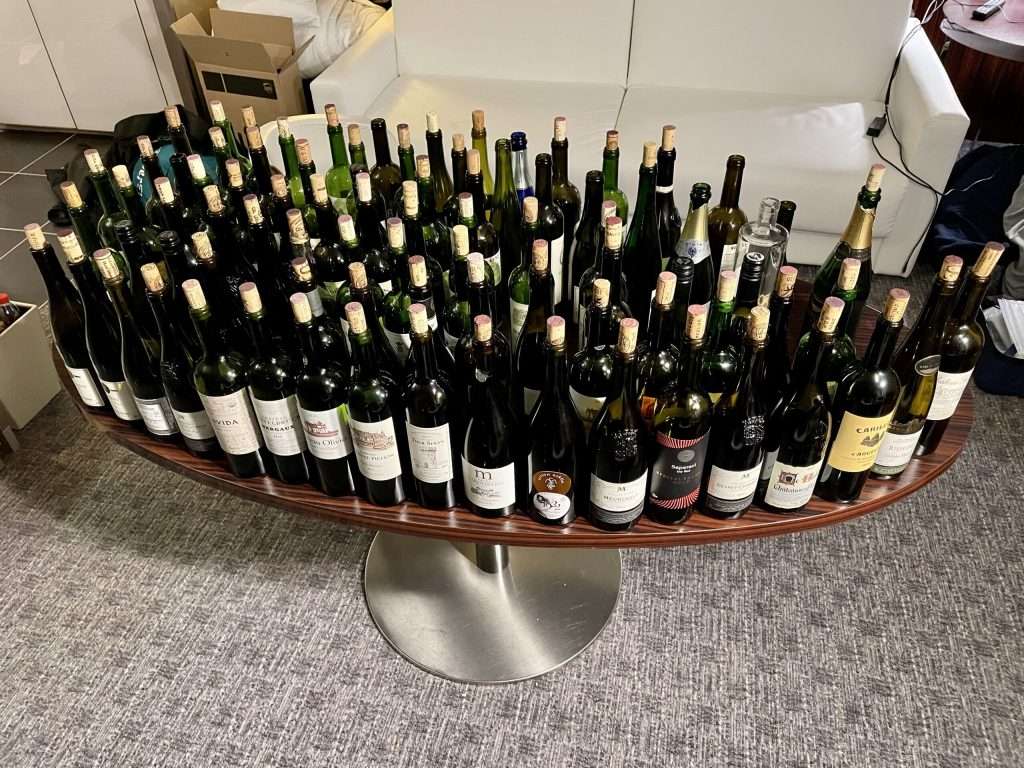
Anyhow, this year we omitted all travel, and we split each day between visiting a producer somewhere in Paris and tasting wines back in the hotel room. We usually do this in some sort of suite at a hotel located in central Paris. We need a large room just for the logistics of each of us having sleeping space, storing the insane number of boxes and bottles that come to us while we are there [If you include all of the wine that we tasted and that David and I brought back to our respective homes, it was well over 100 bottles that made their way to that hotel room], and having space to actually sit and taste through 10-15 bottles in a round.

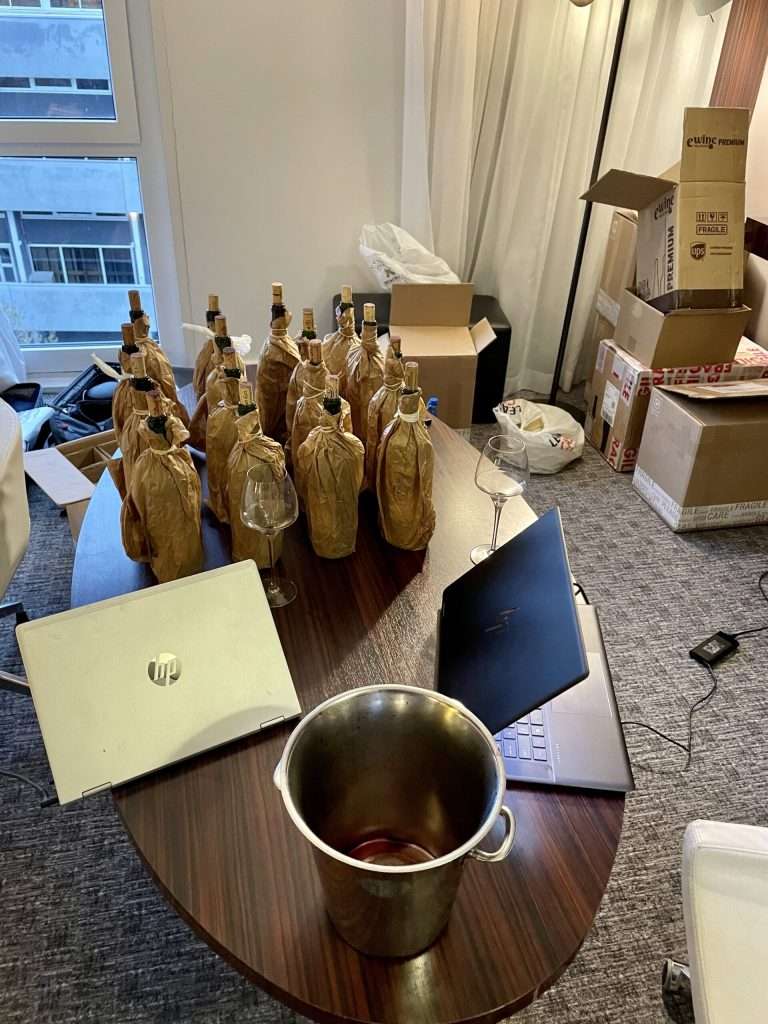
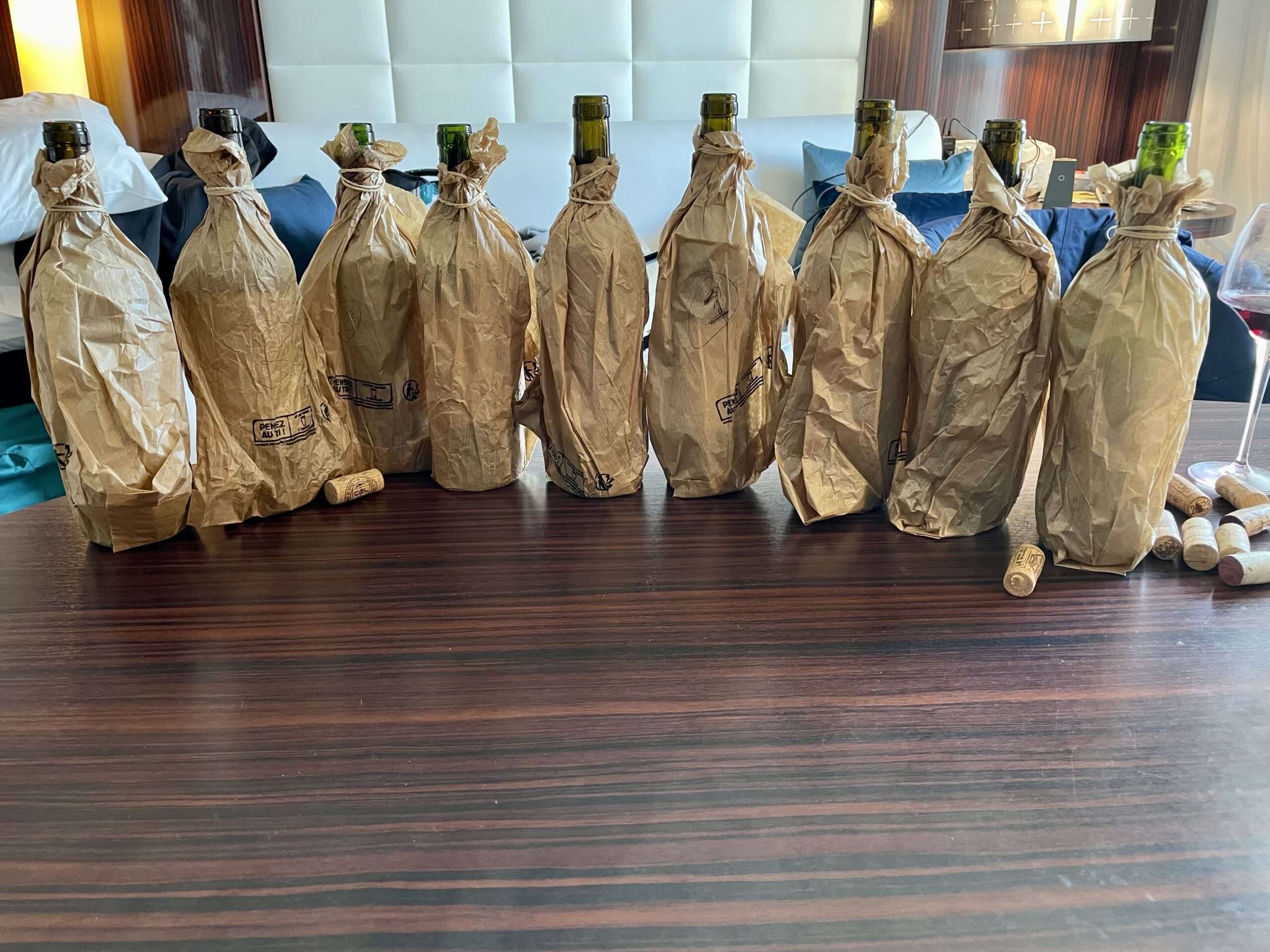
This year, we decided to taste just about everything in the hotel, blind. This sets up some logistical issues. First we needed to make sure that the wines made sense to taste together – it is unfair to taste a small 2021 wine that goes for 8 Euro right after a 100 Euro bottle. The quality is not going to be the same nor is your expectation. And so, to deal with that, as David was aware of the wines we would be tasting (he arranged for them to be there after all), he broke the wines into a number of flights and bagged them in brown paper bags. I then randomly grabbed and numbered them. So – in short, I knew nothing about which wines we were tasting at all – and while David knew which wines we were tasting overall, he had no control over the order and could not know specifically which bottle was being tasted at a given time.
Another issue we faced was wines being affected by either being too closed – or by a lighter bodied wine or a wine made in a more delicate style coming after a more full bodied or robust wine. To offset these issues, we tasted all of the wines that could be affected by being closed, a second (or even 3rd or 4th time) after time had passed. In addition, on subsequent tastings, the drinking order of the wines was reversed so that wines could not be influenced by the same wine that was drunk previously on a subsequent tasting. Are these methods foolproof in terms of guaranteeing a “pure” result? No. But honestly, we gave each wine a fair shake and did our best to ensure that each wines showed as best it could.
Having said all of that, this does show the inherent flaws of tasting fully blind without the proper facility to retaste with the mitigations described above. The order is something that people can understand clearly but there WERE some crazy improvements for certain wines in subsequent tastings related to air – especially in the wines that were made by Pierre Miodownick. Some of those wines showed far poorer in the initial tasting than they did later on – and many of them needed multiple rounds to come in to their own – even the white! I tasted the Carillon D’Angelus over three days total – and quite frankly it was still improving when I had to dump what I had left before getting on the plane back to Israel. This is something that I have known for quite some time and as a result, even though I participate in a number of blind tastings a month usually with tasting groups that I belong to, but because these tastings do NOT lend themselves to the mitigations mentioned above (due to time/logistics constraints) , I never publish those notes.
But luckily, here we were able to do it right and so below you will find notes on all of the wines we tasted in the order that we initially tasted them.

Before I get to that though, I have to describe the scene. As I mentioned, we are in a large suite – there are boxes of wine in every corner. There is a small table where we have 10-15 bottles that David has bagged and I have numbered. We have wine glasses out, computers and phones out. No one is listening to us and so we freely discuss the lines as we take notes. I have to say, in terms of wine tasting experiences, there are NONE more fun than these. Even the ‘80’s pop-rock that David insists on listening to as we taste add to the fun. It is just the absolute best time in terms of tastings. So my thanks to David for doing this with me each year. Super-fun! [Links to his posts about these tastings are here and here.]
Here we go…..
This content is for members only. Please Login or Subscribe Here to continue reading!
1922 Meritage, 2020 Carillon d’Angélus, 2020 Château Haut-Breton, Alavida, Alsace, Blanc, Blanc de Blancs, Blaye Cotes de Bordeaux, Bordeaux, Bordeaux Superieur, Bourgueil, Brut, Casa E.di Mirafiore, Cave de Ribeauville, Champagne, Champagne Cuvee Chambricard, Charlie Winery, Chateau Cheval Brun, Chateau Clement-Pichon, Chateau de Mole, Chateau du Courneau, Chateau Haut-Piquat, Chateau Jaumard, Chateau Lafitte, Chateau Larcis Jaumat, Chateau Olivier, Chateau Pape Clement, Chateau Rollan de By, Chateau Tour Seran, Chateau Les Tuileries, Chateauneuf du Pape, Château Bellerives Dubois, Château Brousseau, Château de Marmorières, Château Guibeau, Château Haut-Brignot, Château Picampeau, Chinon, Cotes de Bordeaux, Dolcetto D'Alba, Domaine Bousquet, Eclectic, Extra Dry, Georgia, Golan Heights Winery, Gold, Grand Cru Classe, Haut de Grava, Haut-Medoc, Judean Hills, Kabinett, Kakheti, Keresztur, L'enclos de Zeide, L’Arzelle, La Boucaude, La Petite Metairie, Languedoc, Larigaudiere, Late Harvest, L’Excellence, Les Amandiers, Les Bialeres, Les Vignerons de Landerrouat Duras Cazaugitat, Les Vin de Vienne, Lussac Saint-Emilion, Mademoiselle, Maison Sarela, Margaux, Marquis, MD Excellence, Medoc, Mendoza, Pavillon Du Vieux Chantre, Pays d'Oc, Pessac-Leognan, Philippe Paine, Plume de Paloumey, Prosecco, Puisseguin-Saint-Emilion, Riesling, Saar, Saint Emilion Grand Cru, Saint-Emilion, Saint-Joseph, Saint-Peray, Saperavi, Special Brands, Tokaji, Val D’oca Millesimato, Vendanges Manuelles, Vermentino, Vielles Vignes, Vignac, Von Hovel, Weingut von Hövel, Yarden, Zenata -

Another round of QPR (Quality to Price Ratio) Hits and Misses, Four USA QPR WINNERS (two more for France)– January 2023
I hope you all had a wonderful Gregorian Calendar New Year! This will be my last post for my blog’s Calendar year. As usual, my QPR posts are a hodgepodge of wines but thankfully we have some nice QPR (Quality to Price Ratio) wines.
For all those asking for my yearly Four Gates Winery post – that will have to wait till after my year-end posts. No worry, the sale will end in 14 minutes so get your wines, everyone!!
QPR (Quality to Price Ratio) Wines
It has been three months since my last QPR (Quality to Price Ratio) post and many people have been emailing me about some unique wines I have tasted and some lovely wines that are worth writing about.
Thankfully, no matter how much garbage and pain I subject myself to, we are still blessed with quite a few wonderful QPR wines out there. This post includes some nice wines and some OK wines with the usual majority of uninteresting to bad wines.
The story of 2021 Israel whites and roses is very unfortunate, it started with a bang. Matar and a couple of others showed very well. Sadly, after that, every other white and rose wine from Israel was not as impressive. They all show middling work and product, very disappointing indeed. Since then, there have been more hits and misses, but overall the 2019 and 2021 vintages look good enough.
My thanks to Ari Cohen for helping me again with some of these wines! The 2007 Chateau Peyrat Fourthon La Demoiselle D’Haut Peyrat, 2013 Porto di Mola Aglianico Roccamonfina, Aglianico, and the 2021 Domaine Bousquet Alavida, Mendoza were all thanks to him!
We have a nice list of QPR WINNERS:
- 2021 Domaine Bousquet Alavida, Mendoza – Fun, cheap, and enjoyable wine! Bravo!
- 2013 Porto di Mola Aglianico Roccamonfina, Aglianico – Maybe this was the first kosher Aglianico ever!
- 2007 Chateau Peyrat Fourthon La Demoiselle D’Haut Peyrat, – this has been popping up all over Paris – DRINK UP!
- 2019 Chateau Royaumont, Lalande de Pomerol — A little too ripe for me but solid, BEWARE there is no 2020
- 2019 Barons Edmond & Benjamin de Rothschild – Another solid wine!
- 2020 Netofa Tel Qasser, Red, Galilee – A lovely Rhone-style wine that shows finesse
There were also a few wines that are a slight step behind with a GREAT or GOOD QPR score:
- 2021 Chateau de Cor Bugeaud, Blaye-Cotes de Bordeaux (M) – A nice 2021 wine that is mevushal
- 2021 Barkan Chardonnay, Galilee (M) – A good Barkan Classic
- 2019 Gush Etzion Cabernet Franc, Lone Oak Tree, Judean Hills – A solid Cab Franc, with balance and a bit of elegance
- 2022 Rimapere Baron Edmond de Rothschild Sauvignon Blanc, Malborough – A sad shadow of the 21 vintage
- 2021 Pescaja Solei’ Arneis, Terre Alfieri (M) – A nice wine but the acidity is lacking
- 2019 Rocca di Frassinello Le Sughere di Frassinello, Maremma Toscana – Nice enough wine but lacking acidity
- 2021 Bat Shlomo Sauvignon Blanc, Israel – Nice but expensive and simple SB
- 2021 Dalton Sauvignon Blanc, Fume, Galilee – A nice enough SB
- 2021 Eola Hills Wine Cellars Pinot Noir, Willamette Valley, Oregon – A nice enough New-World Pinot
- 2021 Rothschild Flechas de Los Andes Gran Malbec, Mendoza – A ripe mess but many will like it
- 2019 Domaine du Castel Raziel, Judean Hills – A solid wine but too expensive
There are a few wines that got a QPR Score of EVEN – meaning expensive or average:
- 2021 Vitkin Pinot Noir, Judean Hills – A simple Pinot Noir
- 2020 Chateau Le Crock, Saint-Estephe (M) – One of those bad years for the Crock, such is life!
- 2020 Netofa Tel Qasser, White, Galilee – It is here because of the price, nice wine but too expensive
- 2021 1848 Winery Cabernet Franc, Judean Hills – A ripe wine that will make some happy
- 2017 Capcanes La Flor Del Flor Samso, Montsant – A ripe but controlled wine that is too expensive
- 2021 Chateau Le Petit Chaban, Bordeaux (M) – A simple enough but pleasant wine
The others are essentially either OK wines that are too expensive, duds, or total failures:
- 2021 Cantina Cignozza il Generoso, Toscana – A poor wine that is also expensive
- 2021 Raziel Rose, Judean Hills – A good enough rose that is crazy expensive
- 2017 Villa Mangiacane Magnificus, Toscana – A Super Tuscan that is oaked and overripe
- 2020 Domaine Du Castel Grand Vin, Judean Hills – An average wine that is far too expensive
- 2019 Flam Noble, Israel – Another Israeli wine that is simple enough but crazy expensive
- 2021 Tzora Shoresh, Blanc, Judean Hills – Another Israeli wine that is too expensive for its quality
Some things that made me stand up and take notice (AKA QPR WINNERS):
In this group, the best wine is the Chateau Royaumont, though this vintage is ripe, and will take a long time to calm down. There is no 2020 Chateau Royaumont, FYI.
The 2020 Netofa Tel Qasser, Red, is a lovely wine and one that will be here for a while.
The 2019 Barons Edmond & Benjamin de Rothschild, Haut-Medoc is the mevushal version they sell here in the USA and is quite lovely, with great balance and enough complexity.
The 2021 Domaine Bousquet Alavida, Mendoza is the TRUE WINNER to me, it is available in a few places here in the USA and it is lovely! Throw in the fact that it can be found for 12 dollars here in the USA and BRAVO!
The other two wines, 2013 Porto di Mola Aglianico Roccamonfina, Aglianico, and 2007 Chateau Peyrat Fourthon La Demoiselle D’Haut Peyrat, are in France, popping up here and there in shops, nice wines, drink NOW!
Other wines of note (AKA QPR GREAT or GOOD):
This group is not a group of wines I would buy and some are not even wines I would drink if given the chance. They are Ok wines but there are far better options out there. The two that did surprise me were the 2019 Gush Etzion Cabernet Franc, Lone Oak Tree, and the 2019 Domaine du Castel Raziel, Judean Hills, both were solid wines that I did not expect.
Wines that are either good but too expensive or average (AKA EVEN):
Three wines need a comment here. The 2017 Capcanes La Flor Del Flor Samso, Montsant, finally had a decent vintage, it is a nice wine but I would buy limited to none and drink it soon.The 2020 Netofa Tel Qasser, White, Galilee is a lovely wine, nothing like the 2017 or 2018 vintages, but the price lands the wine here.Sadly, the 2020 Chateau Le Crock, Saint-Estephe is just an average wine and that is why it is here.
The rest of the wines are not interesting to me and are on this list because of either quality or price.
Wines that are either OK but far too expensive or bad wines (AKA POOR/BAD):
This round this list is just duds and I will just leave you to peruse the names and scores down below.
Roundup
Overall another nice list of QPR WINNERS. I can always look at these kinds of lists and say there are only 6 wines I would want to buy from this entire list, but that would be a defeatist attitude. The correct way to classify this list is we have 6 more wines available to us and in the end, as I have stated many times now, I cannot buy all the WINNER wines even if I wanted to. There are just too many good wines out there and that is what we should be focused on!
The wine notes follow below – the explanation of my “scores” can be found here and the explanation for QPR scores can be found here:
2019 Chateau Royaumont, Lalande de Pomerol – Score: 92.5 (QPR: WINNER)This wine is a blend of 70% Merlot & 30 % Cabernet Franc. At the opening, the wine shows its femininity, with lovely floral notes, violet, and ripe fruit, shortly after it shows a far riper expression with an intense perfume of fruit, nice loam, dirt, green notes, eucalyptus, roasted mint, and minerality. This shows you that some wines can be fruity but you can see the reality of the makeup and understand its final place. This contrasts Israeli wines whose nose and mouth are so over the top that it never comes around. With even more time the wine does return to its feminine side with lovely floral notes, still, the ripeness is there and while it is controlled it does worry me, with plum, rich loam, smoke, earth, mint, eucalyptus, and lovely fruit. The mouth of this full-bodied wine is ripe and balanced, yet also lovely and feminine with expressive floral notes, violet, plum, cherry, rich and dense mouthfeel, not extracted yet complex, somewhat layered, mouth-drying tannin, elegant, and complex, nice sweet oak, menthol, more mint, basil, and lovely smoke. The finish is long, dirty, earthy, smoky, and ripe, with more tannin, mineral, scraping graphite, green notes, violet, and leather. BRAVO! Still, the ripeness abounds and takes over the mouth and nose it is scary. Drink from 2024 until 2032. (tasted December 2022) (in San Jose, CA) (ABV = 15%)
2020 Netofa Tel Qasser, Red, Galilee – Score: 92 (QPR: WINNER)The nose of this wine is lovely, it starts a bit slow but with some air, the wine opens to show bright fruit, herbs, smoke, roasted meat, tar, blue and red fruit, and a lovely floral bouquet, jasmine, violet, bravo! The mouth of this full-bodied wine is ripe, and controlled, with lovely acidity, ripe boysenberry, juicy strawberry, raspberry, and rich saline, with lovely sweet oak, mouth-draping tannin, and nice minerality, nice! The finish is long, tart, ripe, balanced, and refreshing, with watermelon, root beer, floral notes, and coffee. Drink by 2028. (tasted December 2022) (in San Jose, CA) (ABV = 13.5%)
2019 Barons Edmond & Benjamin de Rothschild, Haut-Medoc (M) – Score: 91.5 (QPR: WINNER)This wine is a blend of 85% Merlot & 15% Cabernet Sauvignon. The nose of this wine starts with lovely notes of ripe red and blue berries followed by rich loam, funk, rich mineral, wet dirt, tar, and green notes/foliage. The mouth of this medium-bodied wine is less weighty than the 2018 vintage with lovely notes of smoke, dirt, loam, dark raspberry, currants, blueberry, Elderberries, rich funk, foliage, lovely mouth-coating tannin, a bit too many green notes, and searing acidity. The finish is long, dirty, earthy, and mineral-driven, with lovely smoke, toast, pencil shavings, graphite, more green notes, dark chocolate, and lovely tension. Drink until 2028. (tasted December 2022) (in San Jose, CA) (ABV = 14%)
2021 Domaine Bousquet Alavida, Mendoza – Score: 91 (QPR: WINNER)The nose of this wine is floral, ripe, balanced, and enjoyable, with violet, rosehip, saline, green notes, dark cherry, raspberry, and smoke. The mouth of this medium-plus bodied wine is very fun, floral, ripe, well balanced, fun, with good mouthfeel, organic and without added sulfites, showing ripe plum, blackberry, raspberry, with nice mouthfeel, great acidity, balanced and fun, with lovely ripe and jammy fruit. The finish is long, ripe, balanced, and good, with smoke, mineral, roasted meat, and more floral notes. Lovely! Drink by 2024. (tasted November 2022) (in Paris, France) (ABV = 14.5%)
2013 Porto di Mola Aglianico Roccamonfina, Aglianico – Score: 91 (QPR: WINNER: France)This wine is crazy, it has almost no fruit on the nose or the body but it has fruit in the structure to keep it alive with rich acidity and a lovely mouthfeel. The nose of this wine is lovely, dirty, earthy, smoky, with lovely barnyard, and rich mushroom, with hints of violet and rose. With time the wine opens to a new world. The mouth of this medium-bodied wine is ripe, with dark fruit, blackberry, raspberry, smoke, elegance, rich tannin, smoke, mushroom, and lovely tea. The finish is lovely, tannic, and herbal, with lovely barnyard and floral notes, lovely. Drink now!!! (tasted November 2022) (in Paris, France) (ABV = 12%)
2007 Chateau Peyrat Fourthon La Demoiselle D’Haut Peyrat, Haut-Medoc – Score: 91 (QPR: WINNER: France)This wine is 15 years old and it does not evoke happiness in me, sure it is a perfectly good wine, it is not dead, not oxidized, but it has also not evolved. This reminds me of a recent post by my friend, Avi Davidowitz, where he said something I said often to Benyo about the early day Baron Herzog wines, they survive, but they do NOT evolve as time passes. The wine is enjoyable, but I would prefer another option.The nose of this wine is perfectly balanced, well made, and professional, but also just OK, at this point, showing little to no evolution into tertiary notes, there are mushrooms, and there is no barnyard, but the tertiary is more in the background.The nose is nice with good mushrooms, nice dirt, earth, with red fruit, and nice smoke. To me, the nose is dominated by dirt and the surprising fruit, and the rest is in the background.The mouth of this medium-bodied wine is where things become far less interesting, sure the acidity is impressive, and the mouthfeel and tannin cover the palate with the aid of good acidity, but the wine is just there, it has not evolved, the raspberry and cherry are nice, with good minerality, and more rich loam.If one was, to sum up, this wine, dirt, and mushroom with some fruit would be a solid descriptor. The tannin is devolving. The finish is long, and green, with enough tannin to keep it interesting, with nice mushroom, and graphite. Drink now!!! (tasted November 2022) (in Paris, France) (ABV = 12.5%)
This content is for members only. Please Login or Subscribe Here to continue reading!
Israeli Wine, Kosher French Wine, Kosher Red Wine, Kosher Rose Wine, Kosher White Wine, Kosher Wine, QPR Post, WineAglianico, Alavida, Arneis, Barons de Rothschild Edmond Benjamin, Cabernet Franc, Capcanes, Chateau Le Crock, Chateau Royaumont, Domaine Bousquet, Domaine du Castel, Eola Hills Wine Cellars, Gush Etzion Winery, La Demoiselle D’Haut-Peyrat, La Flor del Flor de Primavera, Le Sughere di Frassinello, Netofa Winery, Pescaja, Pinot Noir, Porto di Mola, Razi’el, Rocca di Frassinello, Rose, Samso, Shoresh, Solei, Tel Qasser, Tzora Winery, White -

2021 Jean-Philippe Marchand Burgundies from Taieb Wines
This content is for members only. Please Login or Subscribe Here to continue reading!
-

And the winner of KFWE 2023 (at least so far) goes to the Big Apple
Share This:
Like This:
10 comments on And the winner of KFWE 2023 (at least so far) goes to the Big Apple -
A tasting of Taieb JP Marchand Burgundies, a massive Domaine Roses Camille vertical, two Taieb Bordeaux verticals, and more!
Share This:
Like This:
Kosher Dessert Wine, Kosher French Wine, Kosher Red Wine, Kosher Sparkling Wine, Kosher White Wine, Kosher Wine, Wine, Wine TastingAloxe-Corton, Aux Herbues, Bonnezeaux, Bourgogne, Chablis, Champagne, Charles de Ponthieu, Chateau Castelbruck, Chateau de Fesles, Chateau Haut Breton Larigaudiere, Cuvee Special, Domaine Roses Camille, Gevrey Chambertin, Hautes-Cotes de Beaune, Hautes-Cotes de Nuits, Jean-Philippe Marchand, La Chablisienne, Le Dome, Louis de Vignezac, Meursault, Nuits Saint Georges, Pommard, Sous Chaillots -

Four Gates Winery’s January 2023 new releases
Share This:
Like This:
-

The Top 24 QPR Kosher Wine WINNERS of 2022
Share This:
Like This:
Anthony Girard, Chalk Hill, Chateau Castelbruck, Chateau Clarke, Chateau Clement-Pichon, Chateau Fourcas Dupre, Chateau Labegorce, Chateau Montviel, Chateau Olivier, Chateau Royaumont, Chateau Tour Seran, Chateau-Lafon-Rochet, Chianti Classico, Clos Lavaud, Clos Mesorah, Covenant Winery, Domaine du Chateau Philippe le Hardi, Echo de Roses Camille, Elviwines, Gevrey Chambertin, Herenza Reserva, Herzog Cellars Winery, Lake County, L’indiscrete, Le Hurevent, Les Crais, Pavillon de Leoville Poyferre, QPR, Riserva, Sancerre, Solomon Blanc, Special Edition, Special Reserve, Terra di Seta, top kosher wines, Vignobles Mayard -
RCC Israel # 43 – Shevat 5783
Share This:
Like This:
Agur, Asif, Blanc de Blancs, Blue C, Cabernet Franc, Carmel, Chateau Piada, Covenant Israel, Famiglia Cotarella, Flam, Forest, Golan Heights Winery, Har Bracha, Haut-Medoc, Highlander, Karka, kayoumi, Les Roches de Yon-Figeac, Marciliano, Merlot, Peyrat-Fourthon, Recanati, Reserve, Riesling, Saint-Emilion Grand Cru, Sauternes, Special Reserve, Umbria, Yarden, Yatir -

My top 25 kosher wines of 2022, including the Wine of the Year, Winery of the Year, the Best Wine of the Year, and the Best Mevushal wines of the year awards
Share This:
Like This:
Blanc, Cabernet Sauvignon, Carillon de l'Angélus, Chambolle-Musigny, Chateau Angelus, Chateau Giscours, Chateau Leoville Poyferre, Chateau Malartic Lagraviere, Chateau Marquis d'Alesme Becker, Chateau Olivier, Chateau Pontet Canet, Chateau Smith Haut Lafitte, Chateau Tour Seran, Chateau-Lafon-Rochet, Chateauneuf du Pape, Château Lascombes, Clos Lavaud, Clos Mesorah, Covenant Winery, Domaine du Chateau Philippe le Hardi, Domaine Roses Camille, Elviwines, Four Gates Winery, Frere Robaire, Grand Cru, Hagafen Winery, Herzog Cellars Winery, Jean-Philippe Marchand, La Rochelle, Lake County, Le Hurevent, Lot 70, Merlot, Meursault, O’dwyers Creek, Pinot Noir, Prix Reserve, Sauvignon Blanc, Solomon, Solomon Blanc, Special Reserve, Vignobles Mayard -
2021 Jean-Philippe Marchand Burgundies from Taieb Wines
Share This:
Like This: