
A couple of years ago, I decided that to really get a feel for what is being produced in the kosher wine world, I needed to make a yearly visit to France to taste through as much as I could, as only a percentage of these productions gets exported to the US, and an even smaller number of releases get exported to Israel (and sold at EXORBITANT prices). My friend David Raccah of kosherwinemusings.com has been doing this for years, and he invited me to join him. In November of 2019, I did a week in France gallivanting all around and tasting as much I could in various parts of the country. There was a lot of ground to cover a very short time. Of course, the COVID pandemic struck soon after that trip and basically there was no chance to repeat that trip in 2020. This November in between the Delta and Omicron waves, travel restrictions were mostly lifted for the vaccinated, and David and I were able to meet again in France. This time though, rather than travel around France and potentially expose ourselves to the virus unnecessarily, we decided to spend our time together in Paris exclusively and have as many tastings in Paris as possible, and where it was not possible to have a formal tasting, to have the wines shipped to us from various vendors. We ended up with three formal tastings with winemakers/producers; with one producer shipping us the wines; and buying the rest of what we wanted to taste either locally in France and having them shipped to the hotel; or purchasing them in Israel and me schlepping them with me to Paris (yes absurdly, there are French wines available in Israel that are NOT widely available in France). I landed late Sunday night and got situated in the hotel and rested up. David arrived on Monday morning and after dropping his stuff in the hotel we went directly to our first tasting – IDS.
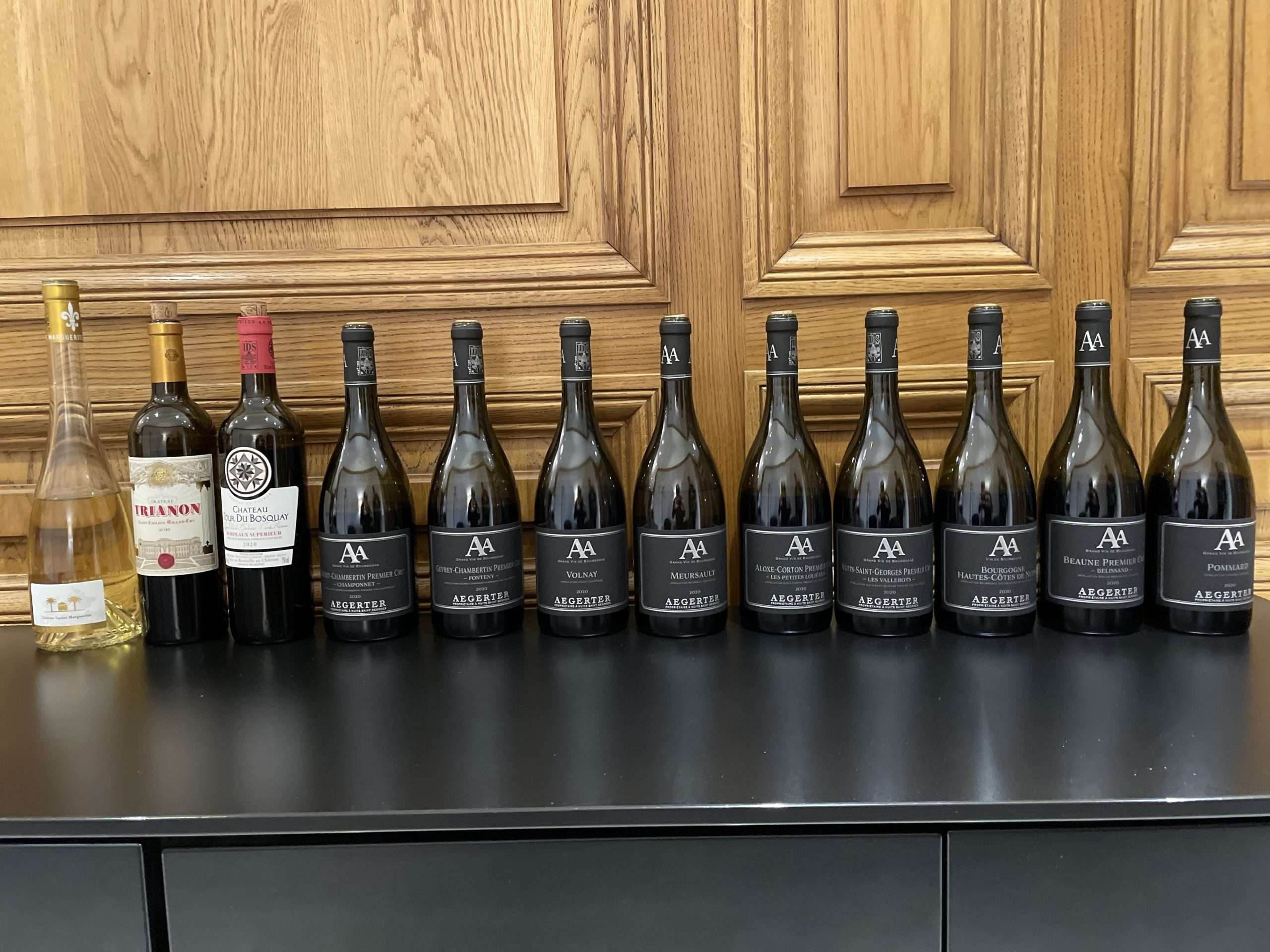
IDS is one of the four big French kosher producers – Royal, Taieb, and Bokobsa being the others. While they are smaller in terms of bottles produced than any of the companies mentioned above, the only company that is really competition in terms of high-end portfolios is Royal. IDS does NOT try to satisfy every segment of the market. Usually they pretty much ignore all but the highest end – and, for the most apart, their wines are always excellent – even when they do dip their toes into the mid and lower range spaces. Perhaps the most famous properties they work with are Château Smith Haut Lafitte, Château Lafon Rochet, and Château Valandraud in Bordeaux and Château Sainte-Marguerite in Provence. Starting with the 2018 vintage, IDS started producing Burgundies with Maison Jean-Luc & Paul Aegerter, a relatively small producer and negociant in Burgundy. In 2018, they produced three red Burgundies at the Villages level and competed with the best kosher Burgundies that had been produced until then. In 2019, they produced only two Burgundies – this time a Premier Cru and a Grand Cru. While there were only two for the 2019 vintage, they are the finest kosher red Burgundies produced to date . With the 2020 vintage, IDS produced nine kosher Burgundies, eight of them reds (5 Premier Cru and 3 Villages) and, for the first time, a white. Based on the performance of the previous vintages, I was super-excited going into this tasting, and I was not disappointed. David and I arrived and met with Benjamin Uzan of IDS at their beautiful offices in the middle of Paris. Paris always blows me away. It’s got that beautiful European quaint feeling even in the middle of the city. IDS’s offices exemplify that. Really nice and old school feeling. In addition to the Burgundies, we tasted a white from Château Sainte-Marguerite and two red Bordeaux wines.
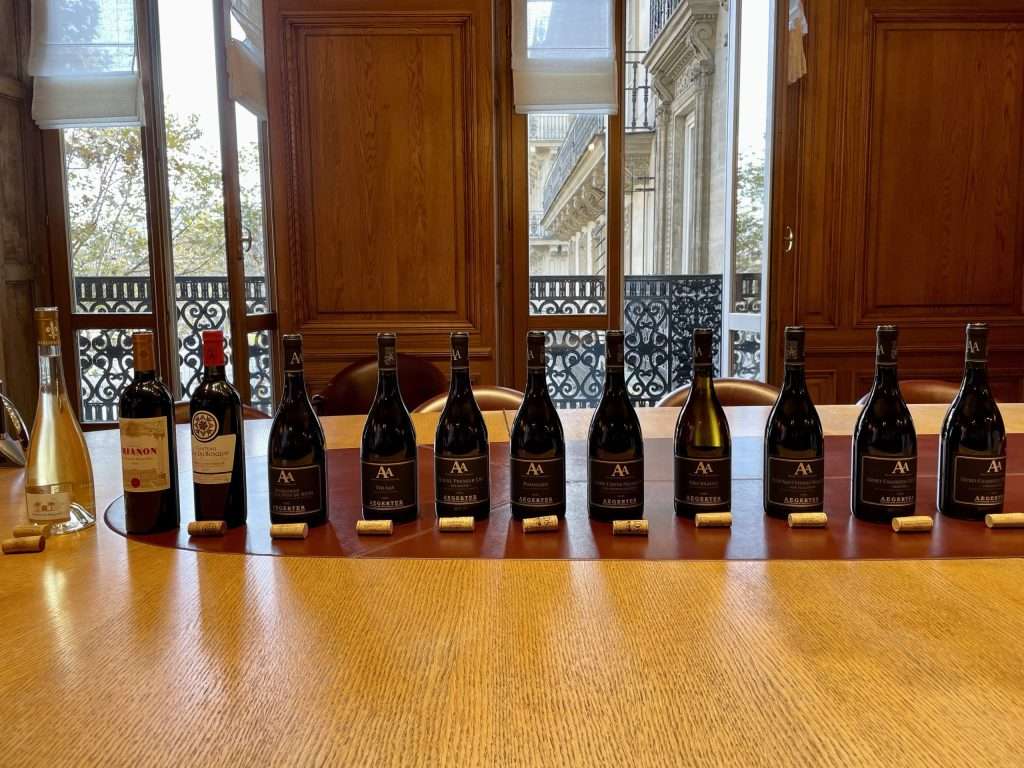
All in all, the tasting was excellent, as my notes below will show, and included one of the best whites I have ever had. There was a single issue though that ran through a number of the red Burgundies. It is something that David and I discussed at length both during and after the tasting. The issue (if you can call it that, as you will see in a second) is Volatile Acidity. I vacillated between whether or not to include a lengthy explanation of what it is and how it impacts wine and flavor. I know David did the same. In the end, in his excellent post he has already referenced the article that I would have, which is from Wine Spectator. I encourage you (as always) to read David’s notes in addition to mine as well as the WS article, if you are interested. But as David already did that, there really is no reason for me to rehash all of that. The only point that I will mention here is that sensitivity to Volatile Acidity varies by person. Under .6g per liter is undetectable by everyone, and above .9g per liter is detectable by everyone. Everything in between varies by person. Another factor in whether or not VA is detectable is the wine style it is found in. There are higher levels of VA in Botrytized wines for instance, yet it is rarely detectable on the palate. As there is a legal limit to how much VA is allowed in wines, all wines test for VA in the lab. Without knowing what the actual levels of VA are in these wines, it is pure speculation. My guess though is that it is somewhere in that grey area of between .6 and .9 grams per liter – likely on the lower side. It just happens that both David and I are sensitive to VA, and it is something that was clear on the palate. But we are likely in the minority here. As a matter of fact, these bottles were brought to an RCC dinner that night, and of the other 20+ people sitting around the table only two other people noticed anything different about these wines. On top of that, as some of the flavors VA produces are not necessarily problematic in terms of Pinot Noir, it is likely that most people will love these wines, as they are very well-made, and I really liked most of them them even WITH the VA. Having said all of that, take my notes and scores with a grain of salt whenever VA is mentioned as you may or may not get the same flavors on the palate that I did.
With that out of the way – here are my notes:


Leave a Reply