
For quite some time Sommelier has been THE Israeli wine event. It ushers in the new vintages each year and allows people within the industry to sample the new releases from a wide variety of wineries across the country, ostensibly to allow stores, hotels, and restaurants to knowledgably place orders. For the last couple of years, the show has been expanded to include consumer hours in the evening, so truly everyone can get a taste (though often, many of the more expensive bottle are no longer shown). For people like me the event really allows one to get a sense of where the industry stands currently.
Recent Past
For the last 3-4 years, there has been a decline in quality overall coming out of the wine industry in Israel. It seems that since the 2015 vintage (or even earlier) Israel has been struggling to find its direction. On the one hand, there seems to be an ever- increasing number of wineries – large and small. On the other hand, there has been a startling uniformity in the product these wineries are putting out. There are now three wineries other than Dalton that are in the Dalton area. If you ask me to tell you the difference in style or substance between them, I would struggle.
Another commonality is that while many boutique wineries have opened, often the relatively inexperienced and untrained winemakers want to learn the art of winemaking and have the consumers finance the process. To charge 100 to 250 shekels a bottle for their initial vintages is outrageous – with the “bargain” blends going for 65-90 – and the promise that “this is one of our early vintages and we are only getting better.” Don’t get me wrong – as you would guess, I am supportive of people being enthusiastic about wine. I just don’t think it’s fair to ask consumers to pay top dollar because it’s a “boutique” winery where everything is done by hand – and the product may very well be sub-par! And while by the fifthh or sixth vintage, winemakers may have things more or less ironed out (if they are lucky), asking for our hard earned shekels on an unproven winemaker and/or winery is really ridiculous. The only exception here is where an established winemaker goes out and starts something new. At least there is some sort of track record that a consumer can be comfortable with. But let’s take Tabernacle,, which just released their first vintage – 2017. Already they have changed winemakers – and while the initial wines weren’t horrible, they were nothing that I would buy – yet they are priced as if they have a 15 year track record behind them. And more power to them if they can sell – and if people like their wines. But I think it’s a little out of hand. And Tabernacle is one of the better new wineries showing what they had this year – and while I am using them as an example, I don’t mean to single them out. I used them as an example specifically because their wines are indicative of what is going on – indistinctive from the rest of the market with no clear philosophy or distinctiveness – but no real flaws either (I just happen to not care for the style, but as mentioned they have changed winemakers, so that might change as well).
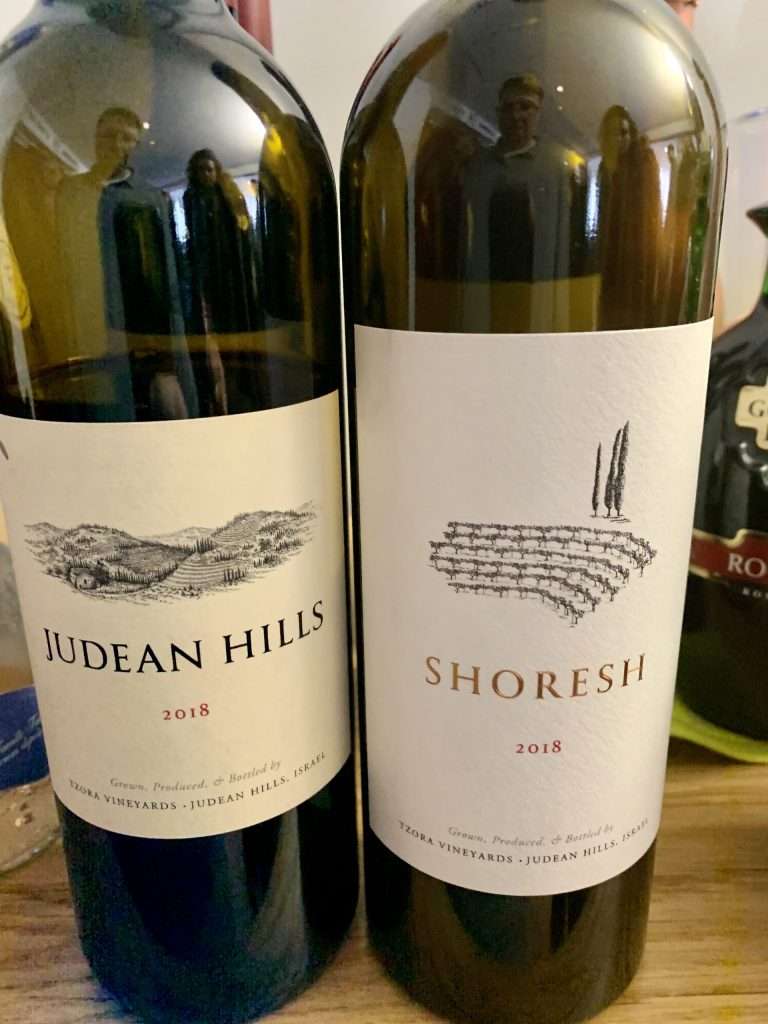
Quality wines from respected wineries have not been immune to the phenomenon of making indistinctive and boring wines either. To be fair, this is not always the fault of the wineries and winemakers. Sure GHW made a conscious decision to change direction with their red wines in 2009. But in some cases, you are just dealt with poor vintages, and there is only so much you can do. There are a number of examples – take Tzora. Eran Pik is immensely talented, and the style of wines that he is going for is RIGHT up my alley. Unfortunately, for the last few vintages they have struggled to put out product that is truly great. Sure – it’s OK. But there was a time where vintage after vintage you knew that the Tzora wines were going to taste wonderful and have the ability to develop with age. That is no longer a given. And this holds true of the 2018 reds – both of which were being poured at the Shaked booth. They are nice wines, but a product of vintage that is not one of Israel’s best. And there is nothing wrong with that – it happens at the best chateaux in Bordeaux – the vintage is what the vintage is – and the last few years have not been particularly great for Israel.
But while these have been tough vintages, all the while, prices have gone up. Where as in France, when there is a bad vintage, it is reflected in the pricing of the wine – in Israel, prices NEVER go down. Israeli wineries simply will wait it out and let the poor vintages sit and rot on the shelves. (And don’t get me started on poor storage conditions in many Israeli wine stores – but that’s for a different post – suffice it to say that I never buy anything older than a year from a store where I can’t be sure of proper storage conditions. Been burned too many times).
Another issue Israel has been dealing with of late is personnel turnover. Carmel’s famed longtime winemaker Lior Lascer finally followed the rest of the upper management out the door, Ella Valley continued its free fall into oblivion, Barkan switched winemakers, but the positive effects are yet to be felt throughout the line. And pretty much within a day of Sommelier, my friend Ya’acov Oryah exited Psagot. All of that just adds to the uncertainty of where things are going in Israel.
2020 in Brief
So I go to Sommelier each year looking for indicators on the ground as to where exactly things are headed on the whole – and of course the very best indicator is the wine itself. Unfortunately, 2019 for whites and rosés does not seem to be anything to write home about. Most rosés are bland and boring and many of the whites lack focus. But again, I think this a vintage issue. Israel knows how to put out nice whites – it just seems that 2019 was not a good year. On the red front it’s hard to say. Things seemed less overtly sweet and pushed this year. That’s a good thing. But there were very few standouts. One can hope that wineries are finally getting the hint that pushing out identical wines across 300 wineries is likely not the best path to a healthy industry in the long term. But changing things takes time. Wines that have been in barrel are basically done. Perhaps over the coming years, as more recent vintages come on line, we will see that some progress has been made. Time will tell.
Leave a Reply