Apologies for what will be a VERY long post – there was a lot to cover. Also – full disclaimer – Ya’acov Oryah is a friend. I don’t believe that impacts how I rate his wine, but it’s important for you to know that for the sake of transparency.
“The true method of knowledge is experiment.”
William Blake
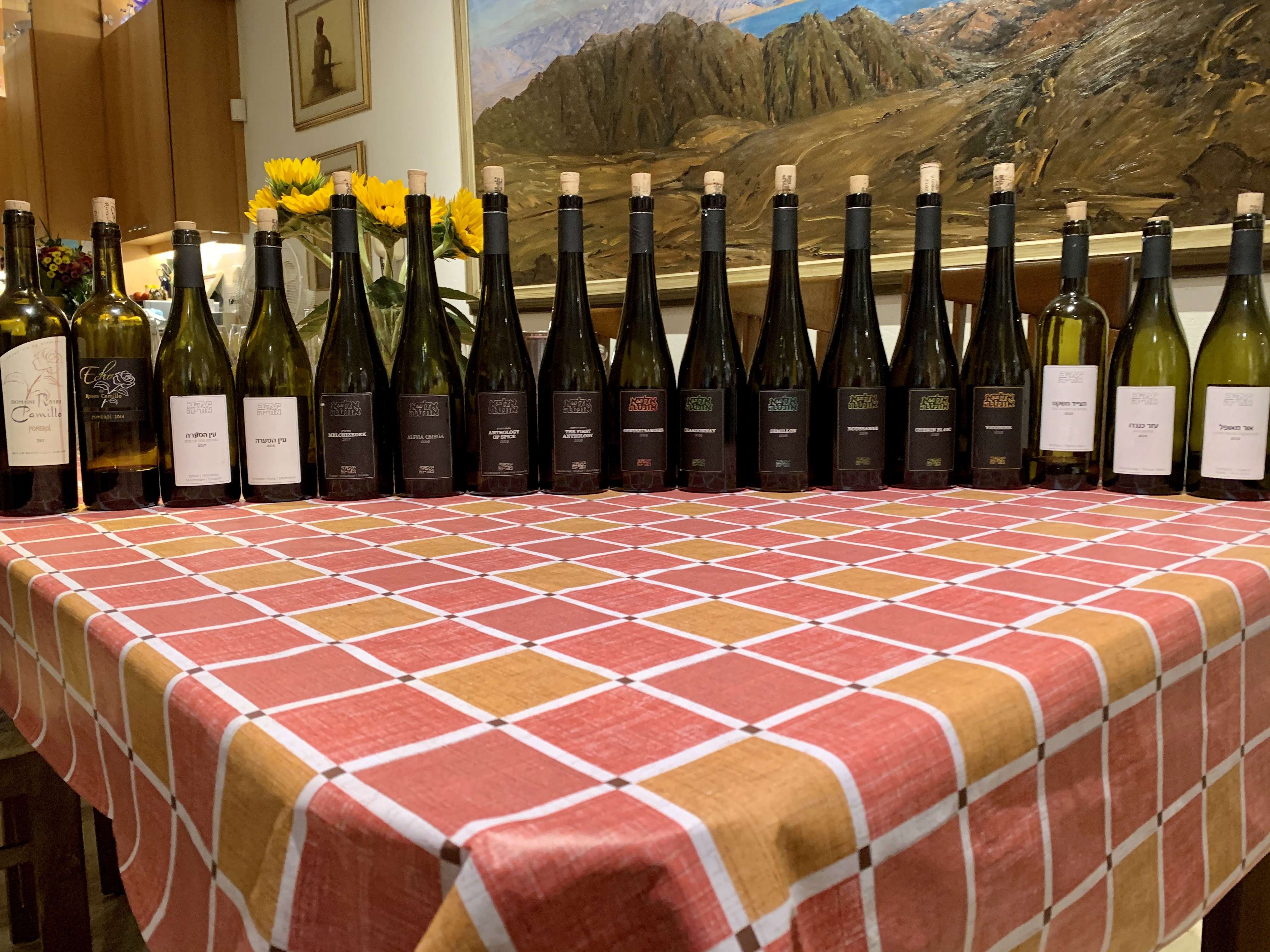
While I get to take part in many organized tastings, none have ever been quite like what I participated in last week. The wines in question were primarily Ya’acov Oryah’s current lineup, which I have already tasted through with him from A-Z (or Alpha to Omega 😉) , not once but twice. This time though we did something different. Ya’acov wanted to perform an experiment and taste through the wines over 3 consecutive to see how the wines changed over time, if they improved, declined, developed, etc. This was prompted by a discussion on Facebook where some people, who had bought wines from Ya’acov’s skin macerated Alpha Omega line, were finding them tough to appreciate.
I have to say, for those who are not prepared for what they will be tasting, I can totally understand why these wines are perplexing. The wines are prepared in a similar fashion to red wines, where the juice sits on the skins for an extended period of time. The wine then begins to extract color, flavor, and tannin out of the skins. This process provides the wines with much more depth, body, and aging potential – but also transforms them into a wine that really doesn’t resemble traditional white wines at all. When evaluating them at such a young age, you really are just scratching the surface – much the way you do when drinking a young high quality red from Bordeaux – you are tasting for potential, not really to enjoy it at this stage. As part of the above mentioned Facebook discussion, my friend Yossie Horwitz of Yossie’s Corkboard advised those having a tough time to leave the wines open for a full 24 hours to better appreciate them. This provided the wine-lovers in question with a much improved result. The entire episode got Ya’acov thinking about how these wines might present in the future. While air does NOT replace time in terms of development of depth of flavor, it can help a wine “open” and be more expressive in its current state. Why is the wine closed? The very things that allow the wine time to develop flavor and act as a preservative (tannin, acid, etc.) , also inhibit the wine from exhibiting flavor when young. The wines sometimes just taste closed, where everything tastes muted – or, at other times, are wildly tannic or acidic – or both. A general rule of thumb is that one day of air equals one year of bottle aging in terms of the wines being able to express their current flavor profile [nothing can really replace time in terms of creating depth of flavor, though air DOES help simulate it a little].
Ya’acov felt that in order to judge ageability we can leave these wines open over 3 days and come back to them see how they are doing after each day. The wines would be left without refrigeration and fully exposed to the air in the bottle without the use of a coravin or any air removal process – simply recorked. The biggest challenge was finding 3 consecutive nights that were free for the 3 of us that were doing this (the third being our dear friend Simon who also graciously hosted us) – especially with Ya’acov being in the middle of harvest and Simon’s frequent travel. But we found the time and the results, while predictable in that the wines improved after being open, were absolutely revelatory. I have lamented before the lack of ageable kosher white wines. I believe that Ya’acov may very well have single handedly changed the kosher white wine landscape with these releases. And it’s not just the Skin Macerated wines – the “straight” whites as well. All but one of them will likely go at least 5 years from harvest – and that is really a conservative number. 10 years is not out of reach either – Ya’acov’s last Valley of the Hunter Semillon is now 10 years old….
The wines that we tasted were all wines that were exported to the U.S. and are currently available for sale there. For the most part the “Day One” results matched my previous tastings – and for my full notes, you should re-read that post – as the notes here are more abbreviated and really here to chart the progression and differences between days only. The only wines not included in the above referenced post were 2016 Alpha Omega (which I hadn’t tasted in about a year, as well as 2 wines that Andrew Breskin of Liquid Kosher [Ya’cov’s American importer] sent Ya’acov to taste – the current releases of the Roses Camille wines – and we added them to the experiment as well. Here is how the wines tasted:
This content is for members only. Please Login or Subscribe Here to continue reading!
Leave a Reply