
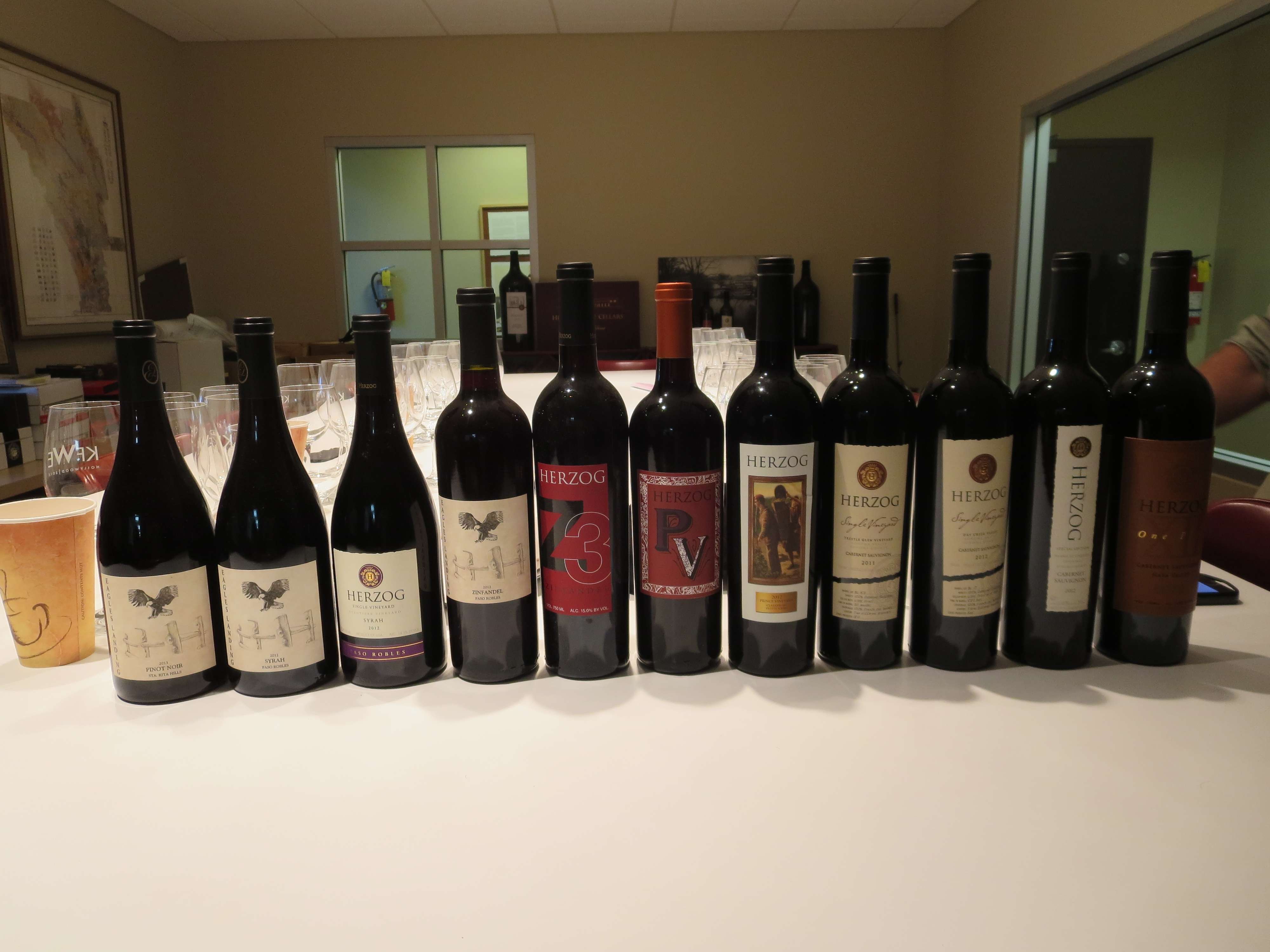
As you all can see I hope, I have been trying to place some focus on the kosher wines from around the world, Israel, France, and my most recent post of the top whites, rose, and bubblies. But to a certain extent, I have been leaving my roots behind, California kosher wines. So this week, I thought I would just work on the notes that I have for all the kosher wines that I have tasted this past year that have been in California, both north, central, and south.
Of course, the list is well known, staring in Napa, that would be Hagafen Winery, and Covenant Winery (though not officially in Napa any longer, it sources the majority of its fruit from Napa) and Hajdu Winery (both are made now in Berkeley, CA). Next is Four Gates Winery, followed by Shirah Winery and La Fenetre, and then finally Herzog Winery, and the 2010 wines from Agua Dolce (AKA Craig Winchell).
To be honest some of these wines are all sold out already, as I slept on the job, but hey I will post them anyway, also it is good to keep track of the wines you have in the cellar.
California kosher Wines
Before I go to the notes, I wanted to talk about California wines for a bit. California wines, for the most part, are sweet wines. Please note the term “sweet” but not date! They are controlled and ripe, but round and full powered. Sadly, there were one or two occasions where the wine had a mind of its own, one Shirah wine and one Agua Dolce wines, that come to immediate memory. But otherwise, they are on the whole very round, ripe, and in your face. There are also, non sweet wines from California, almost old world in nature, like the Covenant wines – for the most part, along with the higher end Herzog wines that are not quite old world – but are indeed mineral or dry fruit based. Four Gates wines are starting to get a bit more ripe, but for the most part continue to show old world style wines, based on the intense acid and lovely mineral notes.
So, how does this compare to Israel and other locals? Well, Spain continues to make great wines for reasonable prices; except for a few Capcanes wines whose prices have went higher after Royal took over distribution. Still, Spanish kosher wines continue to be one of the best places for consistently good, unique, and balanced wines. California to me is the dark horse, sure some of the prices are higher, especially Four Gates, which has been raising prices over the past few years, but California kosher wines continue to be a great place to find wines that are balanced and not overly fruit forward.
As stated, of the list of previously described kosher wines in Cali, and listed below as well, I must say that Covenant, Four Gates, and Herzog are producing new world wines with a clear old world bent. The rest are creating lovely and extremely good new world wines – while showing control with only a couple of exceptions.
In comparison to Israel, I must say that Cali and Spain have Israel beat, for someone like myself. The proof to my statement is in my cellar, over the past year I have moved away from Israel and over to Spain and Cali, with the obvious exception to the wonderful whites/rose/bubbly coming from Israel, and the few red producers that are making great wines. The hope, as I continue to say, is that more wineries follow them and create better wines in Israel, till then I will be shifting hard to France, Spain, Cali, and only the very top Israeli wineries.
So, what makes Cali wines better to me than Israeli wines? Simple, control and balance. California wines, kosher or not, are ripe, the heat demands it, still, it is how those grapes are managed afterwards. I have been able to be part of the wine making at some wineries, and it is a real education to watch wines evolve, simply because the juice is not where the work ends. Once the red grapes are crushed there are two more stages in the wine’s development that define the wine; Fermentation(s) and barrel/tank aging. I am skipping bottle aging, not because it is not important, but because few wineries really do that here in California. The exceptions are Four Gates Winery (that keeps its Merlot some 3-5 years in bottle before releasing), and some of Herzog’s Eagles Landing wines as well.
Oak Usage
Issues that occur in the fermentation(s) stage are not unique to Cali, in any manner, but California has been seeing a fair amount of stuck fermentations in both alcoholic and malolactic fermentations recently. More importantly though is that once the first fermentation is complete the red wines enter the next stage of wine management; barrel aging (unless there is a prolonged cold soak – like Shirah and a few other Wineries do).
It is in the barrel aging where Cali is unique, in its usage of American Oak – which gives wines here those green basil and dill notes, along with coconut/extreme vanilla notes. When people think of Zinfandel, they think Cali and the classic sweet notes that American oak gives those wines. Again, this is really only prominent in the lower level wines of most wineries, kosher or not, but the sweet noted American Oak nuances can be found in more wines – than just those baseline wines. I always ask what barrels were used to make the wine, sometimes I am told a mix or pure American, but when I am told the oak used was all French or Hungarian, I listen but verify!
This content is for members only. Please Login or Subscribe Here to continue reading!


Leave a Reply