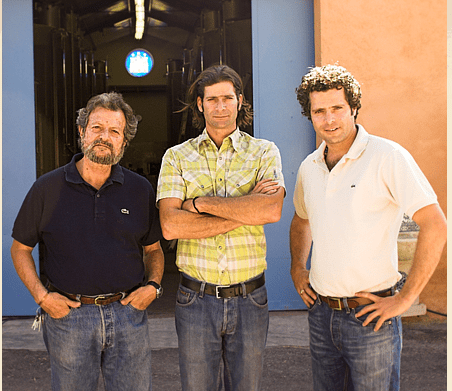
 Whenever I think about wine in Israel, I think more and more about wines from the Judean Hills of Israel, one of the five wine regions of Israel that wraps Jerusalem and the surrounding areas. The most famous winery in this region is also the original winery in the region, the Domaine du Castel. The winery is situated in Ramat Raziel, at the top of hill overlooking the moshav, which lies some 17 or so kilometers from Jerusalem. The story of the winery is one of love, determination, and above all else; family. It takes a fair amount of courage to drop one’s status quo and go after one’s dreams. That is exactly what Eli Ben Zaken did some 19 years ago, when he started the winery, and gave over the day-to-day management of, his then day job, the family restaurant, to his son, Eytan Ben Zaken. The very same son, who now runs the day-to-day operations of the winery, as its COO, along with his brother Eli Ben Zaken, who is the winery’s CEO.
 However, we need to go back in time to get a real appreciation for the story of Mr. Ben Zaken and the Domaine Du Castel. The story starts early in the life of Mr. Zaken, he was born in Alexandria Egypt to a Moroccan Father and Italian mother, and then moved about Europe between England, Switzerland, and Italy. It was in his movements around Europe that he gained a love for agriculture, culinary culture, and wine. Like many Jews Ben Zaken felt the pull to move to Israel, and he made it a reality after the Six Day War of 1967. Soon upon arrival he got to work in what he knew well – agriculture. After some time he built a house in Ramat Raziel and followed his initial love and roots in 1980, when he opened the first real Italian Restaurant in Jerusalem; Mama Mia. Upon opening the winery he went out looking for some locally made wine to serve to his customers and he did not really love what he found.
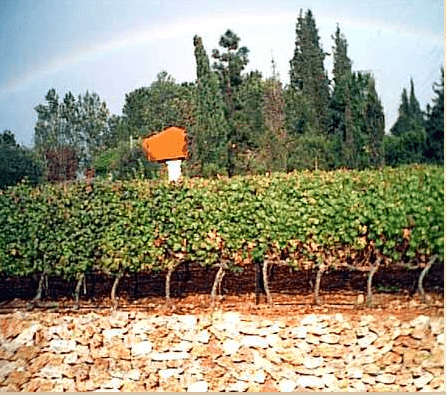 At the time that Ben Zaken planted his first vineyard in 1988 next to his home, he would have no idea that this small vineyard would become the first in so many ways. Initially the vineyard was made up of Cabernet Sauvignon and Merlot, but over time they would add some more Bordeaux varietals and Chardonnay. Ben Zaken had no formal wine training and yet he had no problem pressing his grapes in his barn! Four years later he harvested his first crop, and three years after that in 1995, he produced 600 bottles in his first vintage. The wine was initially produced for himself, friends, and family. However, as the wine got around to friends of his friends, they all loved the product and he starting to think that he may have some good stuff on his hands. However, it was not until luck and serendipity found their way into his life at the same time, when one of the bottles fell into the hands of British expert Serena Sutcliffe, Master of Wine at Sotheby’s in London, who described it as “absolutely terrific … a real tour de force, brilliantly made.” Ben Zaken recalls with pride; “I had tears in my eyes, over the next few days, I went everywhere with that fax in my pocket.”
 Since then Domaine du Castel has been pulling in some of the highest scores and praises from the world’s experts, France’s prestigious Bettane & Desseauve guide counts the winery as one of the 365 worlds best vintages. Daniel Rogov recently commented “Since its inception, Castel has been one of the very best wineries in the country..”, and Mark Squires of The Wine Advocate consistently gives their wines a 90 or higher. Not only is the winery doing extremely well but so is the wine region. The very same wine region that Baron de Rothschild reportedly thought was not conducive to making great wine, was the same region that originally grew the grapes for the Temple, some 2000 or more years ago. It is also the very same region that now makes some of the very best wines in Israel, with some of the biggest names in Israeli wine business sourcing their grapes from the Judean Hills. On top of all that Mr. Ben Zaken original vineyard was the first of its kind in the region for some 2000 years!
Leave a Reply