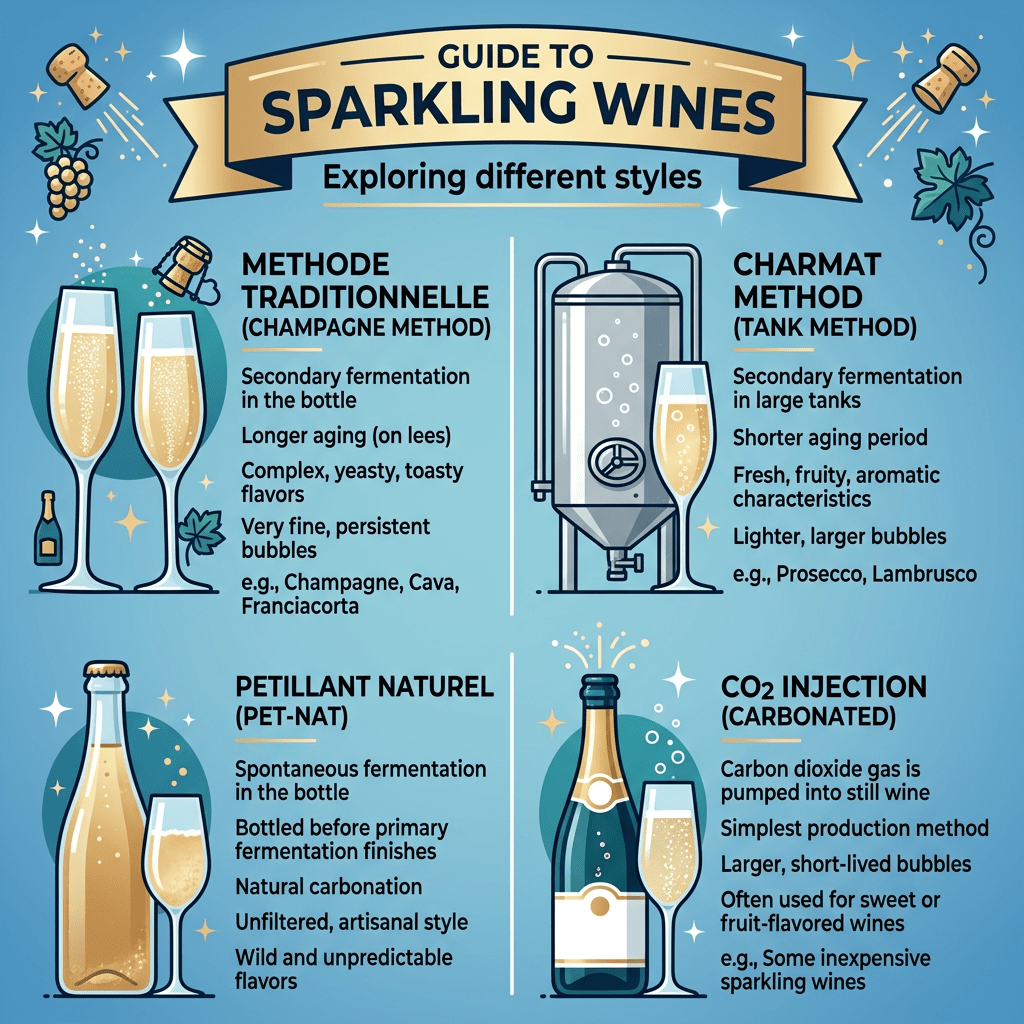
• Guide to sparkling wine styles including Methode Traditionnelle, Charmat Method, Petillant Naturel, and CO2 Injection

    The Current Sparkling Wines on the Market – May 2026

    With Shavuot rapidly approaching, I am posting the top sparkling wines, but to be clear, I drink sparkling wine all year round! The truth is, we were spoiled in the past. The Golan Heights Winery produced many affordable sparkling wines that rivaled Champagnes 3x the price. Sadly, those days are over. The prices escalated, and the wines did not compare to the best in France or Italy. Thankfully, the latest batch of Sparkling wines from Israel, though expensive, has once again matched European wines in quality, whether they are more expensive or just the same price.

    How is Sparkling wine made?

    There are many options – but the vast majority of sparkling wines fall into three categories:

    • Le Méthode Champenoise (Méthode Traditionnelle)
    • Methode Ancestrale
    • The Charmat Method

    Le Méthode Champenoise (Méthode Traditionnelle)

    So, what is Champagne, and how do we get all those cool bubbles? Well, it all starts with a grape of some sort, in most cases, Chardonnay, but we will get back to the other varietals further down. For now, like all wine on planet earth, Champagne starts with a grape. It is picked (often early to lower alcohol and increase acidity), then crushed, pressed, and allowed/encouraged to go through primary fermentation, exactly like all white wines on planet earth. At this point, most houses ferment the base wine in metal tanks or barrels. Some still use wood, but they are the minority.

    Of course, as in much of France (Bordeaux, Burgundy, Champagne), especially in Champagne, the wine can be chaptalized after racking, up to 11% ABV. Now, before the heat waves that have covered much of this earth (call it what you wish), Bordeaux and Champagne prayed to hit their desired mark of ABV, and therefore they used to add sugar to bring up the ripeness of their fruit. Nowadays, Champagne is picking earlier and earlier, and Chaptalization is not a common thing anymore, as Mother Nature is taking care of the fruit’s ripeness all on her own!

    Once the wine has been fermented, the next question arises: should they let the base wine go through a wine’s second natural fermentation, called Malolactic Fermentation? Most allow fermentation to take place and require it, a fact that is easy to achieve nowadays with controlled winery environments, though some do not like it at all. Finally, the barrels/tanks are blended, or, in the rare case, kept aside as a Vintage Champagne, meaning the base wine is sourced from a single vintage rather than a blend of a few vintages.

    So, at this point, what we have is base wine, and while it may be an OK wine, it is far from what the final product will be like. Most base wines are nice enough, but it’s like licking a lemon; these wines are highly acidic and usually not well balanced at that point.

    The next step is to bottle the wine, with yeast and basic rock sugar, which causes a second fermentation. The exact amounts of the two added ingredients are a house secret. The wines are closed with a simple beer bottle cap. You will notice that ALL wines made in this manner have a lip around the top of the bottle, where the cap is attached. Again, if the year is exceptional, then the wine becomes vintage champagne and is aged for at least three years. If the vintage is normal, the bottle’s contents are a blend of a few vintages and are aged for at least 1.5 years.

    All the while, during the second fermentation, the wine ages and becomes more complex as the yeast works. The yeast breaks down as it ferments the rock sugar, adding effervescence and, in the process, lending a lovely mouthfeel and rich complexity. This process is known as autolysis, releasing molecules that are slowly transformed as they interact with those in the wine.

    The process is a dual transformational process. First, the yeasts are broken down, but if that occurred in a 100% hermetically sealed environment, we would have SERIOUS issues, like HS (Hydrogen Sulfide) and mercaptan (think nasty rotten eggs). Oxygen is a two-edged sword; with too much, the wine oxidizes, and with too little, you get HS and a nasty foul egg smell. So, the caps that cover the Champagne bottles as they rest for 18 months to 3 years in these cool racks allow a certain amount of oxygen to flow through; the caps are not hermetic seals. The special stoppers, AKA caps, allow the wine to mature on the lees, with a very slow infusion of oxygen, thereby allowing it to mature at the rate best for it. You can mature them quicker, with a different cap, but you would lose the value of a wine sitting long on the lees.

    According to Wikipediathe effects of autolysis on wine contribute to a creamy mouthfeel that may make a wine seem to have a fuller body. The release of enzymes inhibits oxidation, which improves some of the aging potentials of the wine. The mannoproteins improve the overall stability of the proteins in the wine by reducing the number of tartrates that are precipitated out. They may also bind with the tannins in the wine to reduce the perception of bitterness or astringency in the wine. The increased production of amino acids leads to the development of several flavors associated with premium Champagne, including aromas of biscuits or bread dough, nuttiness, and acacia. As the wine ages further, more complex notes may develop from the effects of autolysis.

    Finally, at this stage, after the bottles have matured for the appropriate amount of time, as indicated on their label (blend or Vintage), we reach the final stages of Champagne: remuage (or “riddling” in English) and Dosage. To get rid of the lees (the dead yeast cells and other particulates), the bottles are hand or machine-manipulated to convince the lees to move towards the cap. Then the bottle’s neck is frozen, and the cap is removed. The lees come flying out in a frozen form, and then the bottle is recapped with the famous champagne cork, but not before it is dosed with more sugar. This very last step is the reason for this post, but let’s leave it for later. For now, let’s talk varietals and color/style.

    This content is for members only. Please Login  or Subscribe Here to continue reading!

    Like This:

    , , , , , ,
    No comments on The Current Sparkling Wines on the Market – May 2026
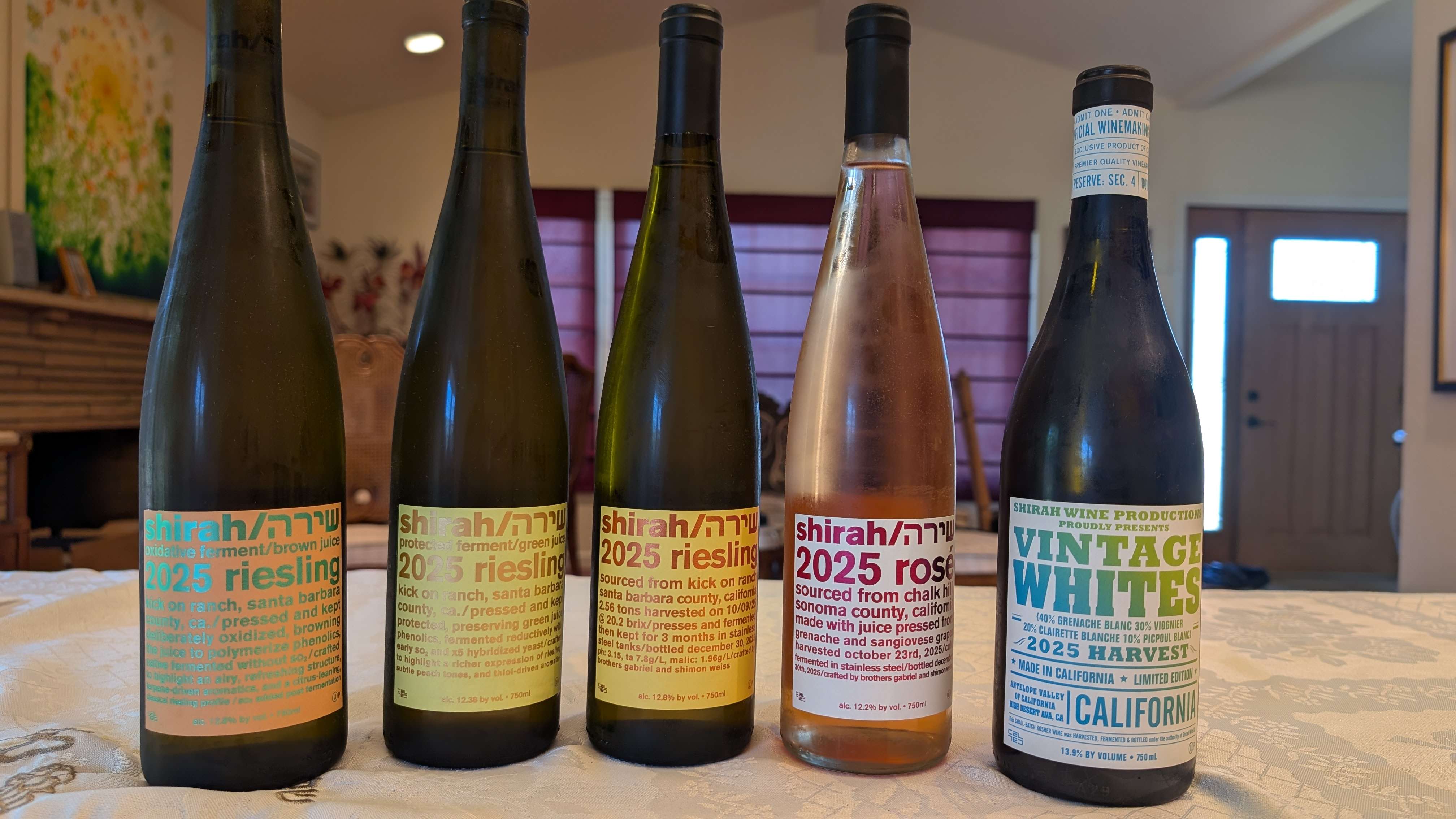
  • 2025 Shirah Green Juice Riesling 2025 Shirah Brown Juice Riesling 2025 Shirah Riesling 2025 Shirah Rose 2025 Shirah Vintage Whites

    California Dreamin’ about more 2021, 2022, 2023, 2024, and 2025 Vintages

    The last large post on California wines was at the end of 2025. Then the madness of getting search to work, and now I am still getting through all the posts. It was time to get the next big California post out! This will not be a retrospective, like I did here. This will be more like the 2024 post I did here, covering the California wines I have recently enjoyed.

    All of these wines came to me; I have not visited any new wineries since the last post (when I visited a few). Still, I always prefer tasting at home because it gives me time to watch these wines evolve, especially the CRAZY QPR (Quality-to-Price Ratio) GREAT wines from Shirah Wines!

    If there is ANY wine you buy from this post (AND NO, my posts are informational, as you all know; they are not meant to drive sales anywhere) – BUY the Shirah wines I have below! NO BRAINER! Of course, I get nothing for this; I am here to help the readers know what I like and what I think is a good deal!

    The plan here is to list the wineries and their wines in the order I tasted them (since I did taste some wines more than once). As I stated before, Covenant continues to impress, as does Shirah, with some of their new wines, which are pretty mind-blowing!

    Many thanks to each and every winery here for putting up with me and sharing their excellent wines.

    My overall feelings about the California 2021, 2022, 2023, and 2024 vintages

    The funny thing, sorry for the slight aside, last decade all the good vintages came in even vintages, 2014, 1016 (to an extent), 2018, and so on. Some think 2019 flipped it – I do not. The 2021 vintage, as many of us have said, crushed it! The 2023 is solid, and the 2025 is looking good. So, in total, the odds are looking MUCH better, and this decade, so far, is the odd-year decade. The 2020 season (a horrible throw-away vintage given the fires and such) was just a hard pass. Then you get the odd-numbered-vintages, 2021/2023/2025, and we are on a roll. Time will tell. So far, 2026 is gorgeous, and I hope I haven’t just jinxed it! I like these cooler temps!

    Let us start with the facts: the 2021 vintage for California was the best I can remember. Yes, better than 2012 or 2014, and all around, everyone, and every winery came out with fantastic wines. Why? Because God gave each winery enough time not to screw it up, and even when they wanted to screw it up, he made sure they could not! DONE! Look, God gave them a raw deal in 2020, across the state – and we all know it! So, in 2021, he made up for it in spades (whatever that means)!

    The 2021 vintage stood out in BOTH the Mevushal and non-Mevushal wine categories. For white and red wines. It was a shockingly good season all around, and everyone came out smelling like roses!

    This content is for members only. Please Login  or Subscribe Here to continue reading!

    Like This:

    , , , , , , ,
    No comments on California Dreamin’ about more 2021, 2022, 2023, 2024, and 2025 Vintages
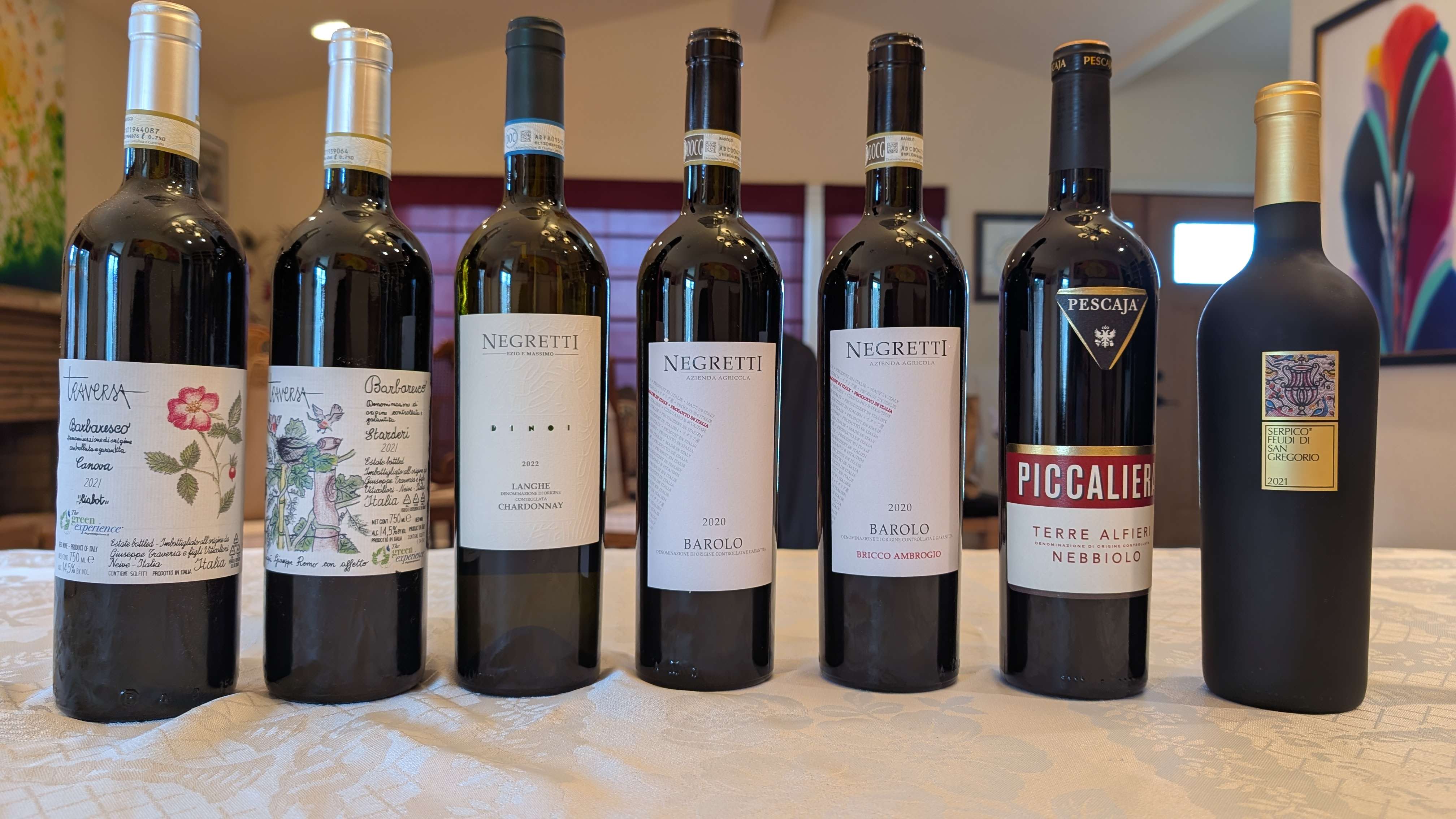
  • 2022 Negretti Winery Chardonnay 2021 Traversa Barbaresco Starderi 2021 Traversa Barbaresco Canova 2020 Negretti Winery Barolo 2020 Negretti Winery Barolo Bricco Ambrogio 2019 Pescaja Piccaliera 2021 Feudi di San Gregorio Serpico

    A tasting of M&M Importers’ current wines – April 2026

    I keep writing posts about the new wines made by The Wine Doctor, Ralph Madeb, president and CEO of M&M Importers. Yet more wines keep coming in, and I am writing another post, featuring 19 new wines and vintages.

    Where can you find the wines?

    Let us get the obvious out of the way first: tracking what M&M Imports and where they are sold is challenging. The big news is that most of his wines are now available on kosherwine.com, which is a HUGE win for those of us outside of the East Coast! I really hope this helps to spread the good word about the work that Ralph and his team do! More information on M&M Importers can be found here. The store with the biggest selection of M&M wines in NYC has to be Idrinkkosher.com (IDK). They are solid, both in terms of pricing and in what they purchase. However, knowing what is actually available at IDK is almost impossible unless you visit the store. I have visited the store a few times, and they offer great prices and good storage. The issue is that it’s unclear what is for sale, as the website hasn’t been updated. Calling hasn’t helped much either, but this post is here to shed more light on the matter. I know Ralph is working very hard on this matter, and I hope we get more news on this soon. My friend Zev Steinberg is working there now, and things have been much better! If you need any help, call the store and ask for John or Zev! By the way, Zev is also doing wine tours in France. If you are looking for a great wine tour, Zev is a great choice.

    However, the best news is probably that you can now purchase many of the SKUs directly from elkwine.com! Elchonon Hellinger is a dear friend, and as always, I make NOTHING from your purchases. However, if you live or are visiting the Miami area, please look him up! If you cannot find what you need on the site, please text him on WhatsApp at 17867501019. He is adding more SKUs as fast as he can!

    Portfolio

    If anyone wants to get a bird’s-eye view of Ralph Madeb, they should listen to the great podcast series from Simon Jacobs – The Kosher Terroir. The episode that focuses on Dr. Ralph Madeb and M&M Importers is this one.

    From a Fifty-Thousand-Mile view, Ralph began his adventure by importing IDS wines and creating his own. Even when he was bringing in some IDS wines, it was not all of them, and access to them was almost impossible.

    Since then, things have grown by leaps and bounds, and now they produce or import more than 90 wines. You can read more about the entire portfolio over here, in one of my previous posts!

    This content is for members only. Please Login  or Subscribe Here to continue reading!

    Like This:

    , , , , , , , ,
    2 comments on A tasting of M&M Importers’ current wines – April 2026
  • Glasses at the KWWD event

    The 2026 Kosher Wine Tasting Events (KFWE and KWD) Retrospective

    With my intense focus on the new Search feature, I have been behind, but as stated, I am past the worst of it and am now pushing forward with many posts! This has been on my mind, and I need to get it out before the bigger posts, like the massive new Italian wine releases from M&M Importers!

    If I can sum up the two events, KWD and KFWE (Kosher Food and Wine Experience), I would say that KWD met and exceeded my expectations, while KFWE continues to meet but really needs to rebrand. At this point, IT IS NOT a food event; it has not been one since it left Manhattan in 2023! Sure, KFWE London is, and to some great extent so is KFWE Oxnard, but KFWE NJ/NY is not only not a food event, the food is a mess and hinders any hope of serious wine tasting. All the major wine events that happen throughout the world, in the non-kosher space, respect the wine, and food is more of an afterthought. It is time for KFWE NJ/NY to do the same and get serious!

    KWD’s Wine and Food Night

    However, let’s zoom in and start talking about events. Once more this year, KWD’s event was first on the list, and thankfully, it was not the week before! The Super Bowl was the following week, so overall, it was a success, timing-wise.

    Look, food will never be a highlight at these two events. As stated earlier, the last time food was part of any of these events in NJ/NY was in 2023. In the future, please rename the KFWE to RWE (Royal Wine Experience), at least for the NJ/NY area. At the KWD, there was one table that saved the event, food-wise: the Grill Father table. Solid food. The rest was just not for me. I needed some sustenance and palate cleaning, and that worked out well.

    Let us start with the ONLY things that matter regarding wine tasting. First, the wine glasses were great! There is ZERO point in pouring whatever wines you have and forcing me to taste them in a tiny glass. Bravo! Next, there were no drunk people, at least not by the time I left at the end. There was water on all the tables, and the spittoons were emptied somewhat consistently (this was the only minor slight). There were crackers, and the tables were not overly packed. When you put this together, you have a WINNER! That is two years in a row now, great work, guys!

    This year’s KWD was the same this year wine-wise, IMO. Royal’s wines at the event were mid-level with a few higher-level wines. Royal was able to highlight some real winners, like a couple of 2023 wines, but mostly they poured older stuff. To me, the real winners were Raziel Wines, ESSA Wines, and some good Herzog Wines.

    The entire M&M lineup was impressive. That table was the REAL WINNER! M&M continues to impress with solid-to-great wines. I had already tasted those and posted them; otherwise, I would be screaming their praises. I have a whole new set of wines to be posting, that will be the next post, B”H!

    The wines at Bam Spirits, Kosher Wine International, Noble Wines (Cedev), and others were good to solid. The Noble wines are starting to shine. Avi and I tasted some of them in Paris, and I tasted even more of them there. The Yarden table had some interesting wines, and overall, I think having an event with many distributors is a WIN-WIN for consumers, and we need more of them, not just one!

    River Wine had a lovely reserve Pinot that I would love to taste again, but I hear it is sold out. I hope to get some somehow.

    Overall, I think the crowds, the passion, and the interest people had in the wines, more than in getting drunk, made for an enjoyable and successful third event by the KWD crew! Bravo, guys!

    This content is for members only. Please Login  or Subscribe Here to continue reading!

    Like This:

    , , , , , , , , , ,
    No comments on The 2026 Kosher Wine Tasting Events (KFWE and KWD) Retrospective
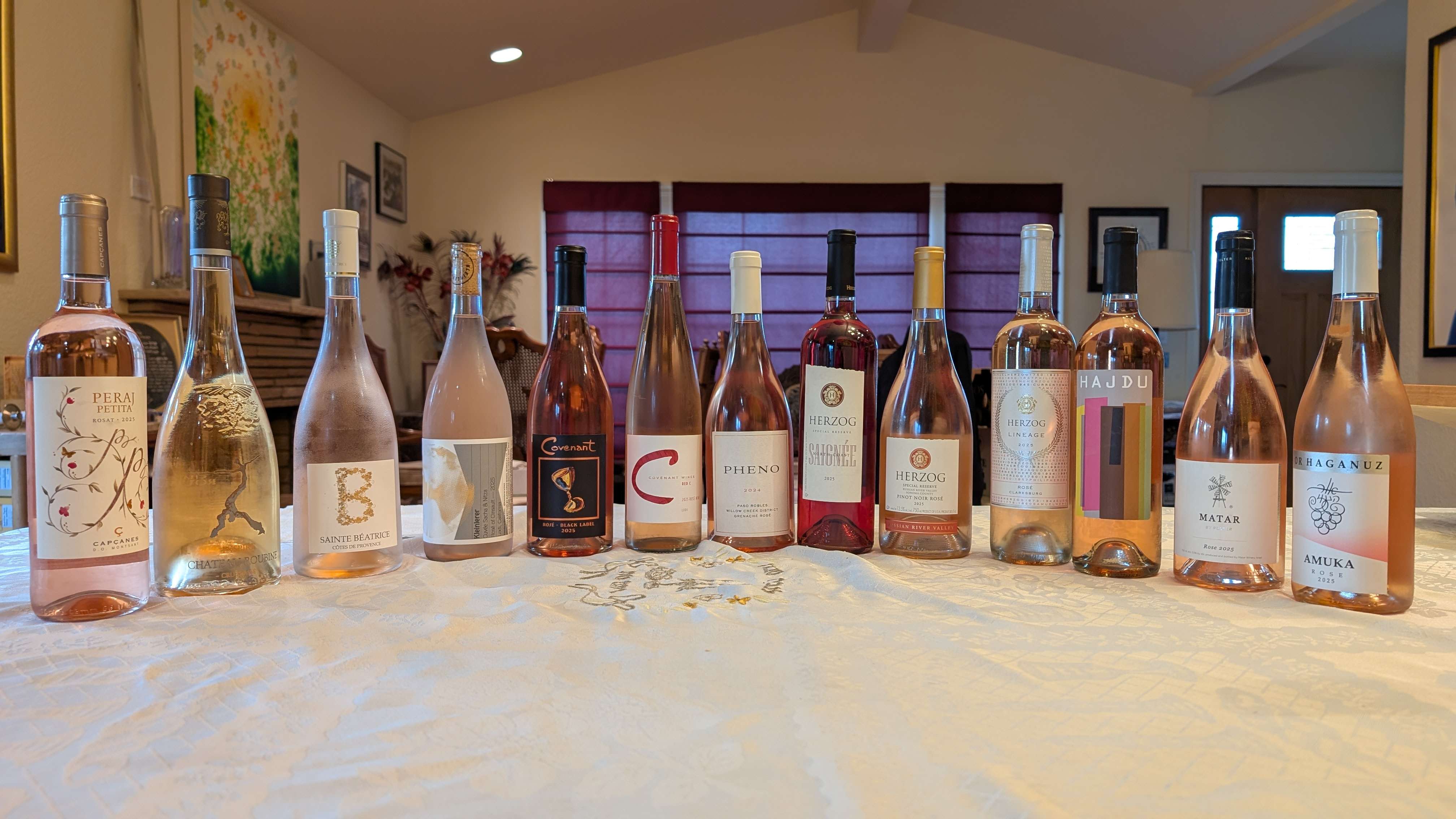
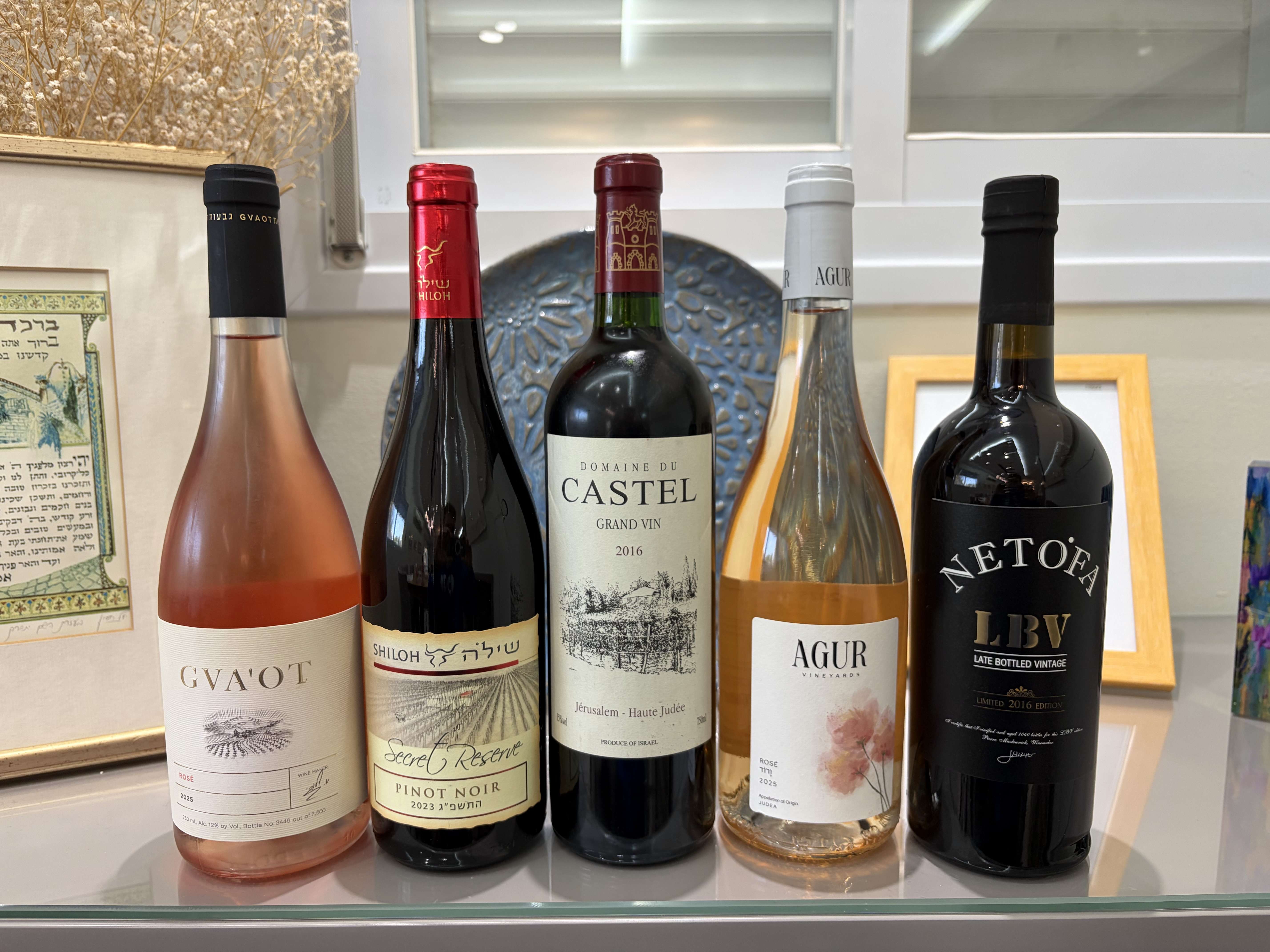
  • The 2026 Kosher Rose season is open and looking good!

    This will mark the first of many posts to come. It also marks the first post since Passover, and I promised there would be no posts until advanced search was available for the Premium members. I am happy to announce that it is now live! This task was more than I ever dreamed about, and I honestly had questions about whether it would ever be possible. I am truly proud of the effort and the outcome, and I hope it is what you guys are looking for. More on that after Avi tests it out. Now on to Rose Wines!

    While rose wine in the non-kosher market is exploding – especially Rose wine from Provence, a wine region of France, kosher roses have ebbed and flowed. Last year, the kosher market for roses went into a tailspin. It is now clear that 2022/2023 was the year of Peak-Rose. However, it was very clear that the Kosher wine market is in a state of Rose fatigue. There are TONS of old Roses all over the market.

    Personally, I stand by my own feelings when it comes to Rose: I prefer white or Sparkling wines. Further, anyone trying to move 40 or 45-dollar roses will be in for a rude awakening this year, IMHO! The saving grace is that, so far in 2025, it’s been a wonderful year for Rose wines.

    QPR and Price

    I have been having more discussions about my QPR (Quality-to-Price) score with a few people, and their fair contention is that they see wine at a certain price, and they are not going to go above that. So, instead of having a true methodology behind their ideas, they rely on what can only be described as a gut feeling. The approaches are either wines that punch above their weight class, so they deserve a good QPR score. Or, this other wine has a good score and costs less than 40 dollars, so it’s a good QPR wine.

    While I appreciate those ideals, they do not work for everyone, nor do they work for all wine categories. It does NOT work for roses. Look, rose prices are 100% ABSURD – PERIOD! The median rose price has risen a fair amount from last year; some are at 40 to 45 dollars for a rose! So far, it is around $ 35, and prices keep rising.

    As you will see in the scores below, QPR is all over the place. There will be good QPR scores for wines I would not buy, while there are POOR to BAD QPR scores for wines I would think about drinking but not buying based on the scores; in reality, I would never buy another bottle because the pricing is ABSURDLY high.

    Also, remember that the QPR methodology is based on the 4 quintiles! Meaning that there is a Median, but there are also quintiles above and below it. So a wine at the top price point is, by definition, in the upper quintile. The same goes for scores. Each step above and below the median is a point in the system. So a wine that is in the most expensive quintile but also the best in the group gets an EVEN. Remember, folks, math wins!

    Still, some of the wines have a great QPR, and I would not buy them. Why? QPR is not primarily based on quality; it’s based on price. Quality is secondary to price. For example, if a rose gets a score of 87 points, even though that is not a wine I would drink, I would drink it if it has a price below 32 dollars (that is 10 dollars more than two years ago – like I said, crazy inflation) – then the QPR score is GREAT. Again, simple math wins. Does that mean that I would buy them because they have a GREAT QPR? No, I would not! If you still want roses, those are okay options.

    Please remember: a wine score and the notes are the primary reasons I would buy a wine – PERIOD. The QPR score serves, secondarily, to help me determine which of the wines I wish to buy is the better value. ONLY the qualitative score can stand on its own when it comes to what I buy. The QPR score, within the wine category, indicates how the wine in question compares to its peers.

    Finally, I can, and I have, cut and paste the rest of this post from last year’s Rose post, and it plays 100% the same as it did last year.

    So, if you know all about roses and how they are made, skip all the information and go straight to the wines to enjoy this year, from the wines I have tasted so far. If you do not know much about rose wine, read on. As stated, I stand by my opinion that Rose is, at best, a fad, and now is the time to join team white wine! White wines are lower-priced, have better scores, and therefore offer better overall value. IF YOU MUST have a rose wine, stick to the few that I state below in my Best Roses section, right above the wine scores. Again, though, this would be the year to buy roses, because they are impressive, but the prices and overall appeal, for me, just ruin it.

    This content is for members only. Please Login  or Subscribe Here to continue reading!

    Like This:

    , , , ,
    No comments on The 2026 Kosher Rose season is open and looking good!
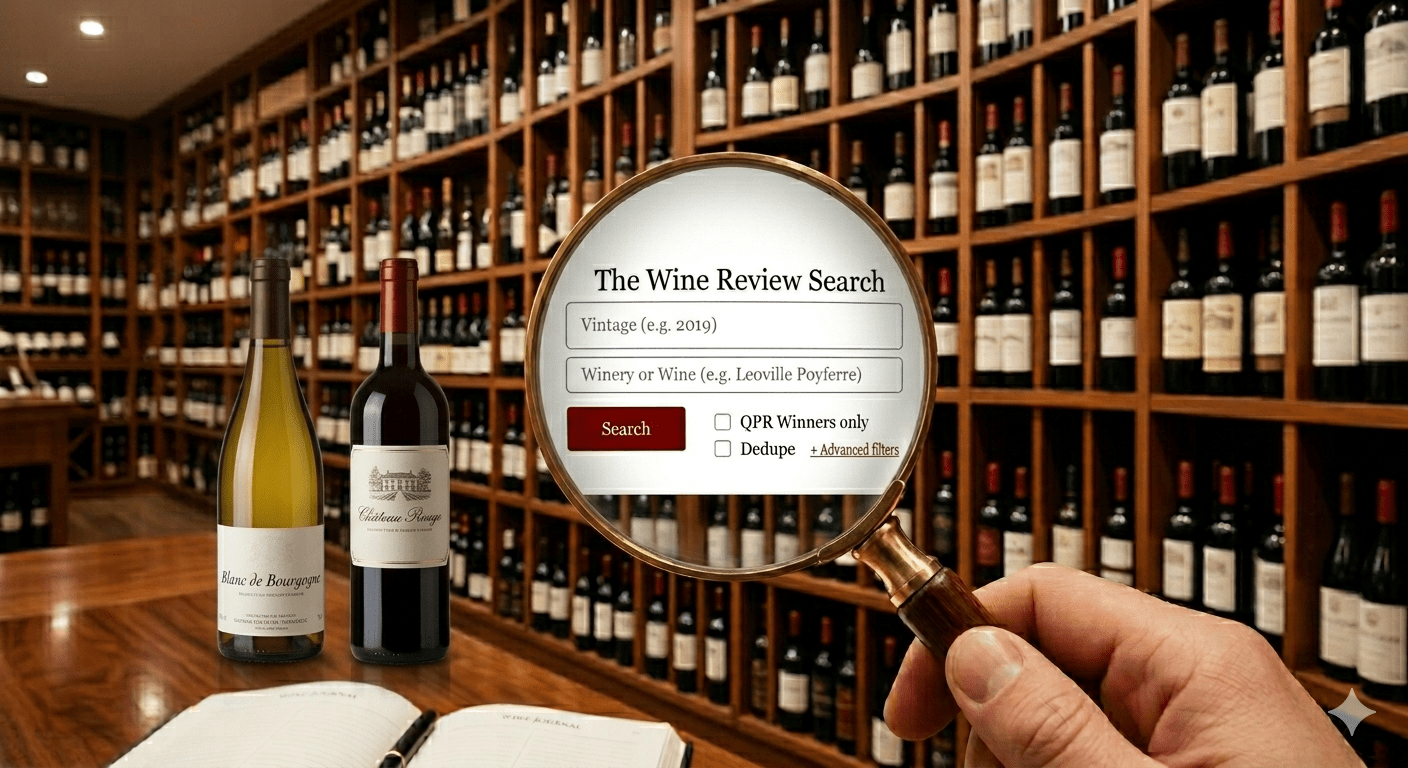
  • Phase Two is LIVE — The Wine Review Search

    Phase Two is live!

    Okay, so I know some of you have been waiting for this one, and I apologize if it took too long, but it is finally here! When we launched Kosher Wine Database, I laid out a four-phase plan – and Phase 2 is now officially live: The Wine Review Search.

    For those who don’t know or don’t remember (no judgment, I barely remember what I wrote last week), the whole point of moving from Kosher Wine Musings / Kosher Wine Unfiltered to this new platform was NOT just to post reviews in a prettier wrapper. It was to build an actual, searchable index of kosher wine reviews — something that could answer “hey, has David written about this wine?” or “what’s a good Israeli red that Avi rated well?” without making you scroll through 18 years of posts and hit Ctrl-F like a maniac.

    So — go play with it. It’s right there in the nav: The Wine Review Search. Or click the big gold button on the home page. I made that pretty hard to miss.

    What’s in there right now

    Actual wine notes of 8,600+ wines reviewed by Avi and me, spanning basically the entire run of both blogs. Every wine has vintage, winery, wine name, tasting notes, and a score (some have QPR scores, some don’t — blogs evolved, we evolved, you’ll see some variation). You can search simply (just type a vintage, a winery, or a wine name), or pop open Advanced to filter by country, color, varietal, QPR WINNERS only, or wines currently in their drinking window. These are the actual wine notes, not links to another post or two or 30.

    What’s NOT perfect — and why I’m telling you upfront

    Look, 18+ years’ worth of blog posts don’t parse cleanly. The data is really good, but it’s not perfect. Some older entries have incomplete metadata — maybe the country is blank, maybe the varietal isn’t tagged, maybe the QPR score predates my even having QPR scores as a concept. If you use Advanced filters aggressively (“only France, only Rosé, only 2020+”), you WILL miss some wines that should have matched but didn’t because their metadata is incomplete. That’s the truth. I’ve put a note on the Advanced panel to that effect.

    The simple search is the reliable one. Type “Leoville” and you’ll get every Leoville we’ve written about. Type “2019” and “Netofa” together and you’ll find them. That part is rock solid.

    The advanced filters are a great first pass — especially for discovery, “show me QPR WINNERS from Italy” and so on. But if you’re hunting for a specific wine, a simple search wins every time.

    What Search actually does

    Unlike the search on the top of the page, the results of this search are actual wine notes. They are mostly accurate. Yes, we have some typos and the like, but overall, the notes you see are what we have on the site. This is something I hope the Premium Members enjoy and value as much as we do!

    What’s next — Phases 3 and 4

    The next two phases, honestly, depend upon all of you, as we laid out the plan in the Join Us Page. We’re looking for a better way to interact and communicate, and we respect your time. We don’t want to be another WhatsApp or Slack “bird in your ear” or face. We hope the Premium and Newsletter community members will reach out to let us know how you would like Phase 3 to proceed. Are you interested in guided tastings? What about a monthly delivery of curated wines (NO WE WOULD NOT MAKE A PENNY), but again, is all this noise, or is there a real interest?

    A quick thank you

    None of this would exist without the members who signed up early when this was still a dream. You believed in this dream and jumped on board! It truly drives us, and we hope you enjoy the next phases. Thank you. Seriously.

    Now go search. Find something you forgot about. Find something new. Tell me what’s broken — because it will be, somewhere.

    Cheers,
    David


    Want to try it?The Wine Review Search

    Not a member yet?Join here

    Like This:

    ,
    8 comments on Phase Two is LIVE — The Wine Review Search
  • Seder 2026

    Each year, as I curate my Seder wine list, I look for the perfect intersection of the practical and the profound. The wines must be “Seder-friendly”—approachable enough for four cups—but they must also be excellent enough to honor the mitzvah and adorn the table.

    Usually, I am not makpid (strict) about sourcing exclusively from Israel; my cellar is typically a global map of favorites. But this year, the classic Haggadah question can be framed a little differently: Why is this year different from all other years?

    This content is for members only. Please Login  or Subscribe Here to continue reading!

    Like This:

    , , , , ,
    2 comments on Seder 2026
  • Domaine Roses Camille Visit – January 2026

    Well here it is, my first sole post on this new platform. Just wanted to thank everyone for the support so far. It has been challenging getting this thing off the ground during the current war and even more challenging finding the time to write. As with the other posts from this trip, even though it was a joint trip, the post is written solely in my voice and the notes are mine , though David’s scores are included here as well (current scores of his are provided for the wines we tasted together and scores from previous posts of his for the two 2019 vintage wines).

    Usually when I post about the trips David and I take to France, I make sure to include all visits with distinct posts as part of the series and always end with the Hotel post as a wrap up. As we were trying to port everything over to the new site, and David REALLY wanted to do his end of year posts which were late and of course predicated on the Royal and Hotel posts, I decided to hold the other posts till later as for the most part they are about winery visits that we did in Bordeaux and 3 out of 4 of those visits did not include tastings. But, there was one visit which DID include tastings and so I wanted to at least that one out prior to Pesach. This post is about our visit to Domaine Roses Camille in Pomerol. I am going to keep this focused ONLY on that visit and leave the rest to a separate post (or 3, haven’t decided yet). But those will come later as I also have to get my pre-pesach seder post out as well.

    We were on a VERY tight schedule when we visited Bordeaux – we had firm appointments at each of the wineries we visited and a train schedule to contend with. As such we ended up having only about an hour for our in Pomerol. Both David and I have written about the wines of Christophe Bardeau many times. We try to taste with him in Paris whenever we are there and he has something new to release. But this was my first time actually visiting the property and tasting with Christophe there. Of course most wineries one visits are either large commercial enterprises or boutique wineries – but all use professional modern equipment to some extent. It is rare that one gets to visit a garagiste winery that is successful – as they tend to ramp up production and get more professional as soon as they achieve any level of success. There are only 2 real examples in the kosher world of proper estate wineries (I am not talking about producers who buy grapes and then produce their wines where they can – even though they too might fall in to the garagiste category) that even though they are wildly successful, have stayed garagiste to the core. The first is Four Gates which I got to visit last summer for the first time (I am just remembering that I never posted about that visit! Will have to fix that…) and now Domaine Roses Camille . Both of these wineries basically are function in tiny spaces. One or two tiny rooms for production and bottling and maybe another for storage and shipping. That’s it.

    This content is for members only. Please Login  or Subscribe Here to continue reading!

    Like This:

    , , , , , , ,
    No comments on Domaine Roses Camille Visit – January 2026
  • The Best/Top kosher wines for Passover 2026 in all price ranges

    As I’ve mentioned before, this list started when people asked me to compile a cumulative list. This year, there have been fewer such events. I went to three of them (including Miami 2025), and the number of great wines is growing along with the overall number of Kosher Wines.

    First, here are a few caveats: This is MY list! This is not a list that will make many happy. These wines are the wines that make me happy. No wines here would be considered overripe, over-sweet, or all over the place. The wines here are listed in the order of cost. That said, the top-line wines – what I call Top-Flight wines- are not defined by cost at all. On that list, you can find 2022/2023 Elvi Wines EL26. At the same time, the list includes some of the best high-end kosher wines I have ever tasted. Ultimately, price does not define your place on the Top-Flight Wines list, nor does QPR (Quality-to-Price Ratio); only pure quality gets you on this list. The list of Top-Flight wines is wines I would buy without hesitation, no matter the cost (if I can afford it, of course).

    Passover is a time of year when Jews buy the most wine, along with Rosh Hashanah, and the US New Year. That is why all the kosher wine events usually take place a month or two before Passover. It allows the wineries and distributors to showcase all their wines, each appealing to different market segments. So, no, there are no sweet or semi-sweet baseline wines here. Many very good bottles of wine priced at 25 or lower can be bought at Skyview Wines, Gotham Wines, Suhag Wine, Liquid Kosher, onlinekosherwine.com, kosherwine.com, and now Elk is live with his website, ElkWine.com.

    Of course, those and others exist. Support your local merchants! I have no real options, so I use the ones to the right of this blog, when viewed on the web (as always, I NEVER make money from them and I never know or care what people buy, the list is who I purchase wines from, and so I feel comfortable recommending them to others).

    Also, the amount of money you spend does not define the value or quality of the wine. Take, for example, the 20-dollar 2023 Elvi Herenza Rioja, 2023 O’Dwyers Creek Sauvignon Blanc, and others. These are lovely wines; the fantastic price is only an added benefit. However, many low-priced wines are not on this list, as they lack the required quality, IMHO.

    Seeing the list and checking it twice (could not help myself), I am sure there will be a question: what defines a wine as a Top-Flight wine, and why are there wines that are not on it? The Top-Flight wines are wines that impressed me when I tasted them. That does not mean that the 2023 Chateau Moulin Riche, as lovely as it may or may not be, can compare to any wine on the Top-Flight Wine list. It does mean that when I tasted any of these Top-Flight wines, I was wowed and said, “This is a wine everyone should get, no matter the price.” In the end, the Top-Flight Wines is my way to whittle down the list of wines I enjoyed from thousands of kosher wines available here in America. In hindsight, I am sure I will have missed some wines.

    This content is for members only. Please Login  or Subscribe Here to continue reading!

    Like This:

    , , , , , , ,
    4 comments on The Best/Top kosher wines for Passover 2026 in all price ranges
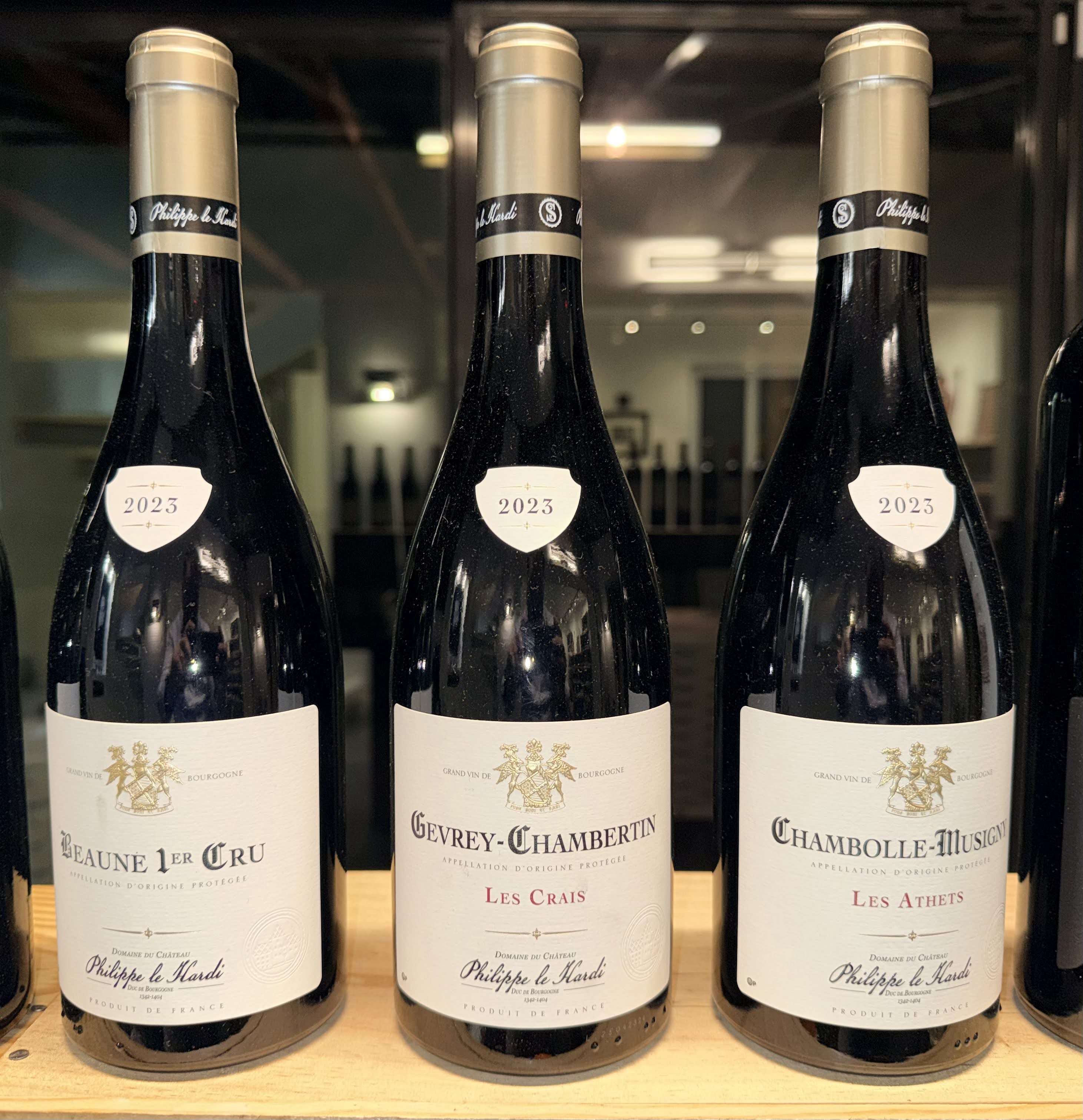
  • 2023 Domaine du Chateau Philippe le Hardi Beaune 1er Cru, Gevrey-Chambertin, Les Crais, Chambolle-Musigny, Les Athets

    The Top and Best 37 QPR Kosher Wine WINNERS of 2025

    In May 2020, I wanted to drive home the need for QPR (Quality-to-Price Ratio) wines. So I set out to create what I thought a QPR metric should be! Gone were arbitrary price ranges and such. So many people arbitrarily define 40 dollars as too much or too little for a given wine. My only question is, on what basis did you come to this decision? Your gut, your price limit, your wife, your accountant? I knew we needed a REAL, quantitative, objective approach to building a QPR score.

    So I let the market determine the QPR price range. I did this by grouping the wines by type (white, red, rosé, sparkling, and dessert) and then further refining the grouping by ageability within white and red wines. This gave me the following groups:

    • Drink “soon” White Wine (Simple whites)
    • Rose Wine (always drink soon)
    • Drink “soon” Red Wine (Simple reds)
    • Mid-range aging Reds (4 to 11 years)
    • High-end Red wines (11 and more years)
    • High-end White wines (7 and more years)
    • Sparkling Wine (No need here for extra differentiation)
    • Dessert Wine

    I then made the mistake of trying to create an Orange wine range/group – that was a HUGE mistake. Again, the wines themselves were not the issue; the issue was trying to group such a small sample set into a single group. So, I moved them into white wines.

    Throughout the year, I posted many QPR posts for almost all of the main categories. I will continue down this road until I find a better way to categorize and track wines that are QPR WINNERS. Regarding the QPR WINNERS score, the secondary QPR score was a 2.1 revision to my QPR score, which is explained in this post. All the wines listed here are QPR WINNERS from my tastings in 2025.

    Let us discuss the approach

    I have heard from a few of you. I do not understand your QPR (Quality-to-Price Ratio) scoring. So, let us take another shot at this! Every time a customer comes into a shop or goes online to buy kosher wine, they have a choice of a few thousand wines online or many hundreds in a store. The question is, how does a buyer differentiate one wine from the next?

    This content is for members only. Please Login  or Subscribe Here to continue reading!

    Like This:

    , , , , ,
    No comments on The Top and Best 37 QPR Kosher Wine WINNERS of 2025